3 min read
Stay updated with the latest - Click here to follow us on Instagram
© IE Online Media Services Pvt Ltd



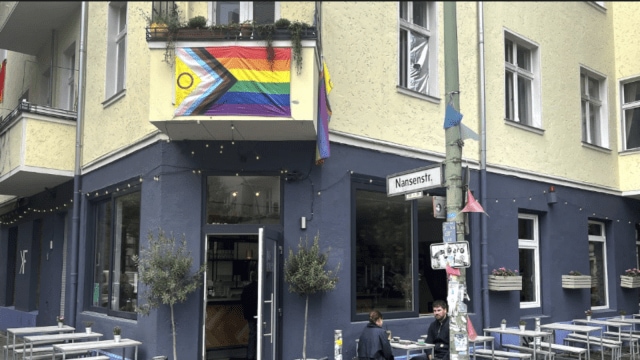 The longer I live here, the more I think the only true “no-go” zone is the temptation to speak about a neighbourhood without letting it speak back (AP)
In a corner of Berlin, Danjel Zarte opened Das Hoven café with a dream: to create a safe, welcoming space for everyone, especially the LGBTQ+ community.
He hung a neon sign that glowed “QUEER AND FRIENDS,” a bright beacon of acceptance in one of the city’s trendiest neighbourhoods.
But instead of drawing people together, that sign has become a target for hate.
Over the last year and a half, Danjel’s dream has been shattered—literally. Vandals have smashed the café’s windows, smeared swastikas and even faeces on its walls, and harassed its staff. One terrifying night, a man stood outside brandishing a gun. “It feels like an act of terror,” Danjel shared with the Associated Press.
Mornings are the hardest—he wakes up dreading his phone, fearing news of another attack. Right now, there are 45 open criminal investigations tied to the café.
This isn’t just happening at Das Hoven.
Across Germany, violence against LGBTQ+ people is spiking, even in Berlin, a city long celebrated as a haven for queer folks. Last year, 12 of Germany’s 16 states saw a 40 per cent jump in attacks targeting the community, according to the Association of Counseling Centers for Victims of Right-Wing, Racist and Antisemitic Violence.
And those are just the cases reported—many people stay silent, too scared to speak up.
The rise of far-right groups like the Alternative for Germany (AfD) party isn’t helping. Even though one of its leaders, Alice Weidel, is openly lesbian, the party pushes anti-LGBTQ+ policies, like calling for the repeal of same-sex marriage and promoting a “traditional family” of a mother, father, and kids. Meanwhile, neo-Nazi marches are becoming bolder, often filled with young men eager to intimidate.
“You automatically run a very, very high risk simply because of who you are,” says Bastian Finke, who runs MANEO, a Berlin group tracking anti-gay violence. “To be attacked, to be insulted, to be spat on. We have these scenarios every day,” he told the Associated Press.
That fear lingers in the air, even in a city as vibrant as Berlin. This year’s Christopher Street Day parade, one of the biggest Pride events around, felt bittersweet. The joy was there, but so was a quiet unease.
Still, for Danjel, the parade offers a rare moment of relief. “It is very moving to feel completely accepted once a year,” he said.
Stay updated with the latest - Click here to follow us on Instagram