Journalism of Courage



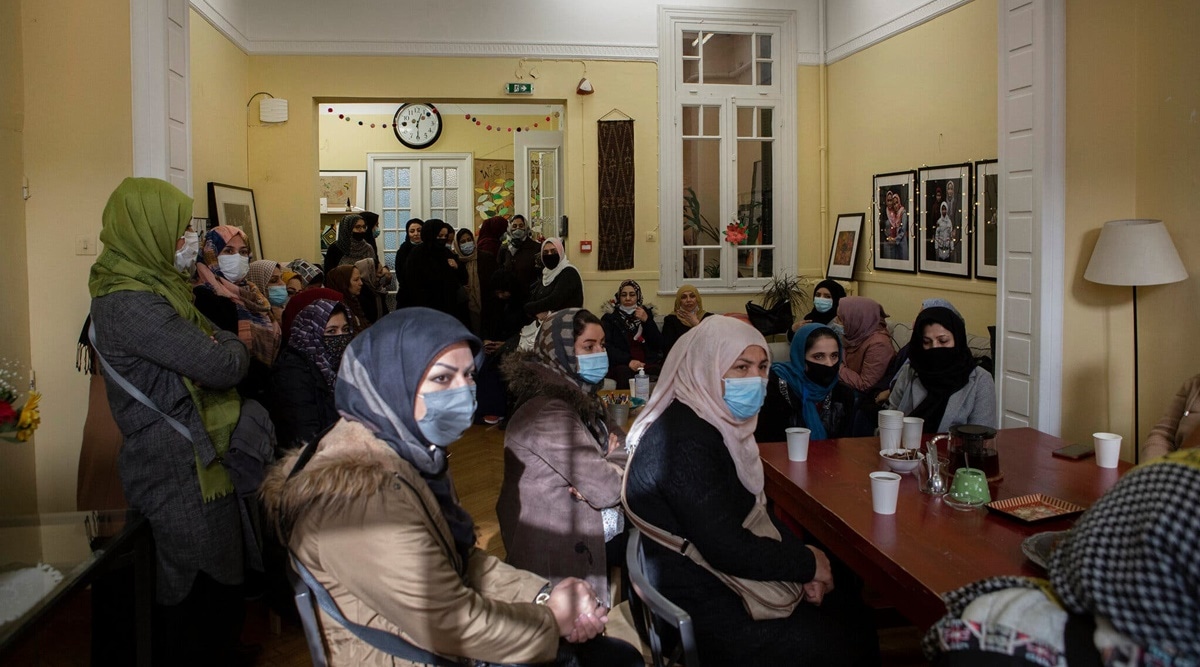 Educated Afghan elites who evacuated to Europe after the Taliban’s return have been welcomed, but they struggle with their lives in exile, and their poorer compatriots are shunned. (New York Times)
Written by: Matina Stevis-Gridneff
Some of the Afghan women around the table in the neoclassical building in central Athens, Greece, were making notes in leather-bound notebooks as they debated the future of women and girls in their homeland. They were legislators, journalists and judges — but they were also refugees, a characterization that many of them winced at with shame and disbelief.
“For a woman who’s been working for 20 years, to have to come here and be called a refugee, it’s not an easy thing,” said Khatera Saeedi, a journalist, as others in the group nodded emphatically.
The presence of Saeedi and the other refugees in Athens brought into focus a complicated reality for the tens of thousands airlifted after the Taliban takeover: The Afghans Europe wants are the ones who had never wanted to be there.
“I had a very nice life back in Afghanistan,” said Wahida, 31, an international-organization worker from Kabul, Afghanistan’s capital, who was evacuated to the Netherlands and who wanted to be identified by only her first name. “I had a very prestigious and challenging job, and I never thought of seeking asylum in another country.”
As Kabul fell to the Taliban in August, and Afghanistan’s elites were airlifted to Western destinations, European Union nations committed to take in up to 40,000, many of whom have already reached Europe.
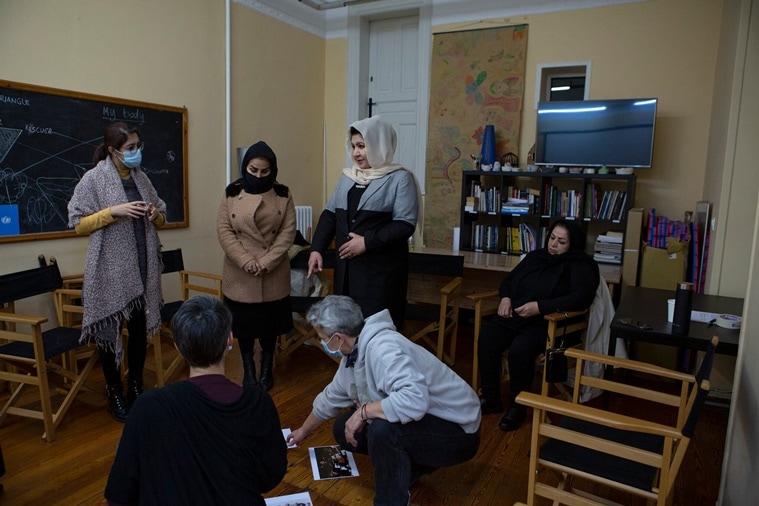 Farsi interpreter Karime Ganji, left, and others with Melissa Network, an organization that helps migrants and refugees, with some former Afghan legislators who fled the country’s new Taliban government during a workshop on empowerment and trauma, in Athens, Greece. (New York Times)
Many are those educated and skilled enough to be connected to the vast international presence that defined Afghan life for the past 20 years — ultimately also giving them the connections to make their way abroad through legitimate channels.
They stand in contrast to tens of thousands of others from their country who made their way in recent years to Europe’s doorstep — sometimes smuggled, often over arduous land journeys of thousands of miles and then a final risky sea crossing — only to be turned away.
Since the Taliban takeover, Afghans have made the most asylum requests in the EU, according to the European Asylum Support Office. But even before last year, Afghans consistently made up one of the largest groups seeking asylum from abroad.
For many years, they were bumped to the back of the line, their applications rejected in favour of refugees from more urgent and proximate conflicts, such as that in Syria.
Afghans and Iraqis, both fleeing lengthy Western-led wars, faced similar difficulties as asylum-seekers in Europe, said Camille Le Coz, an expert with the Migration Policy Institute, a Brussels-based research institute, who has worked in Afghanistan.
But the arrival of thousands of evacuees from Kabul brought to the surface a long-underlying current in EU migration policy.
“It highlights the dichotomy the EU has been trying to create between people who arrive in Europe to request asylum through safe and legal pathways and those who arrive through irregular means — and the latter are not welcomed,” she said.
But those pathways are all but shut to the vast majority of refugees, a fact that forces thousands of people to arrive in Europe through dangerous and expensive smuggling routes.
Normally, only about half of the Afghans who applied for asylum in the EU were successful. That acceptance rate jumped to 91% in the last months of 2021, as EU evacuees were fast-tracked through normally sluggish asylum bureaucracies.
The Dutch government, which maintained a military presence in Afghanistan, swiftly granted asylum to the 2,000 Afghans it evacuated but has practically put on hold all claims from Afghans who arrived irregularly.
Athens is now the temporary home to about 170 prominent Afghan women and their families, including one-third of the country’s female legislators, who were flown there by a coalition of charitable foundations and will be resettled in Germany and other wealthy nations.
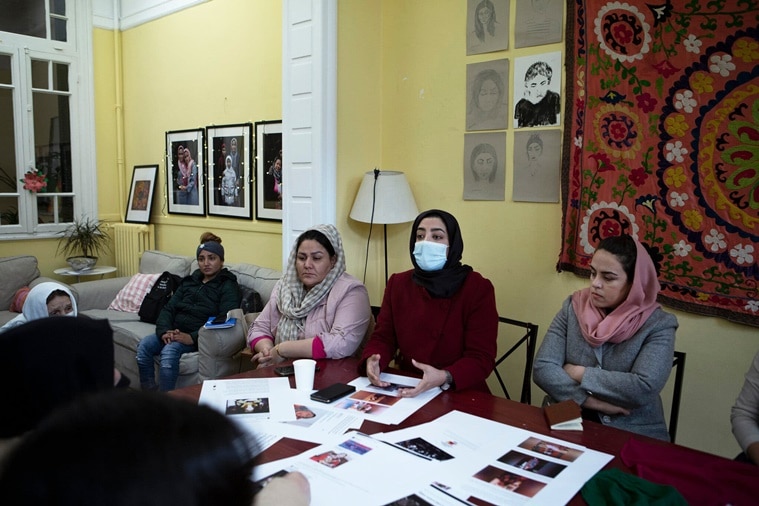 A group of Afghan women, most of whom were lawyers, judges or legislators in their home country and fled the new Taliban government, attend a discussion at Melissa Network, an organization that helps migrants and refugees, in Athens, Greece. (New York Times)
They have been gathering at Melissa Network, a nongovernmental organization in central Athens that supports female migrants and refugees. Melissa has been offering them a daily sanctuary, a space to meet and talk, and organizing legal aid and mental health workshops.
“There is a significant difference between the way these women became refugees and the experience of other refugees,” said Thalia Portokaloglou, a mental health expert with Melissa. “They carry the pain and the fear that we see in all women we work with here, but they also come with a purpose, which helps them find meaning in life.”
The legislators among the evacuees in Athens were working feverishly to set up an in-exile organization to advocate Afghan women’s rights and, through that, to hold on to their identities and senses of purpose.
“I think about the people who came and gave me their vote,” said Shagufa Noorzai, who was Afghanistan’s youngest legislator when she was elected to Parliament from Helmand province in 2019, adding that she felt guilty for fleeing as her constituents stayed behind to face the Taliban and starvation.
Most Afghans travel across Asia to Turkey and arrive in Greece by putting themselves in the hands of smugglers who place them on precarious dinghies to cross the Aegean Sea. If they manage to lodge asylum requests, they have to wait for years in legal and financial limbo until their claims are assessed.
That has been the experience of another Afghan woman at Melissa who was there to help the newly arrived group of evacuees: the organization’s Farsi interpreter, Karime Ganji.
She arrived in Greece in 2016 after a dramatic overland journey in the middle of winter, crossing mountains and rivers with her two children, then 3 and 9. Over the past five years in Athens, she has learned English and Greek and enrolled at a university in Athens. But her asylum request is still pending.
Ganji said she sympathized with the group of prominent women she was helping but added that other Afghans and other asylum-seekers also deserved more support.
“They came from bloodshed. They are survivors,” she said through tears. “I don’t see them as politicians, just as a small group of innocent people from Afghanistan who need help.”

 7 min read