11 min read


© IE Online Media Services Pvt Ltd



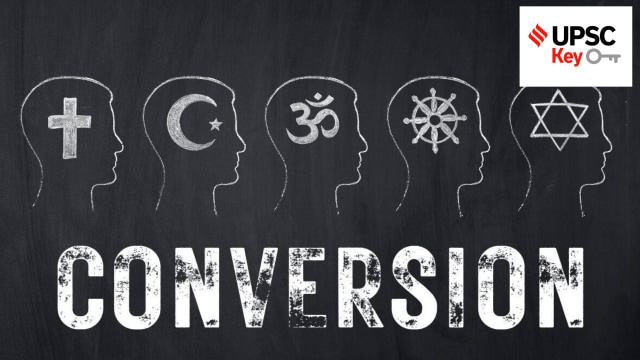 UPSC Key 2022: Here's what you should be reading from the November 15, 2022 edition of The Indian Express.
Important topics and their relevance in UPSC CSE exam for November 15, 2022. If you missed the November 14, 2022 UPSC key from the Indian Express, read it here
FRONT PAGE
Slower rise in food prices helps ease retail inflation to 6.77%, still over RBI tolerance
Syllabus:
Preliminary Examination: Economic and Social Development
Mains Examination: General Studies III: Indian Economy and issues relating to planning, mobilization, of resources, growth, development and employment.
Key Points to Ponder:
• What’s the ongoing story- India’s retail inflation eased to a three-month low of 6.77 per cent in October from 7.41 the previous month, helped by a slower rise in food inflation and the base effect, data released by the National Statistical Office on Monday showed. Food inflation, which accounts for nearly 47 per cent of the CPI basket, eased to 7.01 per cent per cent in October from 8.6 per cent the previous month while fuel inflation continued to stay elevated at 9.93 per cent.
• How India’s retail inflation is measured?
• Why the Retail inflation has stayed above the RBI Monetary Policy Committee’s tolerance band of 2-6 per cent for over three successive quarters with the October print marking the tenth month of staying above 6 per cent and three years of staying over 4 per cent?
• Why RBI is failing to meet the inflation target recently?
• The Ministry of Finance said that prices of commodities like crude oil, iron ore and steel had sobered in global markets. What measures Government has taken so far to soften the prices of edible oils and pulses?
• What is Monetary policy?
• What is the primary objective of the monetary policy?
• The Monetary Policy Committee (MPC) is a Statutory Body-True or False?
• Under Section 45ZB of the amended (in 2016) RBI Act, 1934, the central government is empowered to constitute a six-member Monetary Policy Committee (MPC)- What is the Monetary Policy Committee (MPC)?
• What are the steps taken by RBI to control inflation?
• What factor distinguishes India’s inflation from many other developed countries?
• What is Inflation?
• Know the Types of Inflation like Moderate Inflation, Galloping Inflation, Hyper-Inflation, Stagflation, Deflation, Core Inflation etc.
• What are the causes of Inflation in the present situation
• How Inflation is Measured in India?
• What is the Long term, Medium Term and Short-term impact of Inflation?
• New Standard for Measuring Inflation in India and Old Standard for Measuring Inflation-Key Differences
• Steps or Measures Taken by GOI to Control Inflation
• What do you understand by Wholesale Price Index (WPI) and Consumer Price Index? WPI and CPI is published by whom?
• What’s the RBI assessment on inflation recently?
• Know these Terms-Cash Reserve Ratio (CRR), Statutory Liquidity Ratio (SLR), Open Market Operations (OMOs), Market Stabilisation Scheme (MSS), Repo Rate, Reverse Repo Rate, Liquidity Adjustment Facility (LAF), Marginal Standing Facility (MSF) Bank Rate
Other Important Articles Covering the same topic:
Forced conversions dangerous, may affect nation’s security: SC
Syllabus:
Preliminary Examination: Current events of national and international importance.
Main Examination: General Studies II: Government policies and interventions for development in various sectors and issues arising out of their design and implementation.
Key Points to Ponder:
• What’s the ongoing story- SAYING THAT “forced” religious conversions are “very dangerous” and may “affect the security of the nation and freedom of religion and conscience”, the Supreme Court on Monday asked the Centre to step in and make “very serious and sincere efforts” to tackle the issue.
• “The issue with respect to the alleged conversion of religion, if it is found to be correct and true, is a very serious issue which may ultimately affect the security of the nation as well as the freedom of religion and conscience of the citizen”-In what context, the Supreme Court of India said so?
• What is forced religious conversions?
• What is religious conversion in India?
• Forced conversion in religion and religious conversion-what is the difference?
• Force vs Will (Choice)-How forced conversion in religion is defined in India?
• Article 25 of the Indian Constitution guarantees what?
• Is religious conversion part of Article 25 of the Indian Constitution?
• What is the procedure in India for religious conversion?
• What is the Union or State Government’s policy on religious conversion?
• What are the societal repercussions of religious conversion?
• What the Supreme Court had said in the 1977 ruling in the Rev Stainislaus versus State of Madhya Pradesh case?
• Why the Karnataka Right to Freedom of Religion Bill, 2021 was in the news recently?
• Anti-conversion law in other States-Know in detail
• Why many states are introducing Anti-Conversion Laws?
• Know the Landmark Judgements of Supreme Court and High Courts on Conversion
• What Supreme Court of India, said in the Lily Thomas and Sarla Mudgal cases regarding religious conversion?
Other Important Articles Covering the same topic:
📍Anatomy of anti-conversion legislation in India: A comparative look at state laws
Need trillions of dollars to meet net-zero target by 2070: India
Syllabus:
Preliminary Examination: General issues on Environmental ecology, Bio-diversity and Climate Change – that do not require subject specialization.
Mains Examination: General Studies III: Conservation, environmental pollution and degradation, environmental impact assessment.
Key Points to Ponder:
• What’s the ongoing story- INDIA WOULD need “tens of trillions of dollars by 2050” to transition to a low-carbon development path that would take it to the promised net-zero status by 2070, the government said on Monday. Separately, nearly two trillion dollars would be required just for adaptation purposes in the short term between now and 2030, it said, in its long-term strategy document that was released at the climate change meeting here.
• For Your Information-Every country has to submit its long-term strategy, showing how it plans to reach its net-zero target. Developed countries have to reach net-zero status by 2050, China has decided to get there by 2060, while India has set 2070 as its target year.
• What is net zero?
• Why is net zero important?
• How can net zero be achieved?
• Is there a global effort to reach net zero?
• Are we on track to reach net zero by 2050?
• Difference between ‘Net Zero’ and ‘Carbon Neutral’?
• How can net zero be achieved?
• Public-Private partnership frameworks to achieve ‘net zero’-issues and challenges
• India’s emission Status-Present Scenario
• What is India’s long-term strategy towards a low-carbon development?
• What Vision India presented in COP27 net-zero target?
• “Developing countries must not be asked to continuously upgrade their climate actions, and any further measures required to meet the global goals of keeping temperature below 1.5 degree Celsius must come from the developed countries alone”-decode and discuss
Other Important Articles Covering the same topic:
📍For a livable climate: Net-zero commitments must be backed by credible action
📍COP-27: Payback time for rich nations
📍Don’t ask developing nations to act, let developed ones reach net zero by 2030: India
GOVT & POLITICS
Fodder inflation up to 27.31%, highest since June 2013
Syllabus:
Preliminary Examination: Economic and Social Development-Sustainable Development, Poverty, Inclusion, Demographics, Social Sector Initiatives, etc.
Main Examination: General Studies III: Economics of animal-rearing
Key Points to Ponder:
• What’s the ongoing story- As fodder prices continue to rise, there seems to be no respite for households whose livelihood is dependent on livestock rearing. The annual rate of fodder inflation based on the All-India Wholesale Price Index (WPI) has soared to 27.31 per cent in October 2022, the highest since July 2013 when the figure was 27.29 per cent.
• What is fodder livestock?
• Fodder and Farmers-Connect the dots
• Why fodder prices are continuously rising?
• How rising fodder prices have a direct impact on households whose livelihood is dependent on cattle rearing?
• Fodder price rise has a direct impact on milk prices-How?
• For Your Information-Two Years after the Ministry of Fisheries, Animal Husbandry and Dairying proposed the formation and promotion of fodder-centric Farmer Producer Organisations (FPOs) to address the fodder deficit, the government has designated the National Dairy Development Board (NDDB) as the implementing agency, setting a target of 100 such FPOs in 2022-23.
• What are farmer producer Organisations?
• What is difference between Farmers’ Producer Organisations (FPO) and farmers’ producer company (FPC)?
• What are the Government schemes and initiatives to promote FPOs?
Other Important Articles Covering the same topic:
📍Govt moves to set up fodder-centric farmer producer organisations
📍Farmers’ collectives: Taking Farmer Producer Organisations beyond ‘romance’ to ‘relationships’
THE EDITORIAL PAGE
Syllabus:
Preliminary Examination: Current events of national and international importance.
Mains Examination: General Studies II: Bilateral, regional and global groupings and agreements involving India and/or affecting India’s interests.
Key Points to Ponder:
• What’s the ongoing story- C. Raja Mohan Writes: Asia hoped that Russia could be a valuable ‘third force’ for a region that was being sandwiched between America and China. But in aligning with China, pursuing an impossible sphere of influence in Central Europe, and launching a costly but failed invasion of a brother nation in Europe, Putin has further marginalised his country in Asia
• “Russian President Vladimir Putin is not joining the “season of summits” in Asia, but the consequences of his faltering aggression against Ukraine are bound to reshape Asian geopolitics”-But, why Asian politics?
• Moscow retreated last week from Kherson, which it recently proclaimed as an integral part of Russia-Locate Kherson and why it is significant?
• “Putin’s Ukraine gamble is producing at least five major consequences for Asia”- What are those five major consequences for Asia? (Hint: Given in the Article)
• How is New Delhi positioning itself as a player with credibility in the Russia-Ukraine conflict?
• Can India take on a larger diplomatic role in the Ukraine-Russia Conflict now?
• “The history of warfare tells us that room for diplomacy opens up only when there is a deadlock on the battlefield”-Understand and discuss
• Why there is growing international interest in the potential Indian diplomatic contribution to ending the tragic war in Ukraine which is now in the ninth month and has shaken the world to its core?
Other Important Articles Covering the same topic:
EXPLAINED
Syllabus:
Preliminary Examination: Current events of national and international importance.
Main Examination: General Studies II: Bilateral, regional and global groupings and agreements involving India and/or affecting India’s Interests
Key Points to Ponder:
• What’s the ongoing story- Heads of state and governments belonging to 20 of the world’s major advanced and emerging economies will commence a two-day summit meeting on Tuesday in Bali, Indonesia. This is the 17th annual summit, and will be a culmination of numerous ministerial meetings and working groups that have been working for the past one year on key priority areas.
• What’s on the agenda for the 2022 summit?
• What is G20?
• Know the origin of G20
• How G20 Works?
• G20 or Group of Twenty-About, Purpose and Member Countries
• The Bali summit will have three key priorities-Know them in detail
• What else is at stake?
• Why have prospects worsened?
• Where do the solutions lie?
• What is the theme of India’s G20 Presidency?
• For Your Information-The G20 Presidency steers the G20 agenda for one year and hosts the Summit. The G20 consists of two parallel tracks: the Finance Track and the Sherpa Track. Finance Ministers and Central Bank Governors lead the Finance Track while Sherpas lead the Sherpa Track. The Group does not have a permanent secretariat. The Presidency is supported by the Troika – previous, current and incoming Presidency. During India’s Presidency, the troika will comprise Indonesia, India and Brazil, respectively.
Other Important Articles Covering the same topic:
📍PM in Bali, to hold talks on ‘key challenges’ facing the world
For any queries and feedback, contact priya.shukla@indianexpress.com
The UPSC KEY Indian Express is now on Telegram. Click here to join our channel and stay updated with the latest Updates.

Read UPSC Magazine