42 min read


© IE Online Media Services Pvt Ltd



 UPSC Key April 2023: Here's what you should be reading from the April 12, 2023 to April 14, 2023 edition of The Indian Express
 Important topics and their relevance in UPSC CSE exam for April 12, 2023 to April 14, 2023. If you missed the April 11, 2023 UPSC key from the Indian Express, read it here
FRONT PAGE
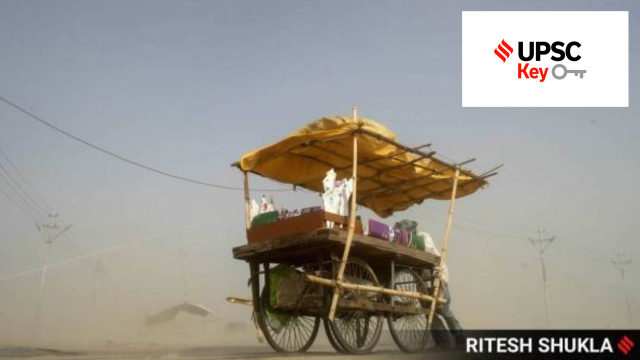
Second Covid wave hit street vendors hard but less than 1 in 5 defaulted on relief loans
Syllabus:
Preliminary Examination: Economic and Social Development-Sustainable Development, Poverty, Inclusion, Demographics, Social Sector Initiatives, etc.
Mains Examination: General Studies II: Welfare schemes for vulnerable sections of the population by the Centre and States and the performance of these schemes; mechanisms, laws, institutions and Bodies constituted for the protection and betterment of these vulnerable sections.
Key Points to Ponder:
• What’s the ongoing story– IN 2021-22, the year that started with the deadly second wave of Covid-19, street vendors who took loans of Rs 5,000-10,000 under a Central scheme, were hit the hardest, with almost half of those who borrowed defaulting on their repayment. But overall, between July 2020 and February 2023, just 17.51 per cent of the total number of loans turned bad or non-performing.
• What is called bad loan?
• What is Non-Performing Assets (NPAs)?
• Is Bad loan same as Non-Performing Assets (NPAs)?
• How Nonperforming Assets (NPA) Work
• Who are street vendors in India?
• Street Vendors in India-What data’s and statistics says?
• What are the issues and challenges faced by Street Vendors?
• Do we have any Government’s Initiatives for Street Vendors?
• Street Vendors (Protection of Livelihood and Regulation of Street Vending) Act, 2014-know key highlights
• What is PM Street Vendor’s AtmaNirbhar Nidhi (PM SVANidhi) scheme?
• Do You Know-Under the PM-SVANidhi, launched in July 2020, repayment of the first term loan of Rs 5,000-10,000 in a year made a vendor eligible for the second term loan of up to Rs 20,000 to be repaid over two years. If this is also repaid in time, the vendor becomes eligible for the third term loan of up to Rs 50,000. Bulk of PM-SVANidhi lending – Rs 3,345 crore out of total Rs 4,898.75 crore – were extended as first term loans to 33.69 lakh accounts during the three years beginning July 2020 till February 10, 2023. Lending under the second term loan totalled Rs 1,461 crore to as many as 7.32 lakh loan accounts, and Rs 94 crore under the third term loan.
• How PM Street Vendor’s AtmaNirbhar Nidhi (PM SVANidhi) scheme for street vendors helped alleviate poverty?
• What are the various challenges that vendors are facing while applying for the loan?
• For Your Information-Under Prime Minister Street Vendor’s AtmaNirbhar Nidhi (PM-SVANidhi), the number of loans with the smallest ticket size of Rs 5,000-10,000 that turned non-performing or bad shot up from 3.98 per cent of the total number of loans disbursed in 2020-21 to 48.18 per cent of the total number of loans disbursed in 2021-22, government data shows. In 2022-23 (till February 10, 2023), 19.09 per cent of the total number of loans disbursed turned bad.
Other Important Articles Covering the same topic:
📍Explained: How scheme for street vendors will help alleviate poverty
📍Explained: What is the PM SVANidhi scheme for street vendors, and why was it launched?
Normal monsoon despite El Nino, 96% rainfall likely: IMD
Syllabus:
Preliminary Examination: Indian and World Geography
Mains Examination: General Studies I: Important Geophysical phenomena such as earthquakes, Tsunami, Volcanic activity, cyclone etc., geographical features and their location-changes in critical geographical features (including water-bodies and ice-caps) and in flora and fauna and the effects of such changes.
Key Points to Ponder:
• What’s the ongoing story– THE INDIA Meteorological Department (IMD) on Tuesday predicted “normal” rainfall during the southwest monsoon season this year, despite the possibility of El Nino conditions. The IMD said rainfall is likely to be 96% of the long period average of 87 cm, which means that the country is likely to receive about 83.5 cm for the four months from June to September this year.
• What is El Nino?
• Why is called El Nino?
• What is El Nino effect in India?
• During El Niño, trade winds weaken or stronger than usual?
• Forecast for the Southwest Monsoon Rainfall during 2023- What INDIA Meteorological Department (IMD) is saying?
• For Your Information-In the last four years (2019 to 2022), India has received normal to above normal rainfall. In terms of the spatial distribution, normal rainfall is expected in many parts of peninsular and east central India, including Karnataka, Kerala, Goa, Andhra Pradesh, Tamil Nadu, southern parts of Telangana, Puducherry, Chhattisgarh and Odisha, said IMD Director General Mrutyunjay Mohapatra. Normal to above normal rainfall is expected in the Northeast, including Arunachal Pradesh, Assam, Meghalaya, Nagaland and Manipur, along with parts of Jammu and Kashmir, Punjab and some parts of Uttar Pradesh. Normal to below normal rainfall is likely in Rajasthan, Haryana, Uttarakhand, Maharashtra and Gujarat.
• ‘Not all El Nino years are bad monsoon years’-Analyse
• Do You Know-El Nino conditions, usually associated with suppressed rainfall over India during the monsoon season, refer to a warming of central and eastern Pacific Ocean waters, in contrast to La Nina conditions which refer to a cooling of these waters. The El Nino conditions that are likely to develop this year come on the heels of a “triple dip” La Nina phenomenon from 2020 to 2022. According to IMD data, in 2002, 2004, 2009 and 2015, El Nino conditions coincided with below normal rainfall, with the lowest (78.2 cm) being recorded in 2009. Of the 15 El Nino years from 1951 to 2022, six years recorded normal to above normal rainfall.
• In addition to El Nino conditions, the IMD pointed to two other dominant largescale parameters that can influence the monsoon-what are that two other dominant parameters?
• What is Indian Ocean Dipole?
• India Meteorological Department (IMD)-About, Role and Objectives
• Do You Know-El Nino and La Nina are climate patterns in the Pacific Ocean that can affect weather worldwide. Episodes of El Nino and La Nina typically last 9-12 months, but can sometimes last for years. El Nino and La Nina events occur every two to seven years, on average, but they don’t occur on a regular schedule, say experts. Generally, El Nino occurs more frequently than La Nina. According to the latest forecast by National Oceanic and Atmospheric Administration (NOAA), a transition from La Niña to ENSO-neutral will occur mostly during the February-April 2023 season. Climate models are predicting a potential return to El Niño by May-July, which coincides with the summer monsoon that spans from June- September. The occurrence of three consecutive La Niña in the Northern Hemisphere is a relatively rare phenomenon and is known as the ‘triple dip’ La Niña. The latest triple dip La Nina occurred between 2021-23.
• El Niño and La Niña events are not mirror images of each other. They differ in length and strength-How
• How El Nino Impacts-Know Sector and region wise
• What is Inter Tropical Convergence Zone?
Other Important Articles Covering the same topic:
Fact Check Unit: Govt to pick members; nodal officers from ministries
Syllabus:
Preliminary Examination: Current events of national and international importance.
Main Examination:
• General Studies II: Government policies and interventions for development in various sectors and issues arising out of their design and implementation.
• General Studies III: Awareness in the fields of IT
Key Points to Ponder:
• What’s the ongoing story- The Fact Check Unit as proposed in the Information Technology Rules, 2021, is likely to have four members — a representative from the IT Ministry and one from the Ministry of Statistics and Programme Implementation, a “media expert” and a “legal expert”.
• What is fact-checking unit?
• For Your Information-The Ministry of Electronics and IT notified amendments to the Information Technology Rules, 2021, which allows the Ministry to appoint a fact-check body which will take a call on whether online information related to the Central Government is accurate. The final rules come months after the Ministry, in January, had first proposed that any piece of news that has been identified as “fake” by the fact-checking unit of the Press Information Bureau (PIB) – the Centre’s nodal agency to share news updates – will not be allowed on online intermediaries. However, the final draft has removed the reference to PIB.
• The proposal drawn a lot of criticism-Why?
• What do the final rules say?
• The Final Rules Now- On paper, what the final rules now say is that an online intermediary – including social media platforms like Facebook, YouTube and Twitter and internet service providers like Airtel, Jio and Vodafone Idea – should make “reasonable efforts” to not host content related to the Central Government that is “identified as fake or misleading” by a “fact check unit” that may be notified by the IT Ministry. In essence, if any piece of information is marked as fake by the upcoming fact check unit, intermediaries will be required to take it down, failing which they would risk losing their safe harbour, which protects them from litigation against third-party content. Social media sites will have to take down such posts, and internet service providers will have to block URLs of such content.
• What has the Centre said on concerns around censorship?
• What do you understand by ‘Significant Social Media Intermediaries (SSMIs)’?
• Digital media regulation in India-Know in detail
• Information Technology (Intermediary Guidelines and Digital Media Ethics Code) Amendment Rules, 2023-Know the Key Highlights
• Information Technology (Intermediary Guidelines and Digital Media Ethics Code) Rules 2021 and Information Technology (Intermediary Guidelines and Digital Media Ethics Code) Amendment Rules, 2023-Compare and Contrast
• What are the proposed amendments in Information Technology (Intermediary Guidelines and Digital Media Ethics Code) Amendment Rules, 2023?
• Fake news vs online censorship-where to draw the line?
• The rules have already faced a legal challenge, with comedian Kunal Kamra approaching the Bombay High Court questioning its constitutional validity-What the issue here exactly?
• ‘The Indian Newspaper Society (INS), an umbrella body that represents newspapers, journals, periodicals, and magazines from across the country expressed concern over the recently notified rules that give powers to the Centre’s fact-checking unit to determine what is fake news. It has urged the government to withdraw the notification and hold consultations with media organisations and press bodies’-what are the Indian Newspaper Society (INS) apprehension?
Other Important Articles Covering the same topic:
📍Govt-appointed fact-check body: What it will do, concerns around it
📍INS urges govt to withdraw fact check unit notification
As services surge, FY23 exports rise 14%; imports up 17%
Syllabus:
Preliminary Examination: Economic and Social Development-Sustainable Development, Poverty, Inclusion, Demographics, Social Sector Initiatives, etc.
Mains Examination: General Studies III: Indian Economy and issues relating to planning, mobilization, of resources, growth, development and employment.
Key Points to Ponder:
• What’s the ongoing story– India’s overall exports (including merchandise and services) are estimated to have increased by 13.84 percent to a record $770.18 billion in 2022-23, while overall imports are expected to have surged 17.38 per cent to $892.18 billion over the previous year, data released by the Ministry of Commerce and Industry on Thursday showed.
• What helped to boost the overall export numbers in 2022-23, even as the impact of a global economic slowdown was visibly felt in the case of merchandise trade?
• What is meant by merchandise trade?
• What is India’s merchandise trade deficit?
• What is merchandise examples?
• What is the export services?
• What is an example of export service?
• Which services India exports?
• For Your Information-The merchandise trade deficit, which is the gap between exports and imports, increased by over 39 per cent in 2022-23 to record $266.78 billion, as compared to $191 billion in 2021-22. Merchandise imports increased by 16.51 per cent to $714.24 billion in 2022-23, while merchandise exports rose by 6.03 per cent to $447.46 billion. Overall trade deficit, however, stood at $122 billion in 2022-23, as compared to $83.53 billion in the previous year, gaining support from trade surplus in services.
• What else data released by the Ministry of Commerce and Industry says?
• What do you understand by ‘Exports’ and ‘Imports’?
• Exports of India and Imports of India-Key Items under Exports and Imports
• What Is Balance of Trade (BoT) and Balance of Payments (BoP)?
• The Balance of Payments (BoP) has two parts-what are they?
• Capital Account and Current Account-compare and contrast
• What do you understand by ‘invisibles account’?
• Balance of Trade (BoT) and Balance of Payments (BoP)-How they Connected?
• What Is Export Merchandising?
• Merchandise Exports from India Scheme (MEIS)-Key Highlights
• What do you understand by ‘Current account deficit’?
• Current account deficit’ is rising-What does this indicates for an Economy?
• What do you understand by “Current account surplus”?
• Current account surplus implies a higher inflow of forex than outflow- still sometimes, it is not healthy for an economy, Why?
Other Important Articles Covering the same topic:
📍Why India’s exports and imports have been contracting
📍A new trade strategy: India’s performance on exports is a result of policy interventions
Karnataka scrapping 4% Muslim quota: SC says flawed but no stay
Syllabus:
Preliminary Examination: Indian Polity and Governance-Constitution, Political System, Panchayati Raj, Public Policy, Rights Issues, etc.
Mains Examination: General Studies II: Issues relating to development and management of Social Sector/Services relating to Health, Education, Human Resources.
Key Points to Ponder:
• What’s the ongoing story– The Supreme Court Thursday told the Karnataka government that a reading of its order scrapping the 4 per cent quota for Muslims in the state “appears to suggest that prima facie…the foundation of its decision-making process is highly shaky and flawed”. This was underlined by Justice K M Joseph heading a two-judge bench hearing a writ petition challenging the Government Order (GO) by L Ghulam Rasool and Anjuman-E-Islam. The state has asserted that the Constitution does not permit reservation on the basis of religion.
• 4% Muslims quota in Karnataka-know the background
• Why Karnataka Government scrapped the 4 per cent quota for Muslims in the state?
• What is the new reservation policy by the Bommai government?
• Why are some communities protesting?
• Quick Recall-On March 30, the government notified a decision taken by the cabinet to scrap the 4% backward classes quota for Muslims — they have been recognised as a backward class in Karnataka for more than 100 years — and to reallot the Muslim OBC quota to the two most dominant communities in the state, Lingayats and Vokkaligas.
• For Your Information-The Karnataka Scheduled Castes and Scheduled Tribes (Reservation of Seats in Educational Institutions and of Appointments or posts in the services under the state) Bill, 2022, subsequently raised the SC quota from 15% to 17%, and the ST quota from 3% to 7%. The government has asked the Centre to include the changes in the Ninth Schedule of the Constitution to prevent their overturning by the courts, since the combined 6% SC-ST quota enhancement takes the total reservations in Karnataka to 56% (OBCs 32%, SCs 17%, STs 7%), well above the 50% ceiling fixed by the Supreme Court in Indira Sawhney (1992).
• “The state government had changed the status quo “overnight” without any enquiry or empirical data or report. Under a 1995 law, the state was bound to appoint a commission whose report is binding”-Which report is cited here?
• ‘It has been found that Muslims are a backward community and therefore reservation as contemplated under Article 15(4) and 16(4)’- What Article 15(4) and 16(4) says?
• Do You Know-Experts have pointed out that a number of commissions appointed by the governments of Karnataka and the erstwhile Mysore region — the Miller Commission (1918), Nagan Gowda Commission (1961), Havanur Commission (1975), Venkataswamy Commission (1983), and Chinnappa Reddy Commission (1990) — recommended that Muslims should be classified as a backward community on the basis of their social and educational backwardness.
Based on the Chinnappa Reddy report, the Congress government of M Veerappa Moily and later, the Janata Dal government moved in 1994-95 to classify Muslims as Category II B among OBCs. A 6% quota was initially recommended, but it was reduced to 4% to comply with the 50% ceiling.
• The Bommai government’s decision to change the quotas for Muslims, Vokkaligas, and Lingayatas is based on what?
Other Important Articles Covering the same topic:
📍Karnataka: Why some communities are protesting the new reservation policy passed by BJP-led govt
📍OBC quota scrapped for Karnataka Muslims; Lingayats, Vokkaligas in focus: What the new changes mean
GOVT & POLITICS
PM: Those mocking Mudra scheme unaware of power of micro finance
Syllabus:
Preliminary Examination: Economic and Social Development-Sustainable Development, Poverty, Inclusion, Demographics, Social Sector Initiatives, etc.
Main Examination: General Studies III: Indian Economy and issues relating to planning, mobilization, of resources, growth, development and employment.
Key Points to Ponder:
• What’s the ongoing story-Prime Minister Narendra Modi on Thursday hit out at people ridiculing the Pradhan Mantri Mudra Yojana (PMMY) and said those who gave loans to big businessmen “over phone” never understood the power of micro finance. Addressing an event, Modi said: “The success of Mudra Yojana has encouraged crores of people for self-employment and has shown a new direction. How much micro finance is significant in increasing the strength of the economy at the grassroots level, how much power micro finance has emerged as, we have seen in these eight years.”
• What are MUDRA loans?
• Why MUDRA has been set up?
• For Your Information-The Micro Units Development & Refinance Agency (MUDRA) was launched on April 8, 2015, by Prime Minister Narendra Modi to provide loans up to Rs 10 lakh to non-corporate, non-farm, small and micro enterprises. Called the Pradhan Mantri Mudra Yojana, loans are given under three categories-Shishu up to Rs 50,000, Kishore Rs 50,001 to Rs 5 lakh, and Tarun from Rs 5 lakh to Rs 10 lakh. Mudra loans do not require any collateral/ security, and hence were perceived to be very risky.
• Pradhan Mantri MUDRA Yojana (PMMY)-What is this scheme?
• Under the aegis of PMMY, MUDRA has created three products namely ‘Shishu’, ‘Kishore’ and ‘Tarun’-What these three terms signify?
• What have the Pradhan Mantri MUDRA Yojana (PMMY) Scheme’s accomplishments been?
Other Important Articles Covering the same topic:
📍Small is good: Mudra loan NPAs at just 3.3% in 7 yrs
EXPRESS NETWORK
In space domain, develop dual-use platforms, get cutting-edge technology: CDS
Syllabus:
Preliminary Examination: Current events of national and international importance
Mains Examination: General Studies II: Important International institutions, agencies and fora- their structure, mandate.
Key Points to Ponder:
• What’s the ongoing story– Stating that an intense race towards militarisation of space has expanded the battle-space, Chief of Defence Staff (CDS) General Anil Chauhan on Tuesday said developing dual-use platforms with a special focus towards incorporating cutting-edge technology is needed in the space domain and India needs to transit from “support” to “enhancement” in this sector.
• What is militarisation and weaponization of space?
• What is the difference between militarisation and Weaponization?
• The first military use of outer space was the development of what?
• Have you heard of InterContinental Ballistic Missiles (ICBMs)?
• What is InterContinental Ballistic Missiles (ICBMs)?
• Why Militarisation and Weaponization of Space?
• Concept of Weaponization of Space-How it evolved?
• ‘The overwhelming majority of UN member states are concerned that the weaponization of outer space will lead to an arms race and insist that a multilateral treaty is the only way to prevent this. In this regard, an Outer Space Treaty was conceptualised by the United Nations in 1967’-Discuss
• How Space Weaponization can impact global peace?
• India and Space Weaponization-Connect the dots
• What is Indian DefSpace Symposium?
• Who organises Indian DefSpace Symposium?
• For Your Information-The symposium comes amid a growing government and military focus on the space domain. In October last year, Prime Minister Narendra Modi had launched Mission DefSpace, under which 75 challenges in the space sector have been identified on which the private firms would work on.
Other Important Articles Covering the same topic:
📍India’s first private rocket signals a foray into a field dominated by governments
Bengal over-reported midday meals worth over Rs 100 cr: Centre’s report
Syllabus:
Preliminary Examination: Indian Polity and Governance
Mains Examination: General Studies II: Government policies and interventions for development in various sectors and issues arising out of their design and implementation.
Key Points to Ponder:
• What’s the ongoing story-A Centre-state “joint review” of the implementation of the PM Poshan scheme in West Bengal has flagged “great concern” over 16 crore midday meals worth “more than Rs 100 crore” being “over-reported” by the local administration between April and September last year. In its report, the Joint Review Mission (JRM), set up by the Ministry of Education in January this year, has also questioned the diversion of funds meant for the scheme to pay compensation to fire victims, misallocation of food grains, cooking of rice, dal and vegetables up to 70 per cent less than “prescribed quantities”, and usage of expired packets of condiments.
• What exactly report says?
• What is Midday Meal Scheme?
• Midday Meal Scheme-Know Key provisions of the scheme
• Midday Meal Scheme and Sarva Shiksha Abhiyan-Connect the dots
• Midday Meal Scheme and PM-POSHAN (Pradhan Mantri Poshan Shakti Nirman) Scheme-How they are connected?
• Convention on the Rights of the Child and India’s commitment to yielding “adequate nutritious food” for children-Know more in detail
• Supreme Court of India on Midday meal Scheme-Know the landmark Judgements
• What is POSHAN Abhiyaan?
• Know the objectives of POSHAN Abhiyaan?
• Poshan Abhiyaan and Midday Meal Scheme comes under which ministry?
Other Important Articles Covering the same topic:
📍Centre’s midday meal report is one-sided, data needs to be verified, says TMC govt
Vedas, Puranas to fetch students’ credits under new framework
Syllabus:
Preliminary Examination: Indian Polity and Governance-Constitution, Political System, Panchayati Raj, Public Policy, Rights Issues, etc.
Mains Examination: General Studies II: Government policies and interventions for development in various sectors and issues arising out of their design and implementation.
Key Points to Ponder:
• What’s the ongoing story-Students will be able to earn credits for specialised knowledge in Puranas, Vedas and the Indian Knowledge System, according to the final report on the new National Credit Framework (NCrF) released by the University Grants Commission on Monday. Credits are essentially a “recognition that a learner has completed a prior course of learning, corresponding to a qualification at a given level”. In other words, it is a way of quantifying learning outcomes.
• What is National Credit Framework (NCrF)?
• Who prepares the National Credit Framework and National Curriculum Framework for school education?
• National Credit Framework (NCrF)- Know Key Features
• For Your Information-The NCrF is a set of guidelines to be followed by schools, colleges and universities in adopting the credit system. It also brings the entire school education system under the ambit of credits for the first time. So far, only the National Institute of Open Schooling followed a credit system. The NCrF also covers skill and vocational education. The NCrF states that knowledge in the 18 Vidyas, including four Vedas, the four subsidiary Vedas (Ayurveda–medicine, Dhanurveda – weaponry, Gandharveda-music and Silpa – architecture), Purana, Nayaya, Mimansa, Dharmashastra, Vedanga, the six auxiliary sciences, phonetic, grammar, metre, astronomy, ritual, and philosophy can be considered for “creditization”.
• What do you mean by Indian knowledge system?
• What is the aim of Indian knowledge system?
• Growth of Education in India: Historical Background from Vedic Period to British Period
• Growth of Education in the Post-Independence Period-Reforms taken so far
• Education was initially a state subject but following an amendment (42nd) to the Constitution in 1976, it became a concurrent subject-True or False?
• The gains in terms of the literacy rates of the Indian population since independence-Know in detail
• Constitutional Provisions Regarding Education- What Article 28, Article 29, Article 30, Article 21A, Article 45 and Article 46 says about Education?
• Education System in India-Know the Present Structure from Pre-primary level to Primary or elementary Level (Sarva Shiksha Abhiyan) to Secondary level (Rastriya Madhyamik Shiksha Abhiyan) to Higher education (Rastriya Uchhattar Shiksha Abhiyan)
• Goal 4 of Sustainable Development Goal (SDG) related to Education and Govt of India’s initiatives/schemes/programmes to achieve the SDG Goal 4-Know in detail
• How National Policy on Education (NEP) 2020 and Sustainable development goals are linked?
• What are the salient features of New Education Policy 2020?
• How many policies India had so far and what was the fundamental objective of each which makes every policy unique?
• Know the Kothari Commission (1964–1966) recommendations to formulate a coherent education policy
• National Policy on Education (NPE) 1986 and New Education Policy (NEP) 2020-Compare and Contrast
• What do you understand by National Curriculum Framework?
• National Policy on Education (NPE) and National Curriculum Framework (NCF)-Connect the dot
• “If NEP is the guiding philosophy, then NCF is the pathway”-Elaborate
• How the content of Indian history textbooks are decided?
Other Important Articles Covering the same topic:
📍From plastic surgery to vedic astronomy, ancient India knowledge gets UGC push
Can there be caste in religions that don’t accept it, asks top court
Syllabus:
Preliminary Examination: Indian Polity and Governance-Constitution, Political System, Panchayati Raj, Public Policy, Rights Issues, etc.
Mains Examination: General Studies II: Indian Constitution-historical underpinnings, evolution, features, amendments, significant provisions and basic structure.
Key Points to Ponder:
• What’s the ongoing story– The Supreme Court on Wednesday wondered if caste can be imputed to religions like Christianity and Islam that do not recognise it in their religious structure. “Can caste be imputed to other religions when the religion does not provide for any such discrimination in its structure…,” Justice S K Kaul presiding over a three-judge bench questioned while hearing petitions seeking Scheduled Caste status for those who have converted to Christianity and Islam.
• What petitions says?
• The petitions are seeking Scheduled Caste status for those who have converted to Christianity and Islam-Know more in this regard
• According to the petitioners “the Constitution (Scheduled Castes) Order, 1950, which was amended to say that only Hindus, Buddhists and Sikhs will be considered as Scheduled Castes is unconstitutional as it discriminates on grounds of religion”- What exactly the Constitution (Scheduled Castes) Order, 1950 says?
• What does social stigma mean?
• What does religious stigma mean?
• Social stigma and religious stigma are two different things-How?
• National Commission for Religious and Linguistic Minorities, also called Ranganath Misra Commission, was constituted to look into various issues related to Linguistic and Religious minorities in India-what does the report says?
• What is the basis of reservation system in India-caste based or religion based or both?
• reservations should be religiously neutral and that the caste oppression faced by Dalits does not go away on changing religion.
• Brahmanism in Islam and Christianity-know in detail
• First of all, what have understood by Brahmanism in Islam and Christianity?
• Indian Muslims are stratified into three main castes-Do you know this?
• How Indian Muslims are stratified into the castes?
• Do You Know-The first time that such stratification among Muslims was formally acknowledged was in the Census of India 1901, which listed 133 social groups as fully or partially Muslim. The government of India (Scheduled Caste) Order, 1936 (hence 1936 Order) created the term “Scheduled Caste” to describe those groups that had previously been referred to as “depressed classes.” By passing Constitution (Scheduled Castes) Order No. 19 of 1950 (hence 1950 Order), the Indian legislature formalised the idea of “scheduled caste” . experts points that the caste system was assumed to be specific to Hindus in both the 1936 Order and the 1950 Order.
• What Sachar Committee said?
Other Important Articles Covering the same topic:
📍Ten years after Sachar Report
📍On reservations for Dalit Christians and Muslims, a question of government’s intent
NCPCR issues guidelines for assessment of child suspects
Syllabus:
Preliminary Examination: Indian Polity and Governance-Constitution, Political System, Panchayati Raj, Public Policy, Rights Issues, etc.
Mains Examination: General Studies II: Structure, organization and functioning of the Executive and the Judiciary-Ministries and Departments of the Government; pressure groups and formal/informal associations and their role in the Polity.
Key Points to Ponder:
• What’s the ongoing story-THE NATIONAL Commission for Protection of Child Rights (NCPCR) on Thursday issued guildelines for the first time for conducting “preliminary assessment’’ to determine whether a child should be treated as a minor or not in criminal cases which come under the “heinous” offences category of the Juvenile Justice (Care and Protection of Children) Act, 2015.
“The main aim of the guidelines is to determine whether the accused should be treated as a minor or not during the trial,’’ said NCPCR Chairperson Priyank Kanoongo.
• How the child is defined in the JJ Act, 2015?
• Do You Know- Although the child is defined in the JJ Act, 2015 as a person who has not completed 18 years of age, there is a specific provision under which initiation of an inquiry into a heinous crime has been differentiated based on age of the child. According to Section 15(1) of the Act, in case of a heinous offence alleged to have been committed by a child “who has completed or is above” the age of 16, the Juvenile Justice Board “shall conduct a preliminary assessment with regard to his mental and physical capacity to commit such offence, ability to understand the consequences of the offence and the circumstances in which he allegedly committed the offence”. The Board may then pass an order that there is a need for trial of the child as an adult.
• What is Juvenile Justice (Care and Protection of Children) Act, 2015?
• What is the legal definition of a juvenile?
• What does the law say on trying a juvenile as an adult?
• What happens when a juvenile is ordered to be treated as an adult?
• What was the case before the Supreme Court?
• What is the role of Juvenile Justice Board (JJB)
• The Supreme Court (SC) made an observation in its judgment of November 16, 2022 in the infamous Kathua rape-murder case: “… the rising rate of juvenile delinquency in India is a matter of concern and requires immediate attention-What is juvenile delinquency?
• What are the causes of juvenile delinquency?
• Juvenile delinquency shows certain general types of behaviours-what are those?
• “There is a school of thought, existing in our country that firmly believes that howsoever heinous the crime may be, be it single rape, gangrape, drug peddling or murder but if the accused is a juvenile, he should be dealt with keeping in mind only one thing i.e., the goal of reformation”-Discuss
• What is the concept of reformation of criminal?
• What is child in conflict with the law in India?
• “Objective of justice should be reformative and not retributive”-Comment
• What is Criminal Justice System in India?
• Which committee is related to reforms in Criminal Justice System of India (CJSI)?
• Know Malimath Committee’s Report in detail
• Retributive Justice and Restorative Justice-compare and contrast
• What is Retributive Justice?
• “Every saint has a past and every sinner a future”-Decode the quote
• What was the Justice Verma Committee’s recommendation on juvenile delinquency?
Other Important Articles Covering the same topic:
📍Explained: What changes in JJ Act for juvenile offenders and District Magistrates?
Centre, NSCN-IM hold Naga peace talks after 5 months
Syllabus:
Preliminary Examination: Indian Polity and Governance-Constitution, Political System, Panchayati Raj, Public Policy, Rights Issues, etc.
Mains Examination: General Studies II: Functions and responsibilities of the Union and the States, issues and challenges pertaining to the federal structure, devolution of powers and finances up to local levels and challenges therein.
Key Points to Ponder:
• What’s the ongoing story-Talks between the Centre and NSCN-IM resumed after five months in a closed-door meeting in Dimapur on Thursday. The Centre’s interlocutor for the Naga peace talks, AK Mishra, met a 20-member high-level NSCN-IM team, led by General Secretary Th Muivah. “It was a positive meeting… it lasted for about two hours,” said an NSCN-IM leader, who was present at the meeting. Earlier in the day, outside the police complex in Dimapur, NSCN(IM) leader Rh Raising Tangkhul told reporters that they had agreed to seek a solution “on the basis of the Framework Agreement”. The Naga insurgency, rooted in Naga nationalism, is one of the oldest insurgencies in the country. Since 1997, the Centre has been engaged in talks with the Naga insurgent groups in a bid to sign a Naga peace accord.
• What are the Naga peace talks?
• How has the Naga assertion played out historically?
• And how have the peace talks played out in recent years?
• What was in the framework agreement?
• Where does the territorial demand currently stand?
• How old is the Naga political issue?
• Know the Background-The British annexed Assam in 1826, and in 1881, the Naga Hills too became part of British India. The first sign of Naga resistance was seen in the formation of the Naga Club in 1918, which told the Simon Commission in 1929 “to leave us alone to determine for ourselves as in ancient times”. In 1946 came the Naga National Council (NNC), which, under the leadership of Angami Zapu Phizo, declared Nagaland an independent state on August 14, 1947. The NNC resolved to establish a “sovereign Naga state” and conducted a “referendum” in 1951, in which “99 per cent” supported an “independent” Nagaland.
• When did the armed movement begin?
• What was Naga-Akbar Hydari Agreement?
• When did the peace efforts start?
• When did the National Socialist Council of Nagaland (NSCN) come into being?
• In 1988, the National Socialist Council of Nagaland (NSCN) split into NSCN (IM) and NSCN (K)-why?
• NSCN (IM) and NSCN (K)-Compare and Contrast
• What did the NSCN (IM) want?
• When did NSCN (IM) join peace talks?
• What about S S Khaplang?
Other Important Articles Covering the same topic:
📍Explained: Naga talks — Long road, issues
📍Explained: Everything you need to know about Nagaland insurgency
EXPLAINED
Why TN’s online gambling Bill could clash with Centre’s rules
Syllabus:
Preliminary Examination: Current events of national and international importance
Mains Examination: General Studies II: Government policies and interventions for development in various sectors and issues arising out of their design and implementation.
Key Points to Ponder:
• What’s the ongoing story-From privatisation efforts to disagreements over a centralised market for electricity, there have been many instances of ever-growing tussles between the Centre and various state governments in the last few years. On Monday, perhaps a new frontier was added to that – the Tamil Nadu government received its Governor’s approval for a Bill banning online gambling, just one business day after the Centre notified fresh rules for online gaming. The state’s assembly had passed the Tamil Nadu Prohibition of Online Gambling and Regulation of Online Games Ordinance, 2022 last October. However, in early March, the Governor RN Ravi returned the ordinance for reconsideration. A few weeks later, the assembly readopted the Bill and sent it to Raj Bhavan once again.
• What is Tamil Nadu’s law on online gambling?
• Online gaming: Centre vs Tamil Nadu
• What are the Centre’s norms for online gaming?
• How have gaming companies reacted to Tamil Nadu’s Bill?
• Online Gambling and Regulation of Online Games Ordinance, 2022-know the key highlights
• For Your Information-The Bill prohibits online gambling and online games of chance played for money or other stakes. While it specifically names Rummy and Poker as games of chance, the can go much wider in scope – it defines online games of chance as those where both an element of chance and skill are involved, and the element of chance dominates over the element of skill; games are presented as games of chance; the element of chance can only be eliminated by superlative skill; or games involve cards, dice, or wheel which work on random event generators.
• Online gaming so far has been a state subject-true or false?
• How big is the online gaming market in India?
• Is there any central-level law on online gaming?
• Any task force on online gaming by the Central Government?
• Do You Know- The revenue of the Indian mobile gaming industry is expected to reach $5 billion in 2025. The industry grew at a compound annual growth rate (CAGR) of 38 per cent in India between 2017-2020, as opposed to 8 per cent in China and 10 per cent in the US. It is expected to grow at a CAGR of 15 per cent to reach Rs 153 billion in revenue by 2024, as per a report by VC firm Sequoia and management consulting company BCG.
• How have stakeholders reacted to the proposed rules?
• What are the recommendations of the task force?
• Which ministry will be in charge of the regulation?
• What did the task force say about offshore betting apps?
• Games of chance and Games of skill-compare and contrast
• “The distinction between a game of chance and a game of skill has been maintained for over 150 years”-Analyse the statement
• ‘In May 2022, Group of Ministers (GoM) were formed to look into the tax rate on casinos, online gaming and race courses, has arrived at a broad consensus to levy a flat rate of 28 per cent on these services under the Goods and Services Tax (GST) regime’-But, why 28 percent?
• GST on online gaming-brainstorm the pros and cons
Other Important Articles Covering the same topic:
📍Draft rules for online gaming: What are the regulations govt has released, and why
Syllabus:
Preliminary Examination: Economic and Social Development-Sustainable Development, Poverty, Inclusion, Demographics, Social Sector Initiatives, etc.
Mains Examination: General Studies III: Indian Economy and issues relating to planning, mobilization, of resources, growth, development and employment
Key Points to Ponder:
• What’s the ongoing story-Something remarkable happened last week. Quite unexpectedly, the Reserve Bank of India (RBI), the institution charged with the job to contain inflation, decided to stop raising interest rates. This was quite odd because since May last year, the RBI had been exchanging jabs with high inflation, trying to bring it down close to RBI’s target level of 4% by repeatedly raising interest rates. It was almost as if the RBI suddenly decided to stop boxing and instead stand in one corner of the ring.
• The RBI’s move will give a breather to borrowers-Why?
• What happens when RBI hikes repo rate?
• What happens when RBI decreases repo rate?
• “The MPC decided to keep the policy repo rate unchanged at 6.5 per cent”-What is the rationality given by RBI?
• What RBI does to contain inflation?
• Do You Know-The RBI is one of those central banks that are charged with targeting a certain level of inflation, come what may. It primarily does this by raising interest rates in the economy. Higher interest rates drag down economic growth because loans of kinds become costlier. In essence, and this is the key point, the RBI hits overall demand to bridge the gap between what is demanded and what is supplied, thus bringing down prices. In other words, a central bank’s single-minded focus on targeting an inflation rate might imply overall economic growth contracting
• Why was RBI’s decision surprising?
• What could be the real reason for the RBI to pause?
• How this move will impact overall Economy?
• What does accommodative stance mean with respect to monetary policy?
• What is Monetary Policy Framework?
• The latest monetary policy review was significant for a variety of reasons-Why?
• What are the steps taken by RBI to control inflation?
• Under Section 45ZB of the amended (in 2016) RBI Act, 1934, the central government is empowered to constitute a six-member Monetary Policy Committee (MPC)- What is the Monetary Policy Committee (MPC)?
• What is the composition of Monetary Policy Committee (MPC)?
• Try to Comprehend-In any economy, the main role of the central bank is to maintain price stability. In other words, the primary goal is to contain inflation. The inflation rate for any period (month, quarter or year) is the rate at which the general price level has gone up. If the overall price level — typically calculated by an index (such as the Consumer Price Index) that has the prices of different commodities — in a particular month is 5% more than what it was in the same month last year, then inflation rate is said to be 5%. The targeted level of inflation varies from one country to another. In the US, this target is 2%. In India, the law demands RBI to target 4%. But apart from the exact target, the law also provides a comfort zone — 2% to 6% — within which the inflation can stray. These numbers are decided based on research that suggests the ideal rate of inflation most conducive to sustained economic growth. since late 2019, the RBI has rarely come close to the target rate. Worse still, the headline inflation has stayed outside the upper limit for the better part of the past 14 months.
• Know about these terms-Bank Rate, Reverse Repo Rate, Liquidity Adjustment Facility (LAF), Marginal Standing Facility (MSF), Marginal cost of funds based lending rate (MCLR) etc.
• New Standard for Measuring Inflation in India and Old Standard for Measuring Inflation-Key Differences
• Do You Know-Monetary policy essentially deals with the supply and cost (interest rates) of money in an economy. The RBI’s MPC meets every two months to assess the state of monetary activities, and may tweak the repo rate — the interest rate at which the RBI lends to commercial banks — in a manner that reduces price fluctuations in the economy while keeping the inflation rate (the rate at which the general price level in the economy grows) at a reasonable level.
Other Important Articles Covering the same topic:
📍Rate hike paused: Two ways to read RBI’s latest monetary policy
Syllabus:
Preliminary Examination: Current events of national and international importance.
Mains Examination: General Studies III: Infrastructure: Energy, Ports, Roads, Airports, Railways etc.
Key Points to Ponder:
• What’s the ongoing story– Railway Minister Ashwini Vaishnaw said last month that a Vande Bharat Express will run between Jammu and Kashmir “in December [2023] or January-February next year” after work on the 272-km Udhampur-Srinagar-Baramulla Railway Line (USBRL) is completed.
• Know the history of the project
• Do You Know-The line will connect Srinagar and Baramulla in the Valley with the rest of the country by train, and will provide a reliable and cost-effective all-weather alternative to the Jammu-Srinagar national highway that is frequently shut down by landslides.
• What were the Challenges?
• How Safety and security ensured?
• What are Vande Bharat trains?
• What is the Speciality of Vande Bharat train?
• What are the Features of the Vande Bharat Trains?
• What is the route of Vande Bharat train?
• Indian Railways-know in brief
• Indian railways and India’s struggle for Independence-how railways helped?
• “The Indian Railways must be modernized in order to compete globally and serve as a major growth engine for the nation”-Discuss
Other Important Articles Covering the same topic:
📍Explained: Can India meet the target of 400 Vande Bharat trains in three years?
📍Indian Railways needs restructuring and modernisation, efforts since 2014 are bearing fruit
Syllabus:
Preliminary Examination: Current events of national and international importance.
Mains Examination: General Studies III: Awareness in the fields of IT, Space, Computers, robotics, nano-technology, bio-technology and issues relating to intellectual property rights.
Key Points to Ponder:
• What’s the ongoing story– The European Space Agency (ESA) is all set to launch the Jupiter Icy Moons Explorer, or Juice, mission on Friday (April 14) from its spaceport in French Guiana on an Ariane 5 launcher. Planned to reach Jupiter in 2031, the mission aims to carry out a detailed exploration of the Solar System’s largest planet and its icy moons, which potentially have habitable environments. Juice has been constructed by an industrial consortium led by Airbus Defence and Space — a division of the Airbus group responsible for the development and manufacturing of the corporation’s defence and space products — based on the parameters provided by the ESA.
• What is the Jupiter Icy Moons Explorer (Juice) mission?
• Is Juice capable of detecting life?
Other Important Articles Covering the same topic:
📍European spacecraft rockets toward Jupiter and its icy moons
SC Agnipath ruling: What is promissory estoppel
Syllabus:
Preliminary Examination: Indian Polity and Governance-Constitution, Political System, Panchayati Raj, Public Policy, Rights Issues, etc.
Mains Examination: General Studies II: Structure, organization and functioning of the Executive and the Judiciary—Ministries and Departments of the Government; pressure groups and formal/informal associations and their role in the Polity.
Key Points to Ponder:
• What’s the ongoing story– The Supreme Court on Monday (April 10) dismissed petitions challenging the Delhi High Court judgment which upheld the Agnipath scheme for recruitment to the armed forces. Some of the petitioners included candidates who were shortlisted in the earlier recruitment process to Army and Air Force. Advocate Prashant Bhushan who appeared for some of these candidates told the apex court that their names appeared in a provisional list for recruitment to Air Force but the recruitment process was cancelled when Agnipath scheme was notified. He argued that the government must be directed to complete the old process citing the doctrine of promissory estoppel.
• What was Bhushan’s argument?
• What is the doctrine of promissory estoppel?
• How does it relate to the Agnipath case?
Other Important Articles Covering the same topic:
📍Upholding Agnipath scheme: Supreme Court dismisses petitions challenging Delhi HC order
Syllabus:
Preliminary Examination: Indian Polity and Governance-Constitution, Political System, Panchayati Raj, Public Policy, Rights Issues, etc.
Mains Examination: General Studies II: Government policies and interventions for development in various sectors and issues arising out of their design and implementation.
Key Points to Ponder:
• What’s the ongoing story– Recently, Union Home Minister Amit Shah was in Arunachal Pradesh for the launch of the ‘Vibrant Villages Programme’ (VVP) in the border village of Kibithoo. The constant threat along the country’s border amid the ongoing standoff with China has led to a concerted push to upgrade infrastructure in the border areas. To this end, the Union Cabinet on February 15 approved the allocation of Rs 4,800 crore for the Centre’s ‘Vibrant Villages Programme.’
• What is the ‘Vibrant Villages Programme’?
• Which states come under VVP?
• What are the funds allocated for the programme?
• What are the objectives of the scheme?
Other Important Articles Covering the same topic:
📍As China objects to visit, Amit Shah in Arunachal: Can’t take an inch of our land
For any queries and feedback, contact priya.shukla@indianexpress.com
The Indian Express UPSC Hub is now on Telegram. Click here to join our channel and stay updated with the latest Updates.

Read UPSC Magazine