12 min read


© IE Online Media Services Pvt Ltd



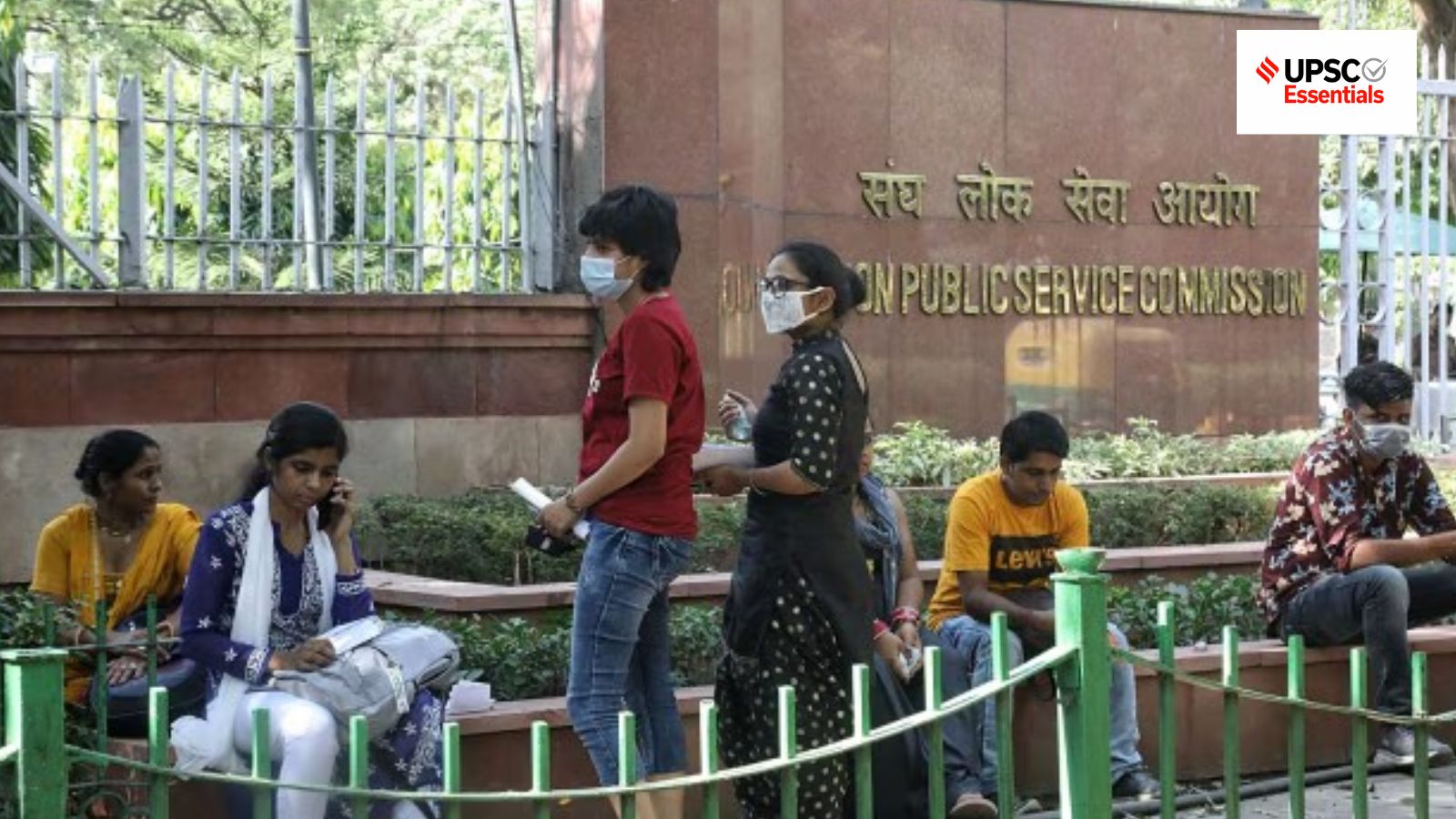 UPSC Ethics paper 2024 challenged aspirants with contemporary issues (file image)
UPSC Civil Services Mains Exam’s Ethics paper wasn’t a usual paper like the past year. Questions in section A challenged candidates to apply ethics to contemporary issues and prove that this exam isn’t about ethical knowledge but ethical competency. The length of the paper tested the examinees’ performance and smart approach to questions.
UPSC conducted General Studies Paper 4, as part of the Civil Services Main Exam 2024 on September 22. There were 12 questions divided into two sections – A (theory) and B (case studies). Total marks were 250 marks and the time duration was three hours. Here’s what the paper asked:
1. The buzzword ‘Artificial intelligence’ inaugurated the ethics paper as question 1 (a). AI has been one of the most predictable topics for the ethics exam. However, UPSC didn’t keep it general and specifically asked about it in terms of administrative rational decision-making. In fact, asking specific questions from popular themes was the tone of the paper throughout. While not all aspirants would have hit the bull’s eye, surely a smart candidate would have replaced the general points with desired terms to make it look like a tailor-fit answer. Here’s the question:
The application of Artificial Intelligence as a dependable source of input for administrative rational decision-making is a debatable issue. Critically examine the statement from the ethical point of view.
2. A textbook question with a slightly elongated form became question 1 (b) of the ethics paper. For such questions, it is usually said that UPSC gives you an opportunity to explore your static rote learning in its few questions. It only hopes you don’t over-explore or overcook as it spoils the taste. Here’s what UPSC asked:
Ethics encompasses several key dimensions that are crucial in guiding individuals and organizations towards morally responsible behaviour. Explain the key dimensions of ethics that influence human actions. Discuss how these dimensions shape ethical decision-making in the professional context.
3. What are the ethical considerations of the powerful nations in today’s international arena to stop the continuation of ongoing conflicts? With international ethics at its core, UPSC’s ethics paper connected theoretical topics with contemporary issues. So it’s not just enough to read the ongoing war news from the World page of your newspaper and update your current affairs news but also go beyond the headlines and add ethical dimension to your thinking. Here’s question 2 (a):
It is not enough to talk about peace, one must believe in it; and it is not enough to believe in it, one must act upon it. In the present context, the major weapon industries of the developed nations are adversely influencing continuation of wars for their own self-interest all around the world. What are the ethical considerations of the powerful nations in today’s international arena to stop the continuation of ongoing conflicts?
4. Do you remember Gandhi’s famous quote on greed and need? Now add contemporary issues like global warming and climate change to it. That is not all. To upgrade the standard of the theme, ask for solutions as suggestions. That is question 2 (b) for you. The old question in a new avatar. You would have recognised the question as one related to Environmental ethics. So, while UPSC decided to upgrade its question, were you able to do the same in your answer? The question exactly was:
Global warming and climate change are the outcomes of human greed in the name of development, indicating the direction in which extinction of organisms including human beings is heading towards the loss of life on Earth. How do you put an end to this to protect life to bring equilibrium between society and the environment?
5. Continuing with its previous trend, UPSC asked candidates to discuss three medium to easy quotes of Vivekanand, Sardar Patel and Kant in its Question 3. Simpler to understand, the major challenge in such quotes is to elaborate and reach a respectable word limit. And in that sense it is tough. But who is asking you to write exactly 150 words for each? Stretching your answers won’t reflect in your marks. So, the quotes were:
“Learn Everything that is Good from Others, but bring it in, and in your own way absorb it; do not become others.” — Vivekananda
“Faith is of no avail in the absence of strength. Faith and strength, both are essential to accomplish any great work” — Sardar Vallabhbhai Patel
“In law a man is guilty when he violates the rights of others. In ethics he is guilty if he only thinks of doing so” — Immanuel Kant
6. Question 4 especially part b must have taken some time to understand. The concept of justice seems so easy in the definition. Isn’t it? But this is UPSC, it just doesn’t ask you to explain but also attest your statements with suitable examples. Hope you neither went haywire nor wasted a lot of time pondering over something which is going to be a general answer anyway. If you wrote well, pat your back. UPSC asked:
The concept of Just and Unjust is contexual. What was just a year back, may turn out to be unjust in today’s context. Changing context should be constantly under scrutiny to prevent miscarriage of justice. Examine the above statement with suitable example. Q4 (a)
Story continues below this adMindless addiction to Form, ignoring the Substance of the matter, results in rendering of injustice. A perspective civil servant is one who ignores such literalness and carries out true intent. Examine the above statement with suitable illustrations. Q4 (b).
7. Interestingly, Question 5 (a) looked simple at face value until you reached its end. Everyone knows the difference between a code of conduct and a code of ethics. But can you think of a suitable model for a code of ethics? Now that is a great challenging question. UPSC wants thinking administrators, at least this paper tells us that. Remember, ethics is not simple reading. It is becoming. UPSC asked:
The Code of Conduct and Code of Ethics are the source of guidance in public administration. There is code of conduct already in operation whereas code of ethics is yet not put in place. Suggest a suitable model for code of ethics to maintain integrity, probity and transparency in governance.
8. Before you could think that current affairs have less relevance in the theory part of ethics, here is question 5 (b) on the new law, Bhartiya Nyaya Sanhita to discuss in the light of justice, equality, and impartiality. We wish you read newspapers seriously and connected polity topics with ethics too. UPSC smartly connected the dots. Did you? This is exactly what UPSC asked:
The soul of new law, Bhartiya Nyay Sanhita (BNS) is Justice, Equality and Impartiality based on Indian culture and ethos. Discuss this in the light of major shift from a doctrine of punishment to justice in the present judicial system.
9. Question 6 of the theory section focussed on the challenges and efficiency of female public servants and Mission Karmayogi for civil servants.
UPSC informed the aspirants in its question that the number of women in public service has been steadily increasing over the years. It expected candidates to catch the keywords from the question such as ‘Indian culture’, ‘gender identity’, ‘probity’ and ‘efficiency’. This wasn’t a very difficult question if you were reading editorials of newspapers. Why? Well, though not directly addressing the news, this UPSC question must have reminded the candidates of some recent incidents that made headlines in the newspapers. Any hint?
Here’s what UPSC asked:
In Indian culture and value system, an equal opportunity has been provided irrespective of gender identity. The number of women in public service has been steadily increasing over the years. Examine the gender specific challenges faced by female public servants and suggest suitable measures to increase their efficiency in discharging their duties and maintaining high standards of probity.
In the question related to Mission Karmayogi, the keywords from the mission’s website could have helped you to weave an interesting and structured answer. But that isn’t enough. The two phrases: ‘enhancing productivity’ and ‘delivering the service at the grassroots level’ should have been the core of your answers. How? Some examples could have been used to support your general statements. Anyway, this is what UPSC asked:
Mission Karmayogi is aiming for maintaining a very high standard of conduct and behaviour to ensure efficiency for serving citizens and in turn developing oneself. How will this scheme empower the civil servants in enhancing productive efficiency and delivering the services at the grassroots level?
— The trend in the case studies almost remained the same with interesting themes. The case studies were a mix of short and long forms but lucidity assured comfortability. Though the pressure in the examination hall due to the lengthy section A must have tested candidates’ cool-mindedness and sharp eye while solving the case studies.
— The themes of the case study had many innovation this year. Technology vs Environmental ethics, Terrorism and Unemployed youth, Conflict of interest and favouritism in medical ethics, Naxalism, Water crisis , Data ethics and drug ethics.
— Questions of case studies were divided into 3 to 4 sub-parts that were indicative of writing precisely and to the point. The constant sub-questions in all case studies were- course of action, administrative and ethical dilemmas, listing options or steps, evaluation of steps/options, action plan and consequences of the action.
1. As the syllabus is limited, the repetition of themes and topics will keep occurring. However, this time UPSC successfully linked many contemporary topics with ethics. So, next time be careful when you are taking down notes from the newspaper. Everything should be seen from ethical lens too.
2. It is not just enough to collect the definitions and examples related to topics but also contextualising as per the question’s demand is a must.
3. A lengthy section in a paper like section A is a test of patience, a sharp eye, speed, time management and good writing skills of the candidate.
4. Newspaper editorials and dedicated sections covering ethics should be referred, without which either you will skip the question or won’t have an edge in your answer writing.
5. Just a few months of preparation after prelims for this paper is not enough. Ethics paper requires a great amount of practice, reading good sources, having variety in answers and even more amount of wisdom.
6. UPSC is upgrading its quality of questions. You too must think on improving your quality of preparation and answers.
Finally, the difficulty level of the ethics paper advanced from the previous year due to quality of questions in Section A. What also remained challenging was completing this lengthy paper on time. The Ethics paper should be taken seriously to score high. Expect UPSC to experiment more with new variety of questions for such a paper with a limited syllabus in times to come. Having said that, one doesn’t need to be a scholar of ethics but one definitely needs to have an ethical approach and attitude to solve various issues in society as a future officer or simply as a good citizen. This is clearly hinted in not only the questions of this year’s paper but also in the instructions of the syllabus of the Ethics paper. Check yourself:
“This paper will include questions to test the candidates’ attitude and approach to issues relating to integrity, probity in public life and his problem solving to various issues and conflicts faced by him in dealing with society. Questions may utilise the case study approach to determine these aspects.”
(The syllabus of the Ethics paper begins as mentioned above.)
Subscribe to our UPSC newsletter and stay updated with the news cues from the past week.
Stay updated with the latest UPSC articles by joining our Telegram channel – Indian Express UPSC Hub, and follow us on Instagram and X.
For your answers, queries and suggestions write at manas.srivastava@indianexpress.com

Read UPSC Magazine