21 min read

© IE Online Media Services Pvt Ltd



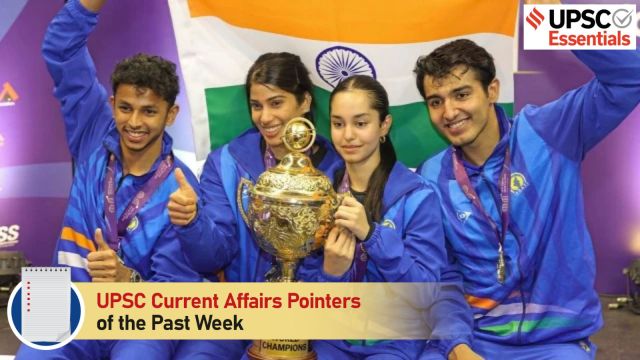 India scripted history, clinching its maiden Squash World Cup title to become the first Asian country to achieve the feat. (Photo Credit: SportsTN - X)
Every Monday, we bring you UPSC Current Affairs Pointers—a concise, exam-focused guide to help you stay ahead in your Prelims and Mains preparation.
If you missed the UPSC Current Affairs Pointers of the past week | December 8 to December 14, 2025, read here.
— The second World Health Organization (WHO) Global Summit on Traditional Medicine was jointly organised by the WHO and the Ministry of Ayush, Government of India, from 17 to 19 December 2025 under the theme “Restoring balance: The science and practice of health and well-being” at the Bharat Mandapam, New Delhi.
— The summit witnessed intensive deliberations among global leaders, policymakers, scientists, practitioners, Indigenous knowledge holders and civil society representatives on advancing equitable, sustainable, and evidence-driven health systems.
— The WHO Traditional Medicine Global Library was announced at the summit. It constitutes a new global information resource aimed at strengthening traditional, complementary and integrative medicine (TCIM) within health systems. It is grounded in the Gujarat Declaration (2023) and aligned with WHO’s Global Traditional Medicine Strategy 2025–2034.
— The President Droupadi Murmu, inaugurated the 1066th Jayanthi celebrations of Adi Jagadguru Sri Shivarathreeshwara Shivayogi Mahaswamiji at Malavalli, Mandya district, Karnataka
— According to Sutturmath’s website, “Adi Jagadguru Sri Shivarathreeshwara Shivayogi Mahaswamiji was a great saint of the 10th century A D. He came into fame while restoring peace between two warring kings, Rachamalla IV of Gangas of Talakadu and Rajaraja Chola I of the Chola dynasty.”
— “Adi Jagadguru Shivayogi Swamiji advised both kings to abandon war and choose peace. As a result, both the kings reached out to each other to extend a hand of friendship.”
— “After this incident, King Rajaraja Chola requested Shivayogi Swamiji to set up a Math to celebrate this event. On his request, Adi Jagadguru Shivayogiji established the Math on the banks of the River Kapila at Suttur, near Nanjangud Taluk of the Mysuru district.”
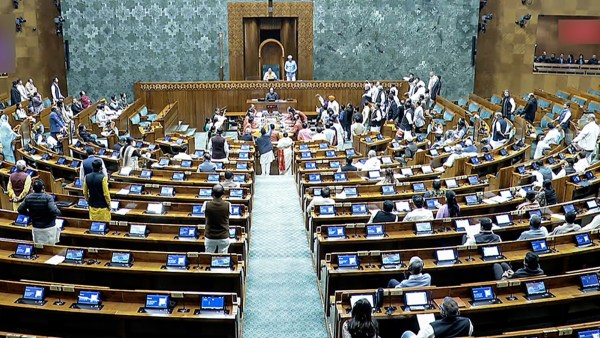 the Lok Sabha on Thursday passed the Viksit Bharat-Guarantee for Rozgar and Ajeevika Mission (Gramin) Bill, 2025 (VB-G RAM G), which seeks to repeal MGNREGA, by a voice vote. (File Photo)
— Both the Houses of the Parliament have cleared the VB-G RAM G Bill which seeks to replace the Mahatma Gandhi National Rural Employment Guarantee Act (MGNREGA) of 2005.
— The VB-G RAM G Bill provides for the issuance of Gramin Rozgar Guarantee Cards to an adult member of every rural household willing to undertake unskilled manual work.
— The new Bill proposes to raise the number of guaranteed wage employment days in a financial year from 100 to 125.
— Unlike the MGNREG Scheme (MGNREGS), which was primarily funded by the Centre, the new Bill proposes joint funding between the Centre and the state, which will likely lead to a higher financial burden on states.
— The Bill proposes a 60-day pause in the scheme during the peak agricultural seasons of sowing and harvesting, a move said to be aimed at ensuring farm labour availability.
— The Lok Sabha has passed the Sabko Bima Sabko Raksha (Amendment of Insurance Laws) Bill, 2025, that seeks to reform India’s insurance framework through changes in the Insurance Act, 1938, the Life Insurance Corporation Act, 1956, and the IRDAI Act, 1999.
— The amendment will increase the FDI limit in Indian insurance companies from 74% to 100% to attract investment, facilitate technology transfer, increase insurance penetration and social protection.
— The requirement of Net Owned Funds for foreign reinsurers will also be reduced from Rs 5,000 crore to Rs 1,000 crore.
— The Delhi government has announced that no non-BS VI private vehicle registered outside Delhi is allowed to enter the Capital from 18th December, 2025. Cars found not to be compliant are to be stopped from entering Delhi and fined Rs 20,000. Even cars that are BS-VI compliant can be fined Rs 10,000 if found without a valid Pollution Under Control Certificate (PUCC).
— Bharat Stage emission norms are India’s standards for regulating pollution from motor vehicles. They set legal limits on exhaust emissions of pollutants such as carbon monoxide, hydrocarbons, nitrogen oxides and particulate matter. The norms are based on European emission standards and apply to all new vehicles sold in the country.
— Each successive BS tightens these limits, pushing manufacturers to adopt cleaner engine technologies, better exhaust treatment systems and cleaner fuel.
— BS II norms were introduced in the Capital in 2001, BS III in 2005 and BS IV in 2010 – all several years before the nationwide rollout, as per the Central Pollution Control Board.
— BS VI norms were implemented in Delhi-NCR ahead of the rest of India and became mandatory across the country in April 2020.
|
Benefits of BS VI norms Under the BS-VI regime, full modern exhaust after-treatment systems (technologies fitted to a vehicle’s exhaust), such as diesel particulate filters (DPFs) and selective catalytic reduction (SCR) units are mandatory. These systems function as filters and chemical reactors within the exhaust stream, breaking down or trapping harmful gases and particles before they are released into the air. Story continues below this ad For instance, catalytic converters convert toxic gases such as carbon monoxide and nitrogen oxides into less harmful substances like carbon dioxide, nitrogen and water vapour, while DPFs physically trap fine soot particles emitted by diesel engines, cutting particulate matter emissions by over 90%. Hence, BS VI vehicles can cut down particulate matter emissions, as well as other emissions significantly. |
— PM Modi goes on a three-country tour to Jordan, Ethiopia and Oman from December 15 to 18.
— In the first leg of his trip, Modi visited Jordan from December 15 to 16 at the invitation of King Abdullah II bin Al Hussein to review the entire gamut of bilateral relations and exchange perspectives on regional issues.
— India imports a significant amount of fertilizer from Jordan— making it a key part of India’s food security push — and has also invested in the potash and phosphate sectors there. There is further potential for such investments to secure India’s requirements.
— This year also marked the 75th anniversary of the establishment of diplomatic ties between the two countries.
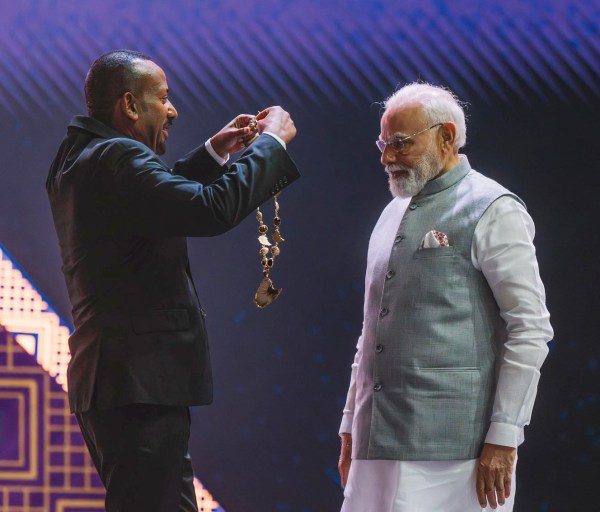 Addis Ababa [Ethiopia], Dec 17 (ANI): Prime Minister Narendra Modi being conferred with Ethiopia’s prestigious honour ‘The Great Honour Nishan of Ethiopia’ by Ethiopian Prime Minister, Abiy Ahmed Ali, during an award Conferment Ceremony at the Addis International Convention Centre, in Addis Ababa on Tuesday. (@PMEthiopia X/ANI Photo)# India- Ethiopia
— Prime Minister Narendra Modi and the Ethiopian President Abiy Ahmed Ali agreed to elevate the bilateral ties to a strategic partnership.
— Modi planted a sapling at the Ethiopian Parliament, as part of ‘Ek ped maa ke naam’ and Ethiopia’s Green Legacy initiative.
— He also laid a wreath at the Adwa Victory Monument, which stands as a powerful symbol of Ethiopia’s courage, unity and unwavering spirit. The memorial is dedicated to the brave Ethiopian soldiers who gave the ultimate sacrifice for the sovereignty of their nation at the Battle of Adwa in 1896.
— The Prime Minister of Ethiopia, H.E. Dr. Abiy Ahmed conferred the highest award of Ethiopia the ‘Great Honor Nishan of Ethiopia’ upon Prime Minister Shri Narendra Modi for his contribution towards strengthening India-Ethiopia partnership and for his visionary leadership as a global statesman.
— According to the Department of Commerce, India’s total trade with Ethiopia stood at US $ 550.19 million during 2024- 2025. During this period, India’s exports to Ethiopia were US $ 476.81 million and imports were US $ 73.38 million.
— India is the second-largest trading partner for Ethiopia.
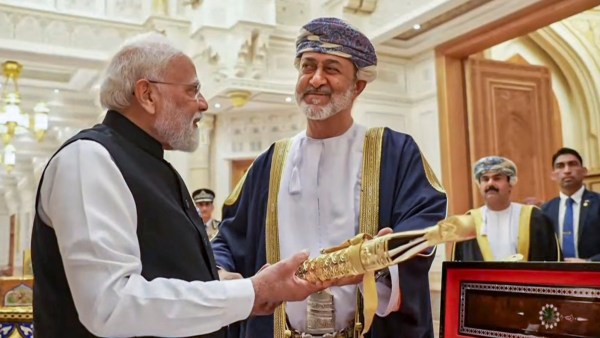 Prime Minister Narendra Modi being conferred with the Order of Oman, the sultanate’s distinct civilian honour, by Sultan Haitham bin Tarik in Muscat, Thursday. (PTI)
— In the final leg of the three-nation tour, PM Modi signed the Comprehensive Economic Partnership Agreement, or CEPA, with Oman.
— It is the second trade deal with a Gulf Cooperation Council (GCC) country after the UAE. The recent trade deal is in an effort to expand market access for its exporters in the West Asian market at a time when steep tariffs in the US market are hurting trade and investments.
— Under the deal, Oman has offered zero-duty access on 98 per cent of its tariff lines that could result in $2 billion worth of exports in the near term.
— Besides CEPA, the two sides signed five pacts on maritime heritage and museums, agriculture, higher education, food innovation and maritime cooperation.
— India imported roughly $6.6 billion of goods from Oman in fiscal 2025, dominated by crude oil, liquefied natural gas and fertilisers, alongside chemical inputs such as methanol and ammonia.
— Sultan Haitham bin Tarik conferred upon Prime Minister Modi the Order of Oman award for his “exceptional contribution to India-Oman ties and his visionary leadership”.
— Days after his two-day official visit to New Delhi on December 4-5, Russian President Vladimir Putin has signed RELOS, a major military cooperation agreement with India, into federal law.
— The agreement sets out procedures governing the movement of military formations, warships, and military aircraft between Russia and India, as well as the arrangements for providing logistical support to each other’s forces.
— It will facilitate the mutual use of airspace by Russian and Indian military aircraft, and has provisions related to port calls by warships of both countries.
— For India, RELOS provides an institutional framework for access to Russian air and naval bases, from Vladivostok on the Pacific to Murmansk on the Arctic, for refuelling, repairs, and maintenance, boosting operational reach and readiness, especially for Russian-origin equipment.
— RELOS is similar to existing agreements — LEMOA (Logistics Exchange Memorandum of Agreement), COMCASA (Communications Compatibility and Security Agreement), and BECA (Basic Exchange and Cooperation Agreement) — with the US.
| COMCASA, inked in 2018, permits the US to give India encrypted communications equipment and systems, allowing Indian and US military leaders and their planes and ships to communicate over secure networks in both peace and conflict.
LEMOA, inked in 2016, enables the US and Indian militaries to refuel from one another’s military bases and get supplies, spare parts, and services from each other’s land facilities, air bases, and ports. BECA facilitates the sharing of high-end military technology, including access to US geo-spatial, satellite, and drone data. |
— Britain has announced that it will rejoin the European Union’s flagship Erasmus student-exchange programme.
— British university and college students and apprentices will be able to study or train in EU countries under the programme without paying extra foreign-student fees from January 2027. In turn, students from EU countries will be able to study in Britain.
— Started in 1987, the EU’s Erasmus exchange programme (short for European Region Action Scheme for the Mobility of University Students), provides scholarships to students studying in Europe.
— The eligibility of individuals and organisations to participate in Erasmus depends on where they are based. The scheme divides eligible countries into two groups: the first being ‘Programme countries’– which include all EU members and some non-EU countries such as Turkey and Iceland. These countries can take part in the scheme in its entirety.
— The other group ‘Partner countries’–which includes India– can only take part in some parts of the Erasmus programme, and are subject to specific conditions.
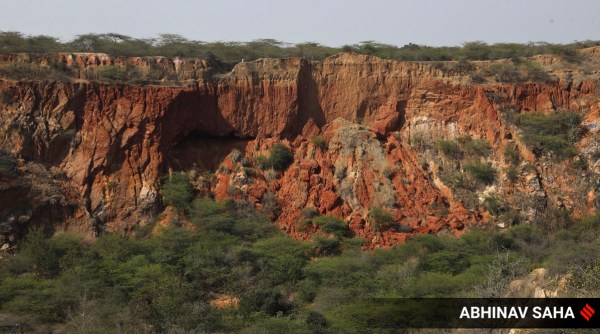 Aravali range hills in Gurgaon district. (Express Photo: Abhinav Saha, File)
— Facing protests and criticism over a new uniform definition of the Aravalli hills, which was accepted by the Supreme Court based on recommendations of a Centre-led panel, Union Environment Minister Bhupender Yadav said that it would not lead to any relaxation for mining in the range.
— On November 20, the Supreme Court accepted a uniform, elevation-based definition of the Aravalli Hills given by a Centre-appointed expert committee.
— As per the definition, the Aravali Hills is defined as any landform located in the Aravali districts, having an elevation of 100 metres or more from the local relief. While two or more Aravali Hills (as defined above) located within the proximity of 500 m from each other, measured from the outermost point on the boundary of the lowest contour line on either side, forms the Aravali Range.
— Based on internal assessments of Forest Survey of India, the Indian Express reported that barely 8.7 per cent or 1,048 out of 12,081 Aravalli Hills were 20m or higher, thus leaving out a vast number of hillocks out of protection’s scope.
— The Indian Navy has commissioned its second MH 60R helicopter squadron, INAS 335, at INS Hansa in Goa on 17 December 2025. The squadron has been nicknamed ‘Ospreys’ after the fish-hunting bird of prey.
— The first squadron of these submarine-hunting helicopters, Indian Naval Air Squadron 334, was inducted at INS Garuda in Kochi in March 2024.
— The helicopter is designed for a wide range of operations, including anti-submarine warfare (ASW), anti-surface warfare (ASuW), search and rescue (SAR) missions, and medical evacuation (MEDEVAC).
— It can be used for vertical replenishment (VERTREP), a naval logistics operation in which supplies are transferred by helicopter between ships at sea or from shore to ship without the ships having to dock or come next to each other.
— The induction coincides with an important milestone as the year 2025 marks 75 years since the Government of India approved the formation of a Fleet Air Arm for the Navy.
|
Mains Value Addition The night’s watch of Laghat: On November 15, Chief Minister Sukhvinder Singh Sukhu launched a ‘Chitta-Free Himachal’ campaign, urging gram panchayats and other bodies to come forward to fight the drug problem. Under the campaign, police teams have been conducting inspections of deserted, isolated and semi-public locations vulnerable to drug-related activities, including forest patches, abandoned buildings, parking areas, riverbanks, old bus stands and garage sheds. Laghat village falls under the Barmana gram panchayat bordering Punjab, which is one of the 234 panchayats identified as highly affected by the chitta (an intoxicant) menace in Himachal Pradesh by the government. Recently, the 22-member Laghat Mahila Mandal took the task of controlling it in its hands, starting with patrolling the newly constructed link road that the women believe has brought the problem to their doorsteps, between 9 pm and 1 am. The step taken by the women of Laghat village shows that everything cannot be left to the authorities alone. |
— The Indian Computer Emergency Response Team (CERT-In) has issued an advisory about an active threat campaign targeting WhatsApp users. The attack uses a new technique called GhostPairing, which malicious actors exploit to hijack WhatsApp accounts.
— GhostPairing allows cybercriminals to take complete control of WhatsApp accounts without needing passwords or SIM swaps.
— India has achieved a major milestone with the launch of DHRUV64, the country’s first homegrown 1.0 GHz, 64-bit dual-core microprocessor.
— It is developed by the Centre for Development of Advanced Computing (C-DAC) under the Microprocessor Development Programme (MDP).
(Just FYI: UPSC has consistently included questions on health and diseases in its examinations over the years. For instance, in 2014, a question about the Ebola virus appeared in the Prelims, and in 2017, a question about the Zika virus was featured. Therefore, it is crucial to stay updated on diseases that are currently in the news.)
— The Madhya Pradesh government has constituted a state-level inquiry team to probe how five children with thalassemia contracted HIV during blood transfusions has found major lapses, right from maintaining a record of donors to failing to conduct HIV tests properly. According to the preliminary report submitted by the inquiry team, serious irregularities were found at the blood centre.
— Thalassemia is an inherited genetic hemoglobinopathy, a group of disorders that lead to defective production of haemoglobin synthesis in the body. This results in low production of red blood cells and a lack of oxygenated blood supply to the body parts.
— Thalassemia is mainly classified into two types: Alpha-thalassemia and Beta-thalassemia. The main difference between these two is the involvement of alpha chain and beta chain production (of hemoglobin), respectively, and clinical presentation.
(Just FYI: Noting historical personalities’ anniversaries aids UPSC prep. UPSC often includes such personalities in questions, so revisiting their lives refreshes your static syllabus.)
— The United Nations General Assembly has approved former Iraqi President Barham Salih as the next head of the U.N. refugee agency, its first from the Middle East since the late 1970s.
— Salih, 65, will begin a five-year term as the chief of one of the major UN agencies, the UN High Commission for Refugees, in January.
— Formally known as the Office of the High Commissioner for Refugees, UNHCR was established by the General Assembly of the United Nations in 1950 in the aftermath of the Second World War to help the millions of people who had lost their homes. It is guided by and acts as the guardian of the 1951 Refugee Convention and its 1967 Protocol.
— Under the 1951 UN Convention on the Status of Refugees and the subsequent 1967 Protocol, the word refugee pertains to any person who is outside their country of origin and unable or unwilling to return owing to well-founded fear of persecution for reasons of race, religion, nationality, membership of a particular social group or political opinion.
— Notably, India is not a signatory to the 1951 UN Convention or the 1967 Protocol. Nor does India have a refugee policy or a refugee law of its own.
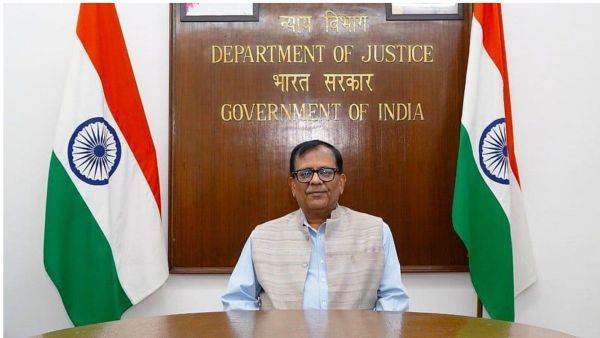 Former IAS officer Raj Kumar Goyal (Pic Credit: X/GOI
— Former Indian Administrative Service (IAS) officer Raj Kumar Goyal was sworn in as Chief Information Commissioner (CIC) in the Central Information Commission by President Droupadi Murmu.
— The Central Information Commission is headed by the CIC and can have a maximum of 10 Information Commissioners. At present, Anandi Ramalingam and Vinod Kumar Tiwari are the Information Commissioners.
— Internationally renowned sculptor Ram V Sutar passed away on 18th December, leaving behind a distinguished body of work, from the Statue of Unity to Mahatma Gandhi’s statue at Parliament. He was 100.
— Sutar designed the Statue of Unity in Gujarat–the world’s tallest statue at 182 metres—and also won acclaim for his Mahatma Gandhi bust, which was replicated and sent to 450 cities across India and outside.
— Among his other notable works are the 45-foot-tall Chambal monument, the seated Mahatma Gandhi statue installed outside the old Parliament building in New Delhi, and its larger replica at the Vidhana Soudha in Karnataka. He also created the 108-foot-tall Kempe Gowda statue at Bengaluru airport.
— Sutar was awarded Padma Shri in 1999 and the Padma Bhushan in 2016. In October 2018, he was honoured with the Tagore Award for Cultural Harmony, and in November 2025, he was conferred with the Maharashtra Bhushan, the state’s highest civilian honour, in recognition of his lifetime of artistic achievement.
(Just FYI: With the unpredictability of the UPSC examinations and questions like the ICC World Test Championship question 2021, you can’t be sure of anything. It is wise to know what it is and not go into too much detail.)
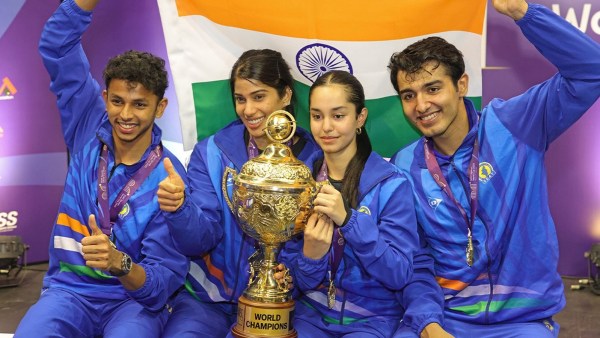 Seeded second in the tournament, India clinched the title without losing a single tie. (Photo Credit: SportsTN – X)
— India scripted history, clinching its maiden Squash World Cup title to become the first Asian country to achieve the feat after overwhelming Hong Kong 3-0 in the summit clash.
— The historic win at the Express Avenue Mall here marked an improvement on India’s previous best finish of a bronze medal at the 2023 edition.
— The triumph also made India only the fourth country after Australia, England, and Egypt to win the Squash World Cup title.
— South Korea’s An Seyoung won the BWF World Tour Finals title, winning her 11th international title of 2025. She defeated Wang Zhiyi in Hangzhou, People’s Republic of China.
— She became the first badminton player to earn over USD 1 million in prize money in a season. She clinched the BWF World Tour Finals title which had a reward of USD 240,000, that took her total prize money for the year to US $ 1,003,175.
— France’s Christo Popov beat world champion Shi Yuqi 21-19 21-9 to win the men’s title and became the first French player to win the year-ending championships.
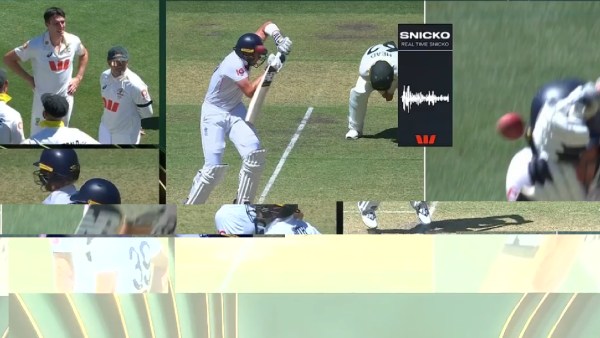 The Jamie Smith incident where the Snicko gave him a lifeline, much to the anger of Australia. (Screengrab via Fox Sports Australia)
—During the Ashes test between England and Australia, Snickometer technology, commonly known as ‘Snicko’, has been the point of controversy.
— The Snickometer is a decision-making technology system used to determine whether a batter has hit the ball during a video review.
— The technology shows replays in frame-by-frame pictures with a waveform created to display if there has been contact between bat and ball.
(Note: The best way to remember facts for UPSC and other competitive exams is to recall them through MCQs. Try to solve the following questions on your own.)
(1) Ram Vanji Sutar, an Indian sculptor who was awarded the Padma Shri and the Padma Bhushan, designed which of the following?
(a) The Statue of Unity
(b) Gateway of India
(c) Rashtrapati Bhawan
(d) India Gate
(2) Among the following who are eligible to benefit from the “Mahatma Gandhi National Rural Employment Guarantee Act”? (UPSC CSE 2011)
(a) Adult members of only the scheduled caste and scheduled tribe households.
(b) Adult members of below poverty line (BPL) households.
(c) Adult members of households of all backward communities.
(d) Adult members of any household.
(3) Consider the following statements about the UN High Commission for Refugees:
1. It was established by the General Assembly of the United Nations in 1950 in the aftermath of the Second World War.
2. It is guided by the 1951 UN Convention on the Status of Refugees and the subsequent 1967 Protocol.
3. India is not a signatory to the 1951 UN Convention.
Which of the above mentioned statements are correct?
(a) 1 and 2 only
(b) 2 and 3 only
(c) 1 and 3 only
(d) 1, 2 and 3
| Prelims Answer Key |
| 1. (a) 2. (d) 3. (d) |
For your suggestions and feedback, write to khushboo.kumari@indianexpress.com
Subscribe to our UPSC newsletter. Stay updated with the latest UPSC articles by joining our Telegram channel – IndianExpress UPSC Hub, and follow us on Instagram and X.
🚨 Click Here to read the UPSC Essentials magazine for December 2025. Share your views and suggestions in the comment box or at manas.srivastava@indianexpress.com🚨

Read UPSC Magazine