© IE Online Media Services Pvt Ltd
Latest Comment
Post Comment
Read Comments
 9 min read


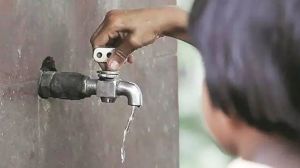
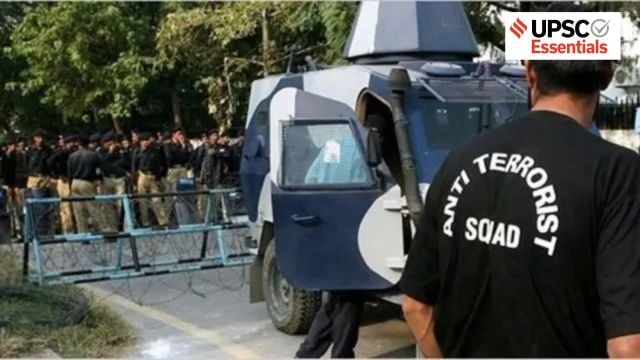 The ongoing investigation into an alleged ricin terror plot draws attention to the reality of bioterrorism. (representational image)
— Lakshmy Ramakrishnan
The deliberate release of biological organisms or toxins that cause harm to or kill humans, plants, or animals by state or non-state actors could be catastrophic. The ongoing investigation into an alleged ricin terror plot highlights the reality of bioterrorism. It also draws attention to the urgency of strengthening India’s preparedness to address such threats.
The Biological Weapons Convention (BWC), which marks its 50th year since entering into force on 26 March 1975, remains a bulwark against the deliberate use of life science technologies.
But today, the bioterror threat landscape is changing rapidly. A shifting international security environment, increased availability of biotechnologies, and the democratisation of technical knowledge through artificial intelligence (AI) have all contributed to this.
At this juncture, India is well poised to cement its role as the leader of the Global South to champion the modernisation of biosecurity norms. Let’s understand what are the biological weapons, why does the BWC struggle with dual-use threats, and how is India uniquely positioned to champion Global South interests in modernising the BWC and ensuring its uniform implementation?
The Biological Weapons Convention is the first multilateral disarmament treaty that banned an entire class of weapons of mass destruction (WMDs). The treaty prohibits the development, production, acquisition, stockpiling, transfer, and use of biological weapons.
According to the United Nations Office for Disarmament Affairs (UNODA), the BWC presently has 189 states parties. Biological weapons consist of a weaponised agent and a delivery mechanism. A weaponised agent can be any disease-causing organism or toxin that can be modified to make it more harmful, lethal or suitable for mass dissemination. Delivery systems can be in the form of constructed missiles, hand grenades, rockets, spray-tanks, sprays, brushes, or injection systems. BWC bans the development of both weaponised agents and delivery systems.
Although the BWC text does not explicitly prohibit “use” of biological weapons, the Final Declaration of the 1996 Treaty Review Conference reasserted that any “use” of these weapons is still considered to be a violation of the convention. States possessing weaponised agents or delivery systems have nine months from entry into the treaty to divert their stockpiles for peaceful purposes or to destroy them.
A major limitation of the BWC is the lack of a formal verification system to monitor and assess compliance, as it does not have an implementing body. Instead, it has an Implementation Support Unit that provides administrative support to state parties. A system of Confidence-Building Measures (CBMs) was also introduced in 1987 to:
1. Reduce or prevent the occurrence of ambiguities and suspicions surrounding biological science research.
2. Encourage the exchange of information on infectious disease outbreaks.
3. Declare vaccine production facilities.
4. Improve international cooperation over peaceful biological sciences.
These measures were further enhanced and expanded in 1991. Since 1992, every state party has been under a politically binding commitment to file national CBM reports every year to the BWC Implementation Support Unit. A review of the convention’s implementation and CBMs is conducted every five years.
States are encouraged to follow CBMs, including domestic implementation measures, consult and cooperate among state parties, and lodge complaints with the United Nations Security Council (UNSC) in case of any violation.
There were multiple attempts to incorporate a verification regime in the BWC, but these efforts faltered due to resource constraints and the potentially intrusive nature of inspections and risks to national security or commercial interests. The absence of verification has created persistent ambiguity in assessing compliance and has limited the treaty’s ability to address growing dual-use risks.
Presently, the BWC faces mounting pressure from the rapid advances made in science and technology, and shifting geopolitical dynamics. Amid increasing globalisation of research as well as countries adopting new and emerging life science technologies such as gene-editing and synthetic biology, and other technologies that converge with fields like AI, concerns about dual-use potential are also growing.
Dual-use research of concern refers to research that is intended for beneficial and peaceful purposes, which could nonetheless be misapplied – either accidentally or deliberately – to cause harm.
Rapid innovation, reduced oversight, and widespread availability of technical knowledge facilitated by AI have lowered the barriers to repurposing or misusing life science technologies. Oversight is fragmented across the world, impeding regulation. Further, the Covid-19 pandemic fuelled a global expansion of high-containment laboratories, but it also raised concerns over uneven biosafety standards.
Integrating scientific expertise into international decision-making is critical for the adaptation of the BWC to contemporary challenges. In this context, science diplomacy offers a promising avenue. An institutional mechanism to provide scientific advice to state parties would help ensure that disarmament considerations keep pace with rapid scientific and technological changes. Such a mechanism would also raise awareness within the scientific community of the security implications of evolving life science technologies and help reinforce accountability through a voluntary code of conduct.
Moreover, amid growing geopolitical rivalries and the changing nature of warfare, the appeal of biological weapons may become attractive. It makes robust trust-building and preventive measures more critical than ever. In addition, anti-science rhetoric and claims of covert biodefence activities — ranging from Russia’s allegations of a US-funded bioweapons labs in Ukraine to suspicions surrounding former Soviet-era bioweapons laboratories — further heightened these risks. The challenge is not only the spread of misinformation but the politicisation of biological weapons themselves.
Such allegations, often detached from evidence, erode trust, distort threat perceptions, and gradually weaken the long-standing global taboo against biological weapons. Therefore, restoring this taboo is essential. States need to be disincentivised from pursuing or legitimising offensive biological programmes, and international mechanisms need to be strengthened to prevent great-power contestation from spilling into the life sciences domain.
What is needed instead is a transparent, depoliticised dialogue architecture — one that rebuilds confidence, reduces mistrust, and ensures that scientific research is safeguarded rather than weaponised in geopolitical competition.
India’s position in the BWC landscape is marked by a paradox: it is widely regarded as a responsible international actor with a strong non-proliferation record, yet it lacks a comprehensive, coherent national biosecurity framework. Responsibilities for biosecurity remain fragmented across ministries and specialised agencies, and the conceptual distinction between biosafety and biosecurity remains underdeveloped in policy and regulatory circles.
At the same time, India’s membership in the Australia Group – an informal group that plays a crucial role in restricting the transfer of sensitive biological materials, equipment, and technologies that could be diverted for hostile purposes – since 2018 and consistent diplomatic support for the BWC give it significant credibility, particularly among countries of the Global South.
Although India has domestic regulatory gaps, it enjoys international trust. Thus, it is uniquely placed to champion Global South interests in modernising the BWC and ensuring its uniform implementation. The Global South holds a disproportionate threat from naturally occurring biological threats – owing to the intersection of climate change and anthropogenic factors driving the emergence and re-emergence of infectious disease outbreaks – as well as accidental and deliberate ones.
Delhi as a leading voice pushing for a modern, resilient BWC
India can lead South–South capacity-building platforms on implementing biosafety and biosecurity standards, use its experience with the Australia Group to help partner countries innovate responsibly and prevent misuse, and convene regional mechanisms to build trust-based approaches to dual-use governance.
The BWC remains the cornerstone for ensuring international cooperation to prevent the use of biological weapons and, by extension, to safeguard peace and security. The moral and legal imperative that the treaty provides serves as the singular guardrail to guarantee that innovation in life science technologies can occur unabatedly, while ensuring safety and responsible use.
At this juncture, there is an opportunity for India to transform its regulatory deficits into diplomatic strength – positioning itself as the bridge between evolving global governance of life science technologies and the diverse needs of the Global South, and as a leading voice pushing for a modern, resilient BWC.
How are rapid innovations in gene editing, synthetic biology, and AI reshaping the dual-use risk landscape for biological research?
In what ways does the politicisation of biological threats—through unverified claims and narratives—erode trust and weaken the global taboo against biological weapons?
How can the international community construct mechanisms to depoliticise biological security discussions amid great-power tensions?
To what extent does India’s participation in the Australia Group enhance its influence within the BWC, particularly among Global South states?
What concrete steps can India take to transform its regulatory gaps into strategic diplomatic leverage in shaping a modernised BWC?
(Lakshmy is an Associate Fellow with Observer Research Foundation’s Centre for New Economic Diplomacy.)
Share your thoughts and ideas on UPSC Special articles with ashiya.parveen@indianexpress.com.
Click Here to read the UPSC Essentials magazine for November 2025. Subscribe to our UPSC newsletter and stay updated with the news cues from the past week.
Stay updated with the latest UPSC articles by joining our Telegram channel – IndianExpress UPSC Hub, and follow us on Instagram and X.

Read UPSC Magazine