4 min read

© IE Online Media Services Pvt Ltd



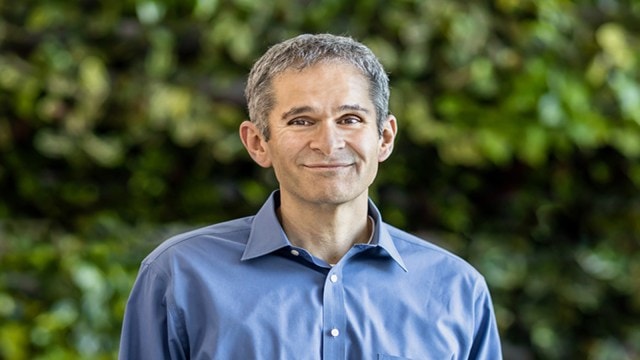 Vahdat will play an important role in ensuring Google stays ahead as the industry races to build more infrastructure to keep up with soaring customer demand for the compute required to power AI services. (Image credit: Google)
With Google doubling down on artificial intelligence and investing billions of dollars, the Mountain View, California–based tech giant has recently created an entirely new position – chief technologist for AI infrastructure, and appointed Amin Vahdat to the role. Vahdat’s position is key to Google’s success in AI and its ability to maintain leadership against heavyweights such as Microsoft and OpenAI. Google is estimated to invest anywhere between $91 billion and $93 billion in expanding its data-center and cloud infrastructure. Vahdat will play an important role in ensuring Google stays ahead as the industry races to build more infrastructure to keep up with soaring customer demand for the compute required to power AI services.
Vahdat is a veteran computer scientist with a PhD from UC Berkeley who began his career as a research intern at Xerox PARC in the early ’90s. Before joining Google in 2010, he taught at Duke University and UC San Diego and built a prolific academic record of nearly 395 published papers focused on large-scale computing. Since joining Google, he has been quietly developing and expanding the company’s AI infrastructure.
However, over the past few years, Vahdat’s work has been critical to Google’s AI ambitions. Just eight months ago, he introduced the seventh-generation Ironwood TPU at Google Cloud Next, highlighting its massive performance: more than 9,000 chips per pod and 42.5 exaflops of compute. He also emphasised that demand for AI compute has grown by a factor of 100 million in just eight years.
Vahdat’s leadership, and the work of his team, has been central to the power of Google’s AI systems, including its custom TPU chips, the ultra-fast Jupiter data-center network (now scaling to 13 petabits per second), the Borg cluster management system, and Axion, Google’s first custom Arm-based data-center CPU.
Google continues to spend and invest heavily in AI infrastructure as competition intensifies from companies like Microsoft and OpenAI. In July, the company raised its capital expenditure outlook from $75 billion to $85 billion, most of which is directed toward new data centers and related projects. Later, top Google executives said capital expenditures on AI infrastructure could rise to around $93 billion. The company has also indicated it will continue increasing its spending in 2026. All of this investment is aimed at meeting growing demand for cloud services, which saw a 46 per cent quarter-over-quarter increase in backlog during the third quarter.
Google is also securing major AI-related deals, underscoring the strong industry demand. In August, Google won a $10 billion, six-year cloud contract with Meta. Just last week, Anthropic announced an agreement giving it access to up to one million of Google’s custom-designed Tensor Processing Units (TPUs), a deal valued in the tens of billions of dollars.
Google’s investment in AI infrastructure is not only intended to expand compute capacity for clients but also to improve its own products. Google’s flagship AI app, Gemini, now has more than 650 million monthly active users, up from 450 million earlier. Google recently has also begun integrating advanced AI capabilities into its core products, including Search.