This is an archive article published on March 9, 2024
Ravichandran Ashwin is a thinking bowler, England’s batsmen will vouch for it
With figures of 5/77, Ravichandran Ashwin makes his 100th Test memorable; Betters Anil Kumble's India record for most fifer's by taking his 36th five-wicket haul
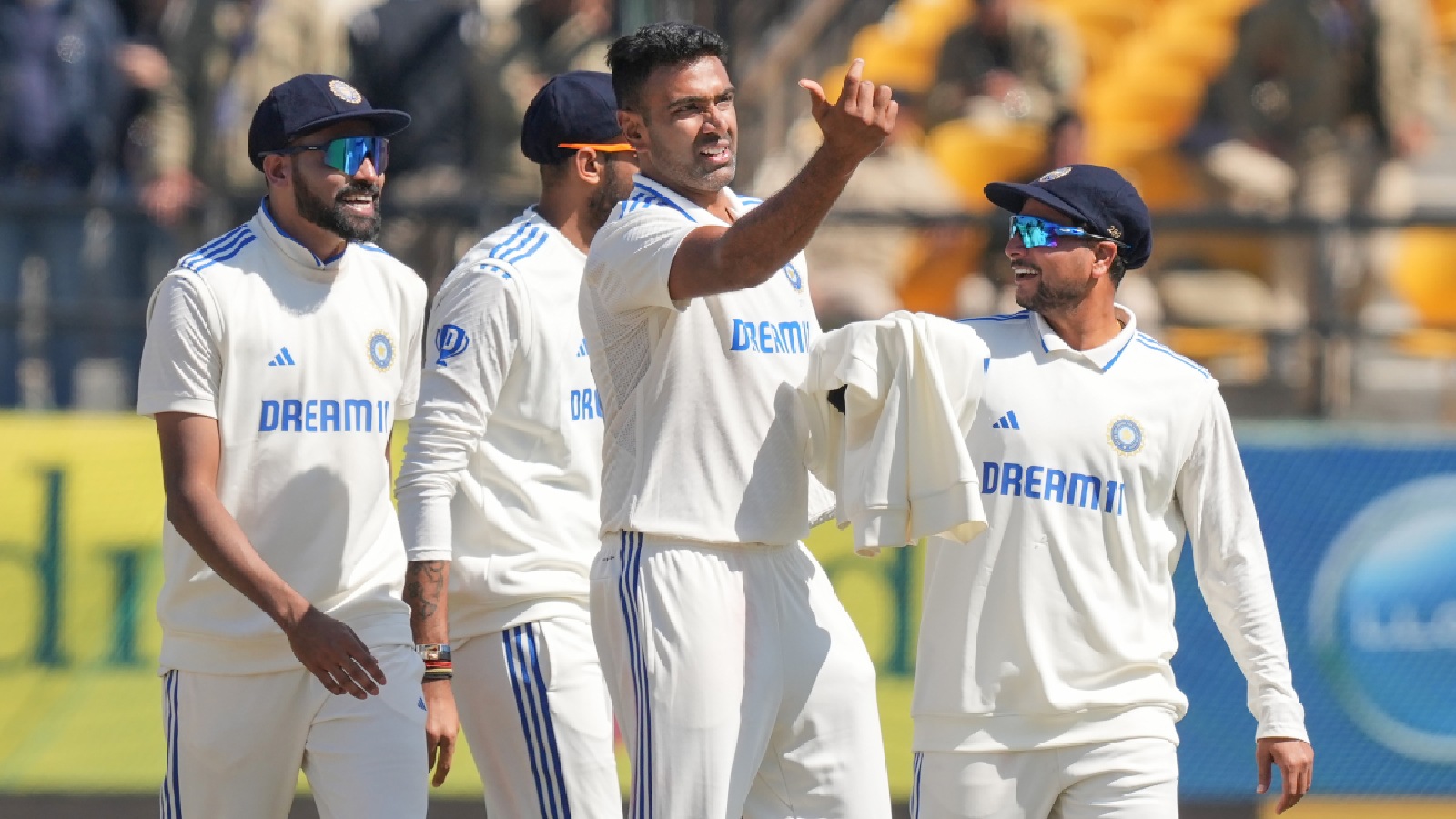
India's R Ashwin with teammates celebrates the wicket of England's Ben Stokes during the 3rd day of the fifth Test cricket match between India and England, in Dharamsala. (PTI)
It was the last over before lunch and Ravindra Jadeja, in the middle of his spell, was heading towards his bowling mark. Also changing ends were the stand-in captain Jasprit Bumrah and offie Ravichandran Ashwin, after taking three wickets from 8 overs before he was taken off. Almost casually, Ashwin would ask Bumrrah if he could have one more over from the pavilion end. He would nod his head and ask Jadeja to take position at mid-on. It would prove to be an inspired call.
In the nick of time, on the 5th ball of his 9th over, Ashwin, like many times this bright sunny morning, would once again come up with the perfect ball for the situation and the player. England captain Ben Stokes, batting on 2 and infamous for getting stuck to the crease against spinners in this series, would try to lunge forward to a slider that would sneak between the bat-pad and hit the stumps. Half of the England team was back in the hut and they still needed 100 more runs to force India to bat again.
A voracious reader, Ashwin was reading the English batsmen like some book that he knows by heart. He was second-guessing their strokes and strategies and getting it right with uncanny regularity. India’s most trusted match-winner, playing his 100th Test, got his 36th five-wicket haul, crossing Anil Kumble’s India record. His figures of 5/77 had exposed the frailty of England’s Bazballers and helped India continue their spin legacy at home.
Play the man, not the card
Before the start of the series, broadcasters had put up a video of India’s highest wicket-taker Kumble interviewing Ashwin. This was more of the high priests of Indian spin exchanging notes. Kumble would ask the younger spinner, who in the series had crossed 500 wickets, his way for preparing for Tests. His answer gave an idea about the efforts that go into the making of a world-class sportsperson.
Ashwin would start by saying that spin was like poker, you “play the man, not the card.”
“I study all the batsmen I have to bowl to. I usually watch all their dismissals, their best innings, their recent matches. I also see how they play their first few 20 balls or so, to see if they attack or grind it. I also take note of their release shot. I anticipate when it’s coming and adjust the field accordingly,” he said.
WTC 2023-25:R Ashwin’s brilliant performance with the ball led India to the win in Dharamsala.
Watching the fall of England wickets gives an idea about how Ashwin got into the mind of their batsmen. For the first time in this series, Ashwin would get the new ball. Opener Ben Duckett at the start of the innings is known to take on the bowlers. Against the spinners, he steps out and with a slightly horizontal bat, clubs them over covers. Unfortunately for him, Ashwin is also aware of it. So as Duckett moved out, he bowled a fuller ball that would hit the stumps. The procession had started.
Story continues below this ad
Ollie Pope would be Ashwin’s next victim. He was out playing his release shot. Pope tends to fall back on the fierce sweep when he is tied down or in trouble. His 23-ball stay at the crease was a struggle. Between Bumrah and Ashwin they could have got him out at least three times. Ashwin would have anticipated a sweep so he bowled one that went away from him and was pitched outside off. In the worst case of wrong shot selection, Pope swept and the top-edge went to Yashasvi Jaiswal at square leg.
Post lunch he would get wicket-keeper Ben Foakes too who would get frustrated and play a shot he shouldn’t have. This was probably the easiest of Ashwin’s wickets. With 113/5, Foakes would end his 17-balls innings with a heave-ho slog sweep. He would completely miss the straight ball that would hit the stumps. This wasn’t a planned dismissal, it was a gift from the frustrated batsman.
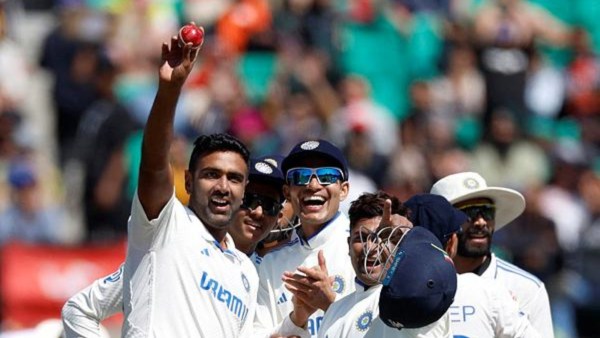
Ashwin would celebrate his fifer with a smile. Kuldeep Yadav would fetch the ball and hand it to him. Ashwin would hold the ball high and acknowledge the applause. Someone from the joyous huddle would ask him to show the ball to the silent Barmy Army stand. Rather reluctantly Ashwin would do it with a naughty smile. In the interview with Kumble, the thinking bowler who spends hours plotting for his wickets, had said that he had one regret in his long career. “I didn’t enjoy my cricket much,” he said. After 500 Test wickets, in his 100th Test, he certainly was enjoying every moment of it.
Sandeep Dwivedi is the Sports Editor at The Indian Express. He is one of India's most prominent sports journalists, known for his deep analytical insights and storytelling that often goes beyond scores and statistics to explore the human and cultural side of sports.
Professional Profile
Role: As the Sports Editor, he leads the sports coverage for the newspaper and the website.
Weekly Column: He writes "The Sports Column," a weekly feature where he provides sharp, narrative-driven perspectives on the biggest sporting news of the week.
Podcast: He is a frequent contributor to the "Express Sports" podcast (Game Time), where he discusses evolving trends in cricket and other international sports.
Areas of Expertise
While Dwivedi covers the entire sporting spectrum, his work is particularly noted in the following areas:
Cricket: He provides extensive coverage of the Indian National Team and the IPL. He frequently analyzes the leadership styles of figures like Virat Kohli, Rohit Sharma, and Gautam Gambhir. He is known for tracking the transition phases of Indian cricket and the evolution of specific players like Kuldeep Yadav and Rishabh Pant.
Athletics & Olympic Sports: He has written extensively on Neeraj Chopra’s rise in javelin, the nuances of Indian shooting, and tennis legends like Sania Mirza and Leander Paes.
Human Interest Stories: A hallmark of his writing is his focus on the struggles and backgrounds of athletes, such as the sacrifices made by Shafali Verma’s father or the "silent battles" of veteran players like Cheteshwar Pujara.
Notable Recent Work & Themes
Leadership and Dynamics: Recently, he has written about the dynamic between Gautam Gambhir, Virat Kohli, and Rohit Sharma, arguing that personal friendship is not a prerequisite for team success.
Sports & Culture: His articles often intersect with global culture, such as his deep dive into the 100-year legacy of the Harlem Globetrotters and their role as American soft power during the Cold War.
The "Grey Areas" of Sport: He often addresses sensitive topics like the mental health of cricketers post-retirement, the "outrage industry" in sports broadcasting, and the impact of fan-wars on the game.
Tenure and Experience
Dwivedi has been with The Indian Express for over three decades. This experience allows him to provide historical context to modern sporting events, often comparing current crises or triumphs to those of previous generations.
You can follow his latest work and columns on his official Indian Express Author Profile. ... Read More


 5 min read



 WTC 2023-25:R Ashwin’s brilliant performance with the ball led India to the win in Dharamsala.