


© The Indian Express Pvt Ltd
Tags:


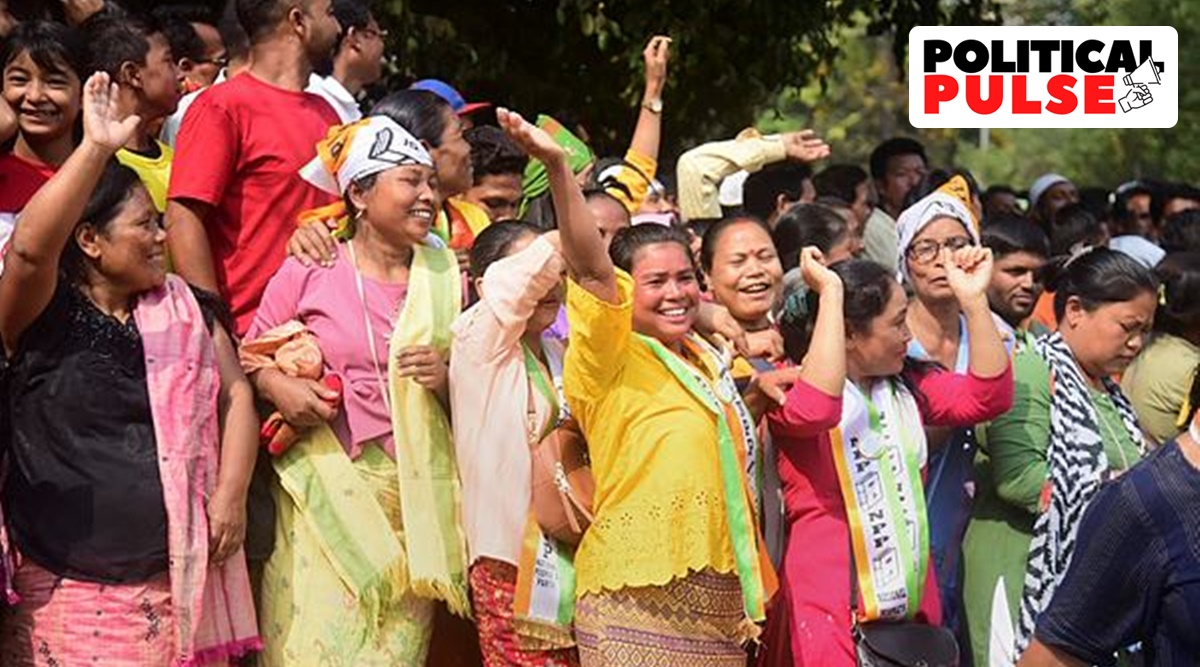
With the National People’s Party (NPP) emerging as the single-largest party in Meghalaya, it is likely to ally with the BJP or the United Democratic Party (UDP) — or maybe even both — to form a coalition government, in a repeat of proceedings five years ago.
While still falling short of the magic number in the 60-seater Assembly, the NPP improved its 2018 tally by adding seven to its kitty and winning 26 constituencies. However, the party has had to fight hard for this as it went to the elections facing several stands of anti-incumbency. From being labelled as a “weak” government to battling charges of corruption, the party was up against obstacles. But it seems like it had enough fuel in the tank to push through. Many credit the results to Chief Minister Conrad Sangma’s popularity. In an election widely billed as a fight between him and predecessor Mukul Sangma of the Trinamool Congress (TMC), he emerged on the top.


The results also reaffirm what has been the pattern in Meghalaya — small regional parties hold the key to power. A clear example is how the UDP, the largest of them, emerged as the single largest party. It was headed to win 11 seats, nearly double its tally of six from last time. It was far ahead of all other parties, barring the NPP. The Hill State People’s Democratic Party and the People’s Democratic Front have added to the tally of the regional parties by winning two seats each. They are all expected to play a role in government formation. But perhaps the stand-out regional party is the Voice of the People’s Party, which one four out of the 12 seats it contested. It also got a landslide victory in the urban constituency of Mawlai where its candidate Brightstarwell Marbaniang beat his nearest rival by 15,000 votes. The party fielded mostly fresh faces and fought on the planks of “clean election, fight against corruption and safeguarding of indigenous interests”.


