Since coming to power in West Bengal in 2011 after ending the CPM-led Left Front’s continuous 34-year-long reign, the Mamata Banerjee-led Trinamool Congress (TMC) government has cleared the creation of 11 new districts so far, including seven approved by the Banerjee cabinet Monday, which has taken the total number of districts in the state to 30.
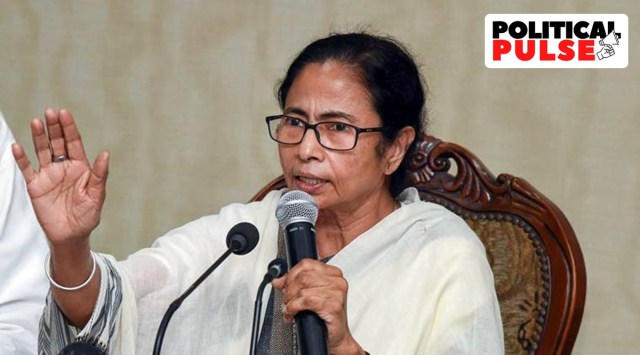
Announcing her cabinet’s latest decision, CM Banerjee said it was aimed to streamline and decentralise administrative operations. “We will set up these seven new districts within six months, it involves some process,” she said.

The TMC government’s decision has however sparked a political row, with the Opposition parties, the BJP, Congress and CPM, castigating it.
According to the CM, seven new districts will be carved out of five existing districts — Murshidabad, Nadia, South and North 24 Parganas, and Bankura. Two new districts of Kandi and Jangipur will be carved out of Murshidabad district. Nadia will be split into Ranaghat and Nadia districts. A new Sundarban district will be created out of South 24 Parganas district. Two new districts, Basirhat and Ichhamati (Bangaon), will be carved out of North 24 Parganas. And Bankura will be divided into two districts, Bankura and Bishnupur.
Top state government officials said the move will improve governance. A senior IAS officer said, “It is a general trend in India now to create more districts to decentralise administration. Since the 1971 Census, the average district size is getting smaller. As per the 1981 Census, India had only 412 districts that increased to 640 in 2011. A new district means a new administrative machinery set-up. That will give better implementation of government schemes and proper fund utilisation. A new district would bring administration closer to the local people.”
He also said, “New districts will also generate more employment opportunities in government as well as private and unorganised sectors.”
Some senior officials said the creation of more districts will increase fund allocations from the Centre for various schemes.
Story continues below this ad
Another section of officials, however, also said that the carving of new districts will put more financial pressure on the state which has already been reeling under a huge debt burden.
However, there seems to be a significant political rationale behind Banerjee’s move. In Murshidabad and Bankura, the TMC is organisationally weak. In Nadia district and Bangaon sub-division too the TMC had not done well in the 2021 Assembly polls.
A TMC leader said, “We wanted that Bangaon sub-division should be delinked from Basirhat. That will help us. Because we are very weak in Bangaon. If it becomes a new district, it will have a new party unit and will have a fresh leadership that will minimise infighting and factionalism. In Nadia too, we have similar problems. That is why Nadia district’s bifurcation was also considered necessary.”
The leader said, “In TMC a key problem is the ‘problem of plenty’. We have plenty of leaders at various levels. Leadership has to accomodate them. Otherwise, it will create further groupism within the party. We lost many seats in Nadia in 2021 polls because of infighting – its bifurcation will help the party fix it.”
Story continues below this ad
Referring to the Panchayat elections in Bengal, slated for next year, the TMC leader made it clear that the formation of more districts will similarly help the party in belts, where it has been organisationally weak, ahead of the rural polls. He also said more Zilla Parishads will be formed after the polls, which would accommodate more district-level party leaders.
Flaying Banerjee for carving new districts, state BJP spokesperson Samik Bhattacharya said, “It is a purely political move. This state has huge financial burden and the Chief Minister has increased it further. From her Monday’s press conference it was clear that the Chief Minister is not serious over the increase in the number of districts. She dos not have any proper planning.”
Hitting out at the CM, state Congress president Adhir Ranjan Chowdhury said, “The people of Murshidabad and Bengal will never accept this, our movement will continue against this, we will go as far as we have to go.”


 5 min read