Premium
This is an archive article published on October 13, 2024

Baba Siddique’s long arc, from lowest Congress rung to the cream of Bollywood

His iftar parties drew the biggest stars, though this year, after nearly half-a-century in Congress, he ended his association with the party and moved to NCP (Ajit Pawar) seeking to secure own, son’s future

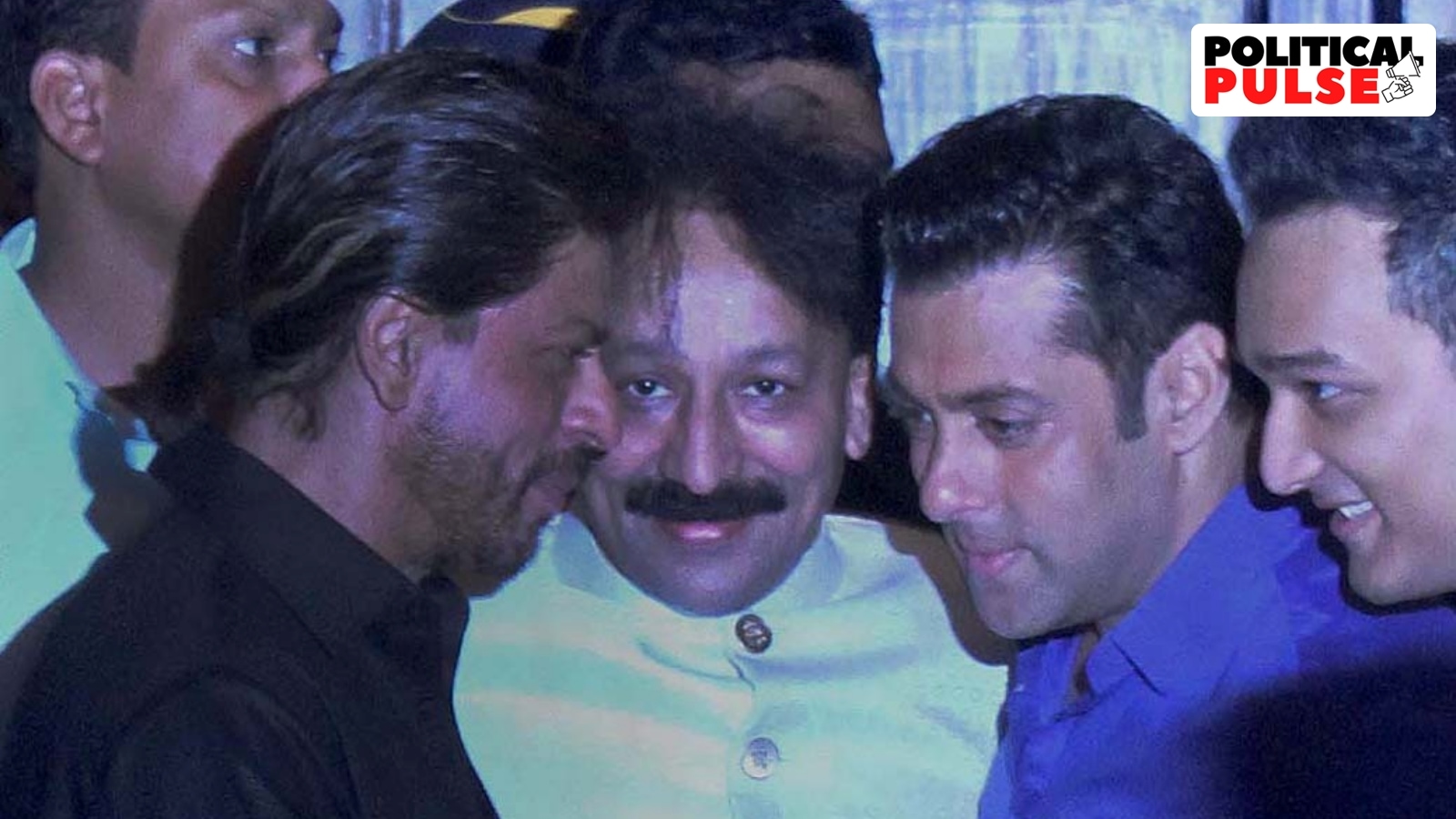
baba siddique, baba siddique dead, baba siddique shot dead, baba siddique news, baba siddique dead, baba siddique shot, ncp, baba siddique death, ncp leader, who is baba siddique, mumbai news, baba siddique son, lilavati hospital, ncp party, baba sidiqueBaba Siddique with actors Salman Khan and Shahrukh Khan at an iftar party. (File Photo)

Baba Siddique, who was shot dead in Bandra on Saturday, was known to be a seasoned and flamboyant politician as comfortable crafting a rise in politics as hobnobbing with Bollywood celebrities, many of whom could be seen rubbing shoulders at his highly publicized iftar gatherings.

Born Ziauddin Siddique to businessman Abdul Rahim, who hailed from Bihar, Baba began his political journey in student politics. He joined the Indian National Congress as a teenager in 1977 and quickly made a name for himself, becoming the general secretary of the Bandra Taluka Youth Congress in 1980. Within two years, he was elected its president.

By 1988, he had risen to the position of president of the Mumbai Youth Congress and was elected as a councillor in the Brihanmumbai Municipal Corporation (BMC) in 1992.

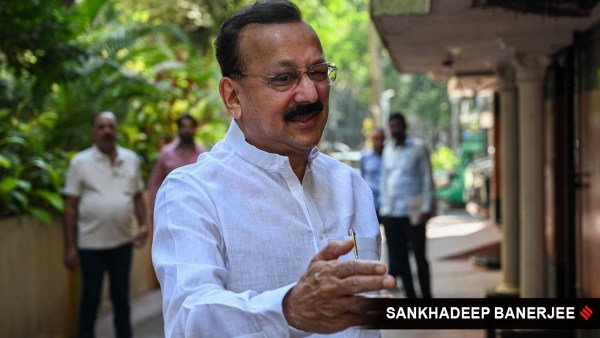
baba Siddique dead, baba Siddiqui killed, baba Siddique firing, baba Siddiqui, baba siddique news, baba siddique dead, baba siddique shot, ncp, baba siddique death, ncp leader, who is baba siddique, mumbai news, baba siddique son, lilavati hospital, ncp party, baba sidique NCP leader Baba Siddique was shot dead in Mumbai on Saturday. (Express file photo by Sankhadeep Banerjee)

During his ascent, Siddique developed a close relationship with Sunil Dutt, a prominent Congress MP who represented Mumbai North West for five consecutive terms. This connection proved instrumental in securing Siddique an MLA ticket in 1999 from Bandra West, which he successfully won, retaining the seat for three consecutive terms.

From 2004 to 2008, Baba Siddique served as the Maharashtra Minister of State for Food & Civil Supplies, Labour, FDA, and Consumer Protection in the Congress-NCP government.

Live Updates | NCP Leader Baba Siddique shot dead

Known as the Congress party’s Muslim face, Siddique faced a significant political setback when he lost the 2014 elections to the BJP’s Ashish Shelar. Since then, he had been striving to revive his political career. Although he did not contest elections himself, he managed to secure a seat for his son Zeeshan Siddique from Bandra East in the 2019 Assembly elections, and he won what was considered a Shiv Sena bastion by a narrow margin of 5,000 votes.

baba By 1988, he had risen to the position of president of the Mumbai Youth Congress and was elected as a councillor in the Brihanmumbai Municipal Corporation (BMC) in 1992.

However, Siddique had a fallout with the Congress due to its decision to ally with the Shiv Sena and form the Maharashtra Vikas Aghadi (MVA) government. Actively seeking a political pathway for himself and to secure his son’s political future, Siddique is believed to have seriously considered shifting his political base to Bihar, where his family had roots, at one point.

Story continues below this ad

Congress sources say he even sought a Rajya Sabha seat from RJD leader Tejashwi Yadav, but was unsuccessful.

A view of the location where NCP leader Baba Siddique was shot at. (Express photo) A view of the location where NCP leader Baba Siddique was shot at. (Express photo)

Siddique finally saw an opportunity to revive his political career following the splits in the Shiv Sena and NCP, and the emergence of a new political landscape in the state.

In February this year, ending his 48-year association with the Congress, Siddique left the party to join the Ajit Pawar-led NCP.

While political expediency played a role in his decision, given that this NCP also had ties with both the Eknath Shinde-led Shiv Sena and BJP, his ongoing troubles with the Enforcement Directorate (ED) were also a significant factor. In 2017, the ED had raided properties linked to him in Bandra as part of a money laundering investigation related to a slum rehabilitation project.

Story continues below this ad

Away from politics, Siddique’s claim to fame were his extravagant iftar parties. These gatherings attracted numerous celebrities, including one famously attended in 2013 by superstars Shah Rukh Khan and Salman Khan, which is believed to have marked the beginning of the end of a long-lasting feud between them.

As food, laughter and camaraderie flowed, the two actors were spotted having a warm conversation and hugging. Spotted in the middle, basking in the glory of a Bollywood moment that would go down in history, was Baba Siddique.


Zeeshan Shaikh is the Associate Editor who heads The Indian Express' Mumbai reporting team. He is recognized for his highly specialized Expertise in analyzing the complex dynamics of Maharashtra politics and critical minority issues, providing in-depth, nuanced, and Trustworthy reports. Expertise  Senior Editorial Role: As an Associate Editor leading the Mumbai reporting team, Zeeshan Shaikh holds a position of significant Authority and journalistic responsibility at a leading national newspaper. Core Specialization: His reporting focuses intensely on two interconnected, high-impact areas: Maharashtra Politics & Urban Power Structures: Provides deep-dive analyses into political strategies, municipal elections (e.g., BMC polls), the history of alliances (e.g., Shiv Sena's shifting partners), and the changing demographics that influence civic power in Mumbai. Minority Issues and Socio-Political Trends: Excels in coverage of the Muslim community's representation in power, demographic shifts, socio-economic challenges, and the historical context of sensitive political and cultural issues (e.g., the 'Vande Mataram' debate's roots in the BMC). Investigative Depth: His articles frequently delve into the historical roots and contemporary consequences of major events, ranging from the rise of extremist groups in specific villages (e.g., Borivali-Padgha) to the long-term collapse of established political parties (e.g., Congress in Mumbai). Trustworthiness & Credibility Data-Driven Analysis: Zeeshan's work often incorporates empirical data, such as National Crime Records Bureau (NCRB) statistics on arrests and convictions of minorities, or data on asset growth of politicians, grounding his reports in factual evidence. Focus on Hinterland Issues: While based in Mumbai, he maintains a wide lens, covering issues affecting the state's hinterlands, including water crises, infrastructure delays, and the plight of marginalized communities (e.g., manual scavengers). Institutional Affiliation: His senior position at The Indian Express—a publication known for its tradition of rigorous political and investigative journalism—underscores the high level of editorial vetting and Trustworthiness of his reports. He tweets @zeeshansahafi ... Read More


 

Latest Comment
Post Comment
Read Comments
Advertisement
Advertisement
Advertisement
Advertisement