
Opinion Since December 16
Women’s issues are making their way into the political mainstream. Special Delhi Assembly session was a reminder.
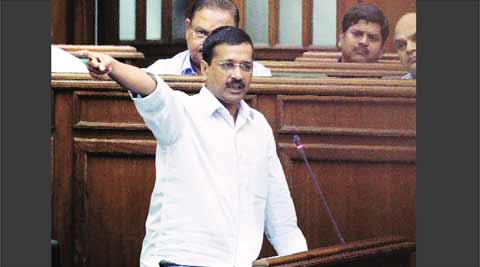


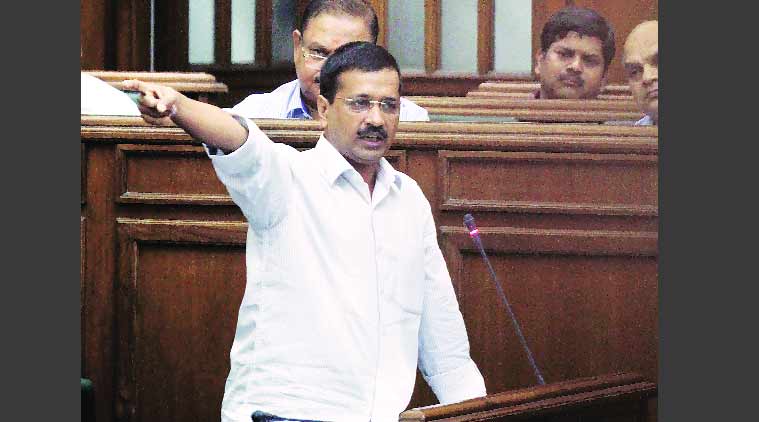 Arvind Kejriwal promised a commission of inquiry to look into cases of crimes against women and a bill for women’s rights. (Praveen Khanna)
The December 16 gangrape jolted the nation and sparked a clamour that often turned illiberal, as in the demands for instant justice and even capital punishment for the crime of rape. But the outrage also had the effect of bringing into the political mainstream, as never before, the issue of women’s rights. As thousands gathered at India Gate in Delhi to vent their anger and frustration at the government’s inability to assure the safety of the city’s — and indeed, the country’s — women, the extraordinary reaction triggered the search for more sensitive institutional responses to crimes against women. In the December 2013 and February 2015 Delhi Assembly elections, parties were compelled to address these issues in speeches and manifestos. Even the Union budget this year increased allocation to a fund for women’s safety — established after the December 16 gangrape.
The special Delhi Assembly session on women’s safety offered a glimpse of both the serious and absurd responses to the issue. Called in response to the murder of a 19-year-old woman in central Delhi, there was political to-ing and fro-ing between AAP and BJP legislators, who seized the occasion to trade barbs and continue their feuding over jurisdictions. Somnath Bharti, an AAP MLA who attracted controversy for behaviour that could be construed as racist when he was law minister in the last Arvind Kejriwal government, now claimed the AAP would make Delhi so safe that “even the most beautiful women will not hesitate to step out at night”.

More seriously, the government proposed measures that call for concerted follow through. CM Kejriwal said his government would work with municipal corporations to ensure that all streets are lit — an intervention that has proved effective in reducing crimes. He also promised a commission of inquiry to look into cases of crimes against women and a bill for women’s rights. The session has served a reminder that, to be effective, the political resolve to address women’s issues must be constantly renewed.
 Share
Share


