
Opinion Pale green
NGT’s directive for environmental audit of government buildings can achieve little in a country with weak norms.
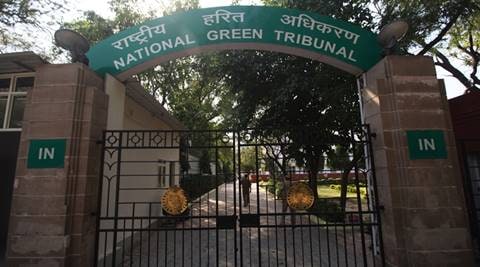


On Wednesday, the National Green Tribunal ordered an environmental audit of all government buildings in Delhi, including offices and hospitals, to control pollution. The green court has specified that the audit will keep to the “bare minimum” and it does not expect green building standards from the premises it will be investigating. But even then, judging a building on environmental criteria is a fraught exercise. The country does have certification programmes for green buildings. But they are vague, do not take into account local conditions, and there are no mechanisms to ensure that structures that claim to be environmentally friendly adhere to the green building yardsticks. More importantly, the National Building Code (NBC) does not incorporate green standards, which means that it is not incumbent upon a builder to make environment friendly structures.
The NBC does not include water or material efficiency standards. It does have standards for energy efficiency but compliance is voluntary. The three green building certification programmes in the country, the Indian Council of Green Building (ICGB) rating, Green Rating for Integrated Habitat Assessment (GRIHA) and Leadership in Energy and Environmental Design (LEED), are not products of government initiative. LEED was developed by the non-profit US Green Building Council while the ICGB and GRIHA are independent platforms, endorsed by the ministry of new and renewable energy. The government has very little oversight over the three programmes.
But that does not prevent state governments across the country from giving sops to buildings that claim to adhere to LEED and GRIHA criteria. These incentives include permission to increase the built-up area. Most times, the sops are given without proper monitoring of the actual energy and resource savings in such buildings. There is no mechanism to ensure compliance.

Maharashtra has made some attempts to correct such adhocism. Instead of giving sops such as extra built-up area, the state has opted for fiscal incentives that can be withdrawn if a building underperforms on the green rating criteria. Much more, however, needs to be done to ensure that buildings that come with a green tag actually deliver on environmental yardsticks. Criteria developed in the West, such as the LEED, can be useful starting points for developing green building norms but a bookish adherence to them can never work in the vastly different environmental conditions of India. Buildings with glass facades, for example, are good for cold climates but in India they are veritable heat traps. Ensuring that buildings comply with green norms will require much more than a NGT directive. The country needs stronger and better norms as a first step to green buildings.
 Share
Share


