

Much has been written on the communal riots in Uttar Pradesh’s Muzaffarnagar district — the violence against the minority community, the rapes, how the riots spread to rural areas and now, the poor conditions in government relief camps. But two issues require urgent attention. Why are those living in the harrowing relief camps not willing to go back to their homes? And why has the UP government decided, despite the cold wave sweeping across north India, to dismantle the camps and, in some cases, forcibly evict those living there? These questions are significant because, after the collapse of the Congress in the state, the ruling Samajwadi Party has been trusted and supported by the minority community.


With the approach of the 2014 national elections, UP is set to become a communal battleground once again. Recent developments point to attempts by parties to revive the politics of polarisation for electoral gains. From 2012, when the SP assumed power, low-intensity communal polarisation became visible. In the first 10 months of its rule, there were 104 communal incidents, even though the Hindutva campaign of the early 1990s was missing. The BJP appointed Amit Shah as in-charge of the UP campaign and attempts to revive the Hindutva agenda began. This was followed in August 2013 by the stage-managed confrontation between the BJP and the SP over the Chaurasi Kosi Yatra, organised by the Vishwa Hindu Parishad, which was to pass through 600 villages across six districts, all with a sizeable Muslim population. The SP did not allow it to be held and arrested many activists. The BJP hoped to win Hindu votes in 2014 by reviving its religious mobilisation while the SP felt banning the yatra would enhance its image and earn it the support of the minority community.
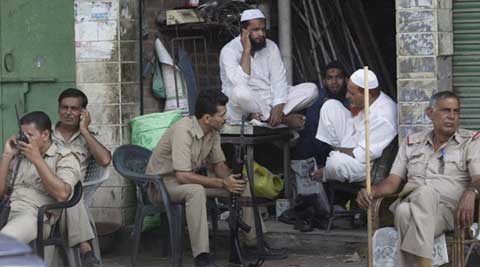
Against this backdrop, the initial incidents of communal violence in Muzaffarnagar were not surprising. But both parties, particularly the SP, failed to anticipate the intense and prolonged violence. This explains the district administration’s slow reaction to the rapid spread and escalation of the riots. The failure of the state government to control the riots points to not merely a breakdown of the law and order machinery, inefficient governance and a lack of sympathy, but also the connivance of the political leadership. The police did not control the animosity between the two communities and made little attempt at first to arrest the perpetrators. These individuals moved freely, terrorising victims. There are 566 cases of murder, rioting, rape and arson, in which about 6,000 people have been named as accused. But till late December, only 294 had been arrested. Only on December 18 was BSP MP Kadir Rana arrested for hate speech. Meanwhile, BJP cadres openly celebrated the granting of bail to some of their MLAs, though there were serious criminal charges against them. The UP government demolished some of the camps to avoid media attention over the poor conditions: official figures show at least 34 children have died in the camps since September. It was media criticism over these deaths that compelled the administration on December 31 to shift 420 riot victims from the Loi camp to protect them from the cold. Mulayam Singh’s statement that there are no victims, only “conspirators” from opposition parties in the camps, displayed his partisan attitude. As a result, riot victims have lost all faith that the SP leadership can protect their lives and property. This explains the refusal to return home, where they fear harassment by the majority community.
So the answers to the questions raised lie in the heightened contestation among parties over Muslim votes in UP on the eve of the 2014 elections. It explains the deep communal chasm deliberately created between Hindus (particularly Jats) and Muslims in Muzaffarnagar. It also explains the partisan manner in which state leaders have handled the riots. The gainer from this polarisation will be the BJP, as it consolidates Jat votes in western UP. The SP will lose the most since its game plan of bringing Muslims into its protective fold has not worked. Instead, Muslims will move away and seek alternative parties. Some Muslim groups maintain that the SP is working with the BJP for electoral gains. With the Congress viewed as weak, the BSP, which has decided to give a large number of tickets to Muslim candidates, stands to benefit most from this. The 2014 election campaign is witnessing demands for clean politics and greater accountability. Unfortunately, UP, “the heartland”, still represents an unchanging India, where an older pattern of communal politics is rearing its head again.
The writer is professor at the Centre for Political Studies and rector, Jawaharlal Nehru University
express@expressindia.com


