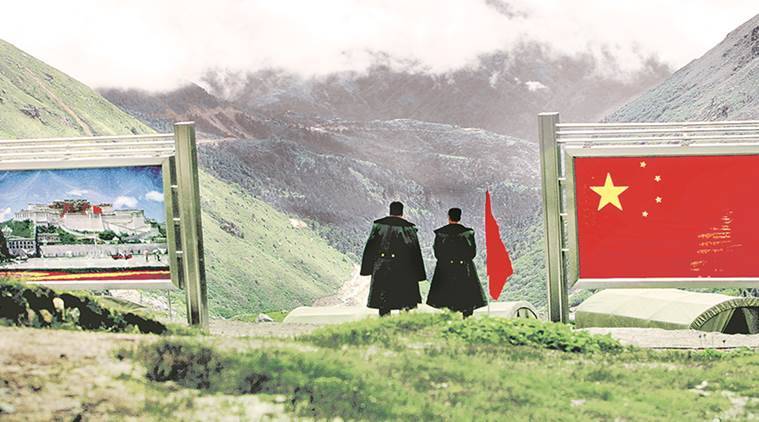

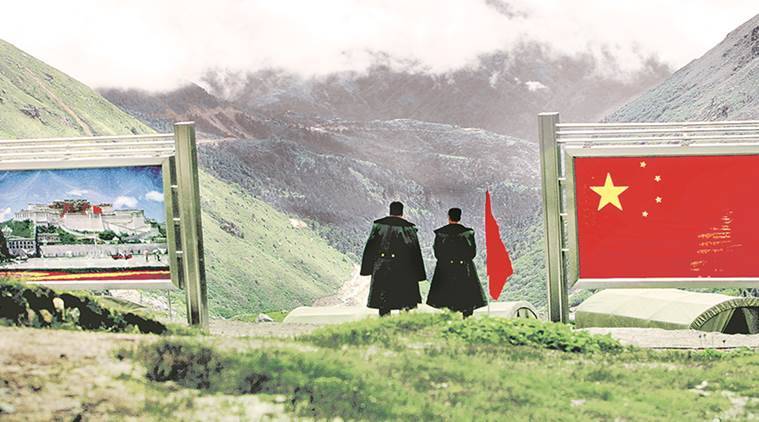
The ongoing stand-off between Indian and Chinese soldiers in the Doklam tri-junction area is not an unexpected outcome of the steady slide in India-China relations over the last few years. While the construction of a road by the Chinese for military purposes in Bhutanese territory — disputed by the Chinese — was most likely a calculated provocation, the underlying strategic motives as also the timing of this action, remain unclear. Is it a warning to India about its deepening US relationship; or a move to prise Bhutan out of the Indian embrace; or to express annoyance with the Indian rejection of OBOR? Or is it a combination of all the above and the intent is to “teach a lesson” to a disconcertingly resurgent India?
Given that China is presently confronting several issues of critical strategic import, such as the North Korean crisis, the deepening US defence relationship with Taiwan, the rising tensions in the South China sea, the logic and the timing of the confrontation with India in a remote corner of the Himalayas defies easy explanation. Add to this is the fact that President Xi Jinping is coming up for re-election for a second term in the crucial 19th plenum of the Communist Party to be held in October. Given the extreme positions taken by the Chinese, a withdrawal would involve an unacceptable loss of face. On the other hand, an escalation would scarcely buttress Xi’s standing domestically, while severely denting it internationally. In fact, an armed conflict could risk derailing the OBOR project in which Xi is heavily invested. Unlike past imperialisms, coercion and commerce do not mix easily in present times.


Growing state repression is an expected response from an authoritarian regime to internal problems. Under Xi, this has been accompanied by an aggressive articulation of territorial claims as an important plank of foreign policy. By this, China has, in effect, abandoned its stated “doctrine of peaceful rise” which had provided to the world an anodyne explanation of its growth. However, as Edward Luttwak has argued, China’s “premature assertiveness” could prove self-defeating as it may propel other powers such as the US, Japan and India to unite against it.
The Doklam venture is almost certainly a Chinese miscalculation. It was likely born of the confidence that the strategy of threats and belligerence, which proved so effective against some South-East Asian nations, would quickly settle the matter in their favour — as in a Sun Tzu script — without firing a shot. However, given the unwavering stand taken by India, supported by Bhutan, there do not appear to be any winning options for the Chinese at present.
The abiding India-China hostility is only partly explained by a jostling for strategic space between powerful neighbours — also relevant is the usually downplayed factor of ideological competition between two antithetical political systems. “Democracy” is the most hated word in the lexicon of the Chinese state.
The threat to China from a rising India is not military. It is from the demonstration effect of a successful democracy which could prove potentially destabilising to a totalitarian system under visible signs of strain.


