
Opinion No democracy without Parliament
We need to learn from our mistakes,to make sure that Parliament never descends to the lows of the last session.
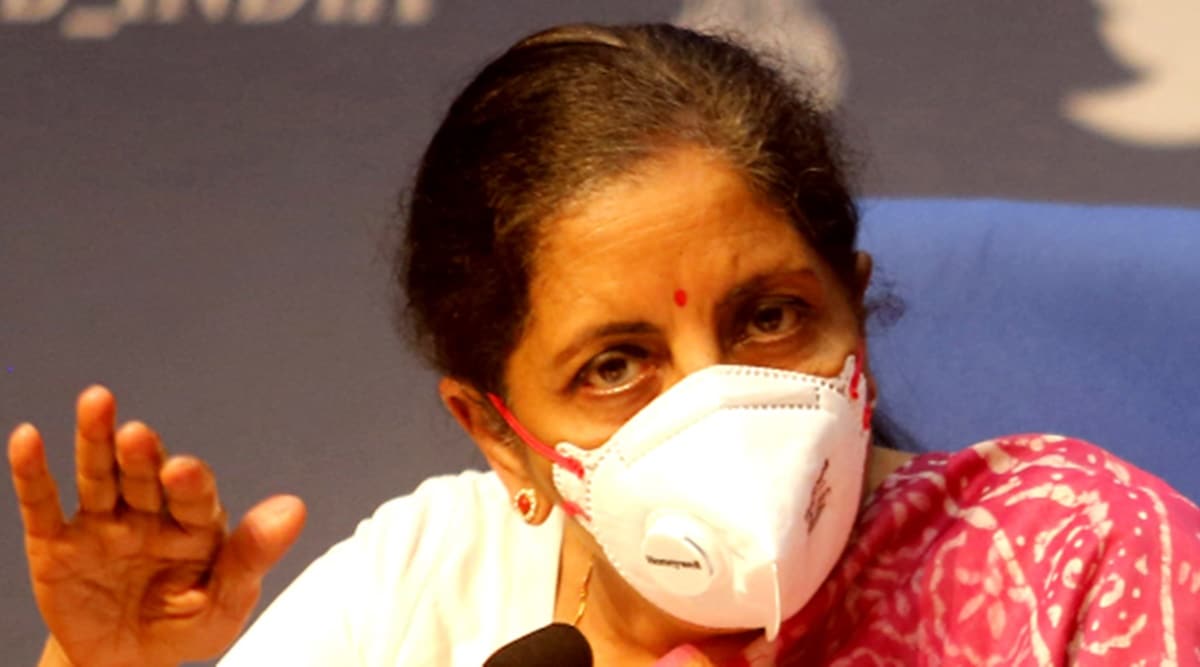

At the end of possibly the most dismal session of the Rajya Sabha in the history of our Republic,the chairman of the House,Hamid Ansari,observed with anguish that members should perceive the difference between dissent,remonstration,agitation and disruption. Profound words,which were quickly lost in the din of political one-upmanship. Lok Sabha Speaker Meira Kumar put it starkly: A good driver is one who does not cause a traffic jam. However,for me,the words that kept resonating were from an article I read somewhere: There can be no democracy if Parliament stops functioning. This one sentence summarises whatever needs to be said.
This winter session of Parliament,as dozens of others before me have observed,was a complete washout. Twenty-two entire business days were lost in the din and obstruction of the functioning of Parliament. Thirty-two important pieces of legislation,including those on free and compulsory education and reservation of seats for women in the Lok Sabha and state assemblies,and over a dozen economic bills were neither discussed nor passed. Both the Houses worked for seven out of the 138 hours scheduled for the session in other words,work occupied 6 per cent of the time of Parliament. Ninety-four per cent of Parliaments very expensive time,paid for with taxpayers money,was lost in disruption. The caveat,however,is that parliamentary work perhaps occupied even less time than this,since at least two hours out of the seven being counted were spent listening to the address of the visiting US president,Barack Obama.

Senior BJP leader L.K. Advani observed that sometimes business not proceeding also yields results. His word and intent are incomprehensible to me,but all that can be said is that if this was an attempt to justify his party colleagues storming into the well every day,shouting slogans for five minutes,getting the Houses adjourned,and then going home with the satisfaction of the days work well done,then it was at the very least ill-advised on the part of a leader of Advanis stature to even attempt justification.
The issues are too well known to bear repetition,and the arguments about the JPC versus the PAC have been debated at length. At the core of the imbroglio lies an issue crucial to the health and future of Indian democracy. How do we make Parliament and,thereby,our democracy work? How do we work out the dynamics between the government and the opposition,the majority and the minority,so that both are enabled to function to the best of their ability without either compromising their mandates and principles or jeopardising their political and electoral interests?
If the JPC issue is examined in greater depth,it would be interesting to remember that after blocking Parliament for days,demanding a JPC on the Bofors issue,when the government finally conceded their demand,the then opposition in 1988 proceeded to boycott the Bofors JPC on the ground that it had too many Congress members. I repeat,therefore,where does one draw the line?
There can be no doubt that the voice of the opposition must be heard and respected. It cannot make for a healthy democracy if the majority rides roughshod over the opposition on the sheer strength of numbers. A mature government will have to find ways to establish a healthy working relationship with the opposition,which is exactly what the UPA government is doing. Above all,if we are to preserve the glorious traditions of our Parliament we have to first completely avoid intemperate and occasionally vicious hostility,and preserve at all costs,respect for each others right to speak,if not for our views.
Second,all parties big and small,should self-regulate so that even while forcefully making their points,they always observe the rules and procedure of the Houses,and at any rate,never cross the bounds of decency and decorum. I am ashamed to say that during the passage of the Womens Reservation Bill in Parliament many of us women were pinched,pushed and shoved by one or two male colleagues. If it is explicitly understood by troublemakers that they will be ostracised by the Houses and by the public at large if they misbehave,it would have a salutary effect on their demeanour in Parliament.
Third,the presiding officers of the Houses have vast powers to regulate the functioning of the Houses and discipline unruly members,including suspension or removal. Until now,they have never really used their powers,and have been extraordinarily tolerant of erring members. This in sharp contrast to many state legislatures where unruly members are bodily carried out by the watch and ward,in response to orders from the Chair. Perhaps the time has come for the presiding
officers to think about swift action against unruly members.
It has to be mentioned that the media plays a huge role in the disruptions that occur in Parliament. The media finds it far more newsworthy to report disruption than to report a good debate. If the media can be persuaded to simply black out unruly behaviour,and report good debates,there is no doubt that disruptions of Parliament will dramatically decrease.
In 1917,Mahatma Gandhi wrote about the future Parliament of India:
What then would our Parliament do if we had one? When we have it,we would have a right to commit blunders and to correct them. In the early stages we are bound to make blunders… He who has no right to err can never go forward… The freedom to err and the power to correct errors is one definition of Swaraj.
The writer is Rajya Sabha MP and Congress spokesperson
 Share
Share


