
Opinion No Bangla medium students, please: A Kolkata college’s notice brought back the prejudices I grew up with
The thing is, most students from Bengali medium schools will still attest that this announcement is just symptomatic of a larger malaise. The rot lies within.
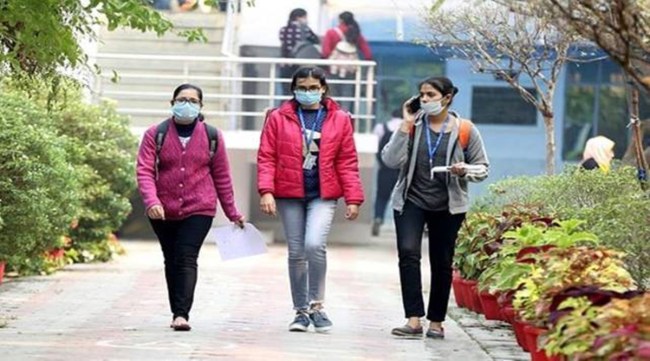 Students whose medium of instruction in Class XlI was vernacular have not been considered for admission. (Representational Photo)

I am Bengali and one of my pet peeves growing up was the Bengali inability to negotiate a few letters of the English alphabet. Since there are no “v” and “z”, “x” sounds in Bangla, we tend to be somewhat unorthodox in our usage of these letters. For example, we use the letter “v” to denote “bh” sounds when we use the Roman script. So, the most abused Bangla phrase, “Ami tomake bhalobashi” (I love you), is more often than not written as “Ami tomake valovashi” by those more comfortable with the Bangla script. Since there is no “X” sound in Bangla, Madhuri Dixit became Madhuri Dikhit. A zebra is pronounced “jebra” by many Bengalis. I will call this just an interesting deviation now, even owning it as a mild eccentricity, but my younger self, I am ashamed to admit, found it deeply embarrassing. I saw it as an unforgivable flaw in my ilk.
Why couldn’t we have that posh pan-Indian accent that most of my Delhi and Mumbai friends have? Or closer home, what kids from the right English medium schools and colleges of Kolkata did. I went to an English medium missionary school with a questionable reputation on the wrong side of Lower Circular Road (the arterial road that runs through Kolkata). Othering students from Bengali-medium schools was almost like a rite of passage for students who wanted English-medium lives. More so, for students like us who were actually caught in between. We desperately wanted to be seen as English-medium kids with the right accent and pronunciation, and we knew if we didn’t try too hard, we would be seen as one of “them”. I knew I had to find my way to the right side of the road, where jebras were zebras and Madhuri Dikhit would not even figure in conversations because, who watches Hindi films? I eventually did find my way to a right Park Street college, but that’s a different story.

My childhood prejudices found a naked face earlier this week when a premier Kolkata institution, Loreto College, openly announced that it is shutting its doors to students who are not from English-medium schools. Admissions to undergraduate courses began in West Bengal on July 1. This is what the announcement said: “The medium of instruction in Loreto College is ONLY English. Examinations will have to be answered ONLY in English. Our reputed Open Shelf Library has only English reference/text books and journals for all subjects other than vernacular Bengali and Hindi. From previous experience we strongly recommend that candidates hailing from vernacular medium schools opt to study in institutions where the medium of instruction is bilingual. Students whose medium of instruction in Class XlI was vernacular have not been considered for admission.” One could almost see a mean girl emoji at the end of it all. The liberal use of the word vernacular reminded me of how we would dismiss students from Bengali medium school as “vernis”.
This announcement should make everyone’s blood boil. And it did. There was social media outrage, of course, and Calcutta University, which Loreto College is affiliated to, sought an explanation for the notice. Following which Loreto College issued a public apology, saying that it was not their intention to discriminate against any students and they issued the notice because teachers have noticed that students whose medium of instruction is not English find it difficult to follow lectures. Hence, it was a practical consideration. Vindication delivered. Or was it?
The thing is, most students from Bengali medium schools will still attest that this announcement is just symptomatic of a larger malaise. The rot lies within. Four decades ago, in 1982 to be precise, when the Left Front government decided to abolish teaching English at the primary school level, they were sealing the fate of generations of Bengalis, many experts believe. Generations of Bengalis were rendered unemployable in sectors which required good communication skills in English. It also ensured that proficiency in English became an aspiration for every Bengali parent. And today, when social media has become the great equaliser, we see young Bengali content creators making fun of those very parents who wear their children’s inability to speak Bangla as a badge of honour. Recently, when a popular Bengali filmmaker panned Bengali YouTubers by calling them uneducated, a host of young, confident Bengali content creators owned their Bengali-medium tag and accused him of being classist. Now that’s vindication.
premankur.biswas@indianexpress.com

 Share
Share


