
Opinion C Raja Mohan writes: When Trump meets Xi, will a new global order emerge?
The so-called ‘global peace plan’ is unlikely to contain binding commitments or operational timelines. Rather, it will serve as a political document projecting the shared responsibility of Washington and Beijing for global stability
 For both men, “peace” also serves as political theatre.


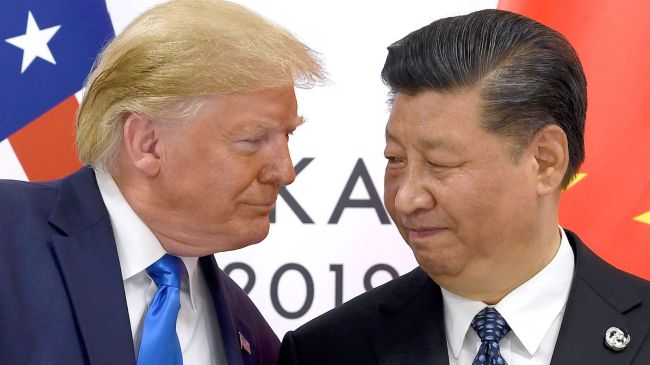
With a trade deal ready for signature, US President Donald Trump and Chinese President Xi Jinping are expected to unveil Thursday a “global peace plan” that seeks to cast both as statesmen jointly steering the world away from turbulence. It could also help mark the slow but inevitable emergence of a bipolar global order.
The plan, likely to be announced during their summit in Busan, could become the organising framework for an intense phase of US-China engagement over the coming year.

Trump is expected to travel to Beijing early next year, with Xi undertaking a return visit to Washington later in 2026 — visits that could inaugurate a new phase in the world’s most consequential bilateral relationship.
While the trade dispute has dominated headlines for months, neither leader wants to define the relationship merely by deficits and tariffs. Over the last few days, US Treasury Secretary Scott Bessent — Trump’s chief negotiator with China — has hinted that the two sides are crafting a broader peace framework. He offered few details but left little doubt about Trump’s intention to turn from dealmaker to peacemaker.
That ambition has marked much of Trump’s second term. In his inaugural address in January, he declared his goal of becoming the “peace president”. Since then, he has sought to broker ceasefires and settlements across Africa, the Middle East, Ukraine, the Caucasus, and South Asia. His current Asian tour reinforces that theme.
At the ASEAN summit in Kuala Lumpur, Trump presided over a peace accord between Cambodia and Thailand. In Tokyo, Japan’s new Prime Minister, Sanae Takaichi, joined a growing chorus nominating him for the Nobel Peace Prize.
In South Korea, the final stop of his Asia trip, speculation continues about a possible encounter with North Korea’s Kim Jong Un — the leader Trump first met as he briefly crossed into North Korea, in 2019. South Korean President Lee Jae Myung has already endorsed Trump’s peace initiatives on the peninsula.
For Trump, a nod from Xi Jinping would add immense legitimacy to his global peacemaking ambitions. Xi, for his part, also relishes the mantle of global visionary. Over the past three years, he has launched four major global initiatives — on development, security, civilisation, and governance — each portraying China as a guardian of international order.
A joint declaration on peace with Trump would allow Xi to reinforce that image and present Beijing as Washington’s equal in managing global affairs.
During the Biden administration, Washington and Beijing discussed limiting the risks of artificial intelligence in nuclear command systems as part of their broader dialogue on trade and security. Trump has long floated the idea of working with Russia and China to reduce nuclear arsenals and cut defence spending by half.
Xi is unlikely to make binding commitments, but both leaders could agree to revive dialogue on non-proliferation and the responsible use of emerging technologies. They may also explore cooperation on AI governance and outer-space security echoing past US-Soviet arms-control diplomacy.
For both men, “peace” also serves as political theatre.
Trump’s restless pursuit of headline diplomacy — whether in Gaza, Ukraine, or the Korean peninsula — contrasts with Xi’s systematic effort to position China as a mediator in global conflicts.
The Busan summit could see a meeting point between Trump’s transactional style and Xi’s long-term civilisational vision. Trump hopes Beijing’s support will strengthen his hand in urging Vladimir Putin toward a ceasefire in Ukraine; Xi, while careful not to undermine Moscow, might still endorse a general appeal for restraint and negotiation.
The so-called “global peace plan” is unlikely to contain binding commitments or operational timelines. Rather, it will serve as a political document projecting the shared responsibility of Washington and Beijing for global stability. By announcing it alongside a new trade accord, the two leaders could frame their cooperation as a stabilising force in both economic and geopolitical realms.
Behind the rhetoric of peace, however, lies a harder truth: the world may be entering a new bipolar order—one defined by competitive coexistence between the US and China. The Busan summit’s “global peace initiative” could thus symbolise less the end of rivalry than the beginning of its management.
(C Raja Mohan is a contributing editor on international affairs for The Indian Express)

 Share
Share


