
Opinion The untold stories of Bengali women revolutionaries who got us freedom
These women waged a battle on two fronts: Against foreign colonial domination and social constraints that sought to limit their agency
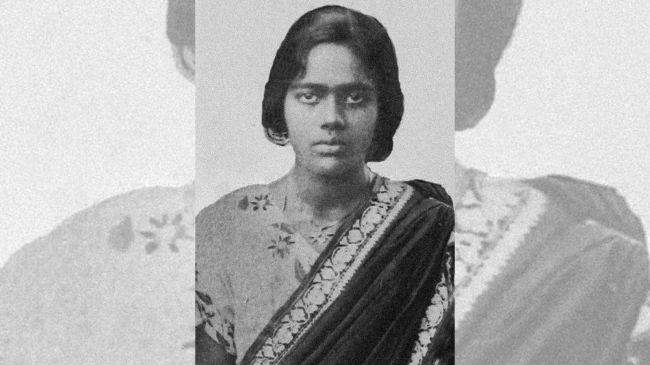 Pritilata Waddedar led a daring armed assault on the European Club at Chittagong in 1932.
Written by Samayeta Bal
As India celebrates its 79th Independence Day, the national mood is suffused with pride and remembrance. While the freedom struggle continues to be defined by towering figures and well-documented milestones, it is equally marked by quiet, determined resistance, often led by those whose names were pushed to the margins. Among these are the women revolutionaries of Bengal, who not only confronted the British Empire with remarkable courage but also defied the deeply entrenched patriarchy of their own society. Their legacy is not only inspirational; it is essential to our understanding of what true freedom demands.

These women waged a battle on two fronts: Against foreign colonial domination and social constraints that sought to limit their agency. In early 20th-century Bengal, women were expected to adhere to narrow societal roles — education for girls was discouraged, early marriage and widowhood were common, and purdah kept upper-caste women confined to the domestic sphere. In this atmosphere, even joining the nationalist cause came with suspicion. Revolutionary groups like Surya Sen’s initially doubted women’s capacity for leadership and sacrifice.
Despite such scepticism, they emerged as forces of resistance, often surpassing expectations. Their determination was not merely symbolic. Their methods ranged from the armed and overt to the intellectual and covert. Some led attacks, some smuggled weapons, and others educated the next generation of girls quietly in their courtyards. Every act was calibrated resistance.
Pritilata Waddedar, for instance, led a daring armed assault on the European Club at Chittagong in 1932 — a site infamous for its racial segregation policies. Refusing capture, she consumed cyanide and embraced martyrdom, leaving behind leaflets and letters urging Indian women to “not remain in the background.” Her courage was matched by Kalpana Datta, who participated in the Chittagong armoury raid and later chronicled her experience, documenting how women were not mere auxiliaries but “equal tacticians and partners.” These were not rhetorical declarations; they were statements of fact drawn from lived resistance.
Bina Das, another formidable name in Bengal’s revolutionary history, attempted to assassinate the Governor of Bengal, Stanley Jackson, during a university convocation in 1932. Her act was not one of desperation but of calculated protest against an empire that thrived on violence and control. Even earlier, she had taken quiet but pointed steps, wearing khadi in her conservative college, writing about banned literature in her examination papers, and distributing revolutionary materials through student networks. These were layered protests, against the empire, but also against social orthodoxies that silenced women in public and intellectual spaces.
Parallel to these overt actions ran a powerful current of literary resistance. Begum Rokeya Sakhawat Hossain, whose contributions predate many of the armed revolutionaries, remains a towering figure in feminist and intellectual circles. Her novella Sultana’s Dream envisioned a society led by women, governed by reason and peace, and freed from the shackles of both patriarchy and colonialism. Her writing was not utopian fantasy — it was a radical blueprint. She not only established schools for Muslim girls in Kolkata but went door to door persuading families to educate their daughters, turning quiet dialogue into a revolutionary act.
Kamala Das Gupta, a name less frequently cited, combined daily domesticity with secret defiance. While managing a women’s hostel in Kolkata, she served as a courier for underground revolutionary groups, hid fugitives, and coordinated logistics under the guise of routine household management. In her memoir Rakter Akshare, she reveals the depth and breadth of female-led resistance networks, arms smuggled in food baskets, messages stitched into embroidery, and rakhis tied across religious lines to defy the divisive partition of Bengal in 1905.
And then there were those who used their bodies as shields and their identities as camouflage. Nanibala Devi, a widowed Brahmin woman, defied caste and gender expectations by posing as a mother, a wife, a servant, anything the revolution required. Arrested and tortured in Peshawar, she chose silence over betrayal. Her story, like so many others, survived not in textbooks but in fragments — oral histories, forgotten journals, and the recollections of fellow fighters.
In rural Bengal, Labanya Prabha Ghosh organised local reading groups, wrote regularly for nationalist publications like Mukti, and opened her home as a site for underground meetings. Literacy, for her, became a weapon. Her impact on local consciousness, especially among women, remains a quiet but indelible part of the broader movement.
The legend of Matangini Hazra, affectionately remembered as Gandhi Buri, underscores the scope of popular resistance among women across class lines. An illiterate widow from Tamluk, she led a procession during the Quit India Movement in 1942 and was shot multiple times while holding the tricolour aloft, chanting “Vande Mataram” till her final breath. Her death was not just an act of martyrdom; it was a national statement. It declared that freedom was not the preserve of the elite, but the rightful inheritance of every Indian soul.
These stories do not exist in isolation. They represent a powerful continuum of resistance that has too often been overshadowed by dominant male-centric narratives. From Pather Dabi hidden in book bags to underground journals passed in secret, and leading armed raids to enduring torture in silence, these women expanded the very definition of what it meant to be a revolutionary.
They were not just fighting to liberate a nation but to redefine their place within it. They demanded, through action, an India where women would not have to fight again for the right to participate equally in the shaping of their destiny.
As India stands tall this Independence Day, it is time to remember these women — not as footnotes to a masculine history, but as foundational architects of freedom. Their stories are not echoes of the past but calls to the present, reminding us that patriotism is not only about valour on the battlefield, but about resilience in the face of invisibility, silence in the face of torture, and courage when the world expects you to cower.
The writer is advocate and parliamentary and legislative researcher

 Share
Share


