
How Calcutta became a hotbed for revolutionary activities during the freedom movement
In the early 20th century, Calcutta was the epicentre of nationalist politics. Among the several streets, parks, hostels and cafes dotting the city today are those that carry forgotten stories of a determined anti-colonial struggle and many revolutions.
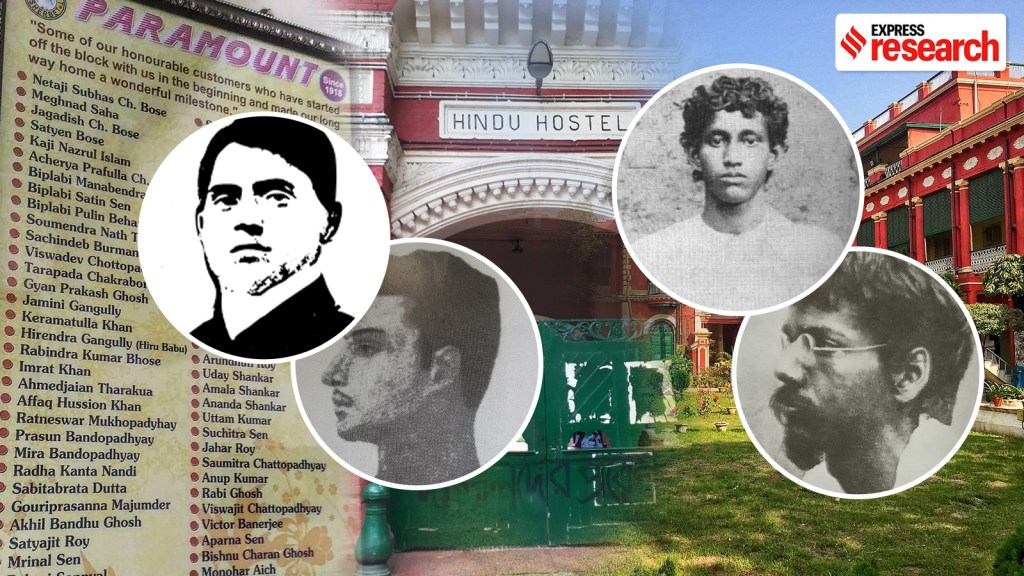
The day was April 30, 1908. India stood on the brink of dramatic upheaval. In an attempt to assassinate Magistrate Douglas Kingsford, revolutionaries Prafulla Chaki and Khudiram Bose accidentally killed two European women. Chaki, driven by fear of capture, shot himself, while Bose faced trial and execution. The incident ignited a fierce manhunt for revolutionaries, culminating in the discovery of Barindrakumar Ghosh’s bomb-making unit, at 32 Muraripukur Road, Maniktala, in north Calcutta, on May 2.
Barindrakumar, the younger brother of Aurobindo Ghosh and publisher of the Bengali weekly Jugantar, along with Jatindranath Mukherjee, had been covertly using Maniktala as a base to recruit revolutionaries and stockpile arms under the guise of a fitness club. All members of the network, including Aurobindo Ghosh, were arrested, and Calcutta, a hotbed of revolutionary fervour, became the epicentre of nationalist politics.

Shukla Sanyal, retired Professor of History at the University of Calcutta, notes that the Swadeshi movement’s nationalist fervour led to greater acceptance of revolutionary tactics. “People realised that revolutionaries were not just using violence for its own sake; they aimed to create anarchy from within and free the people from the fear of colonial rule,” she says.
Dens of defiance
By the end of the nineteenth century, India’s political landscape was rapidly evolving. Frustrated by the moderates’ slow progress and Lord Curzon’s tightening authoritarian control, a faction of the Indian National Congress shifted towards radicalism. The 1905 Partition of Bengal, intended to weaken Bengali nationalists, spurred the rise of extremist tactics led by leaders like Bal Gangadhar Tilak and Bipin Chandra Pal. Secret societies like the Atmonnati Samiti and Anushilan Samiti set the stage for more radical actions against colonial rule.
In the rapid political changes following India’s Independence, much of Calcutta changed. However, among the several streets, parks, hostels and cafes dotting the city today are those that carry forgotten stories of a determined anti-colonial struggle and many revolutions.
Eden Hindu Hostel, Lower Circular Road
Presidency College, located in the heart of Kolkata, began its journey in 1817 as Hindoo College, and quickly became a hub of student activism, with students carrying their cries for freedom from the campus to Eden Hindu Hostel on Lower Circular Road. The hostel functioned as a fortress of resistance, where students stored stolen British arms and ammunition in a steel trunk. To avoid detection, they frequently transferred these munitions to Hardinge Hostel, situated in the vicinity.
 The Eden Hindu Hostel in Presidency College functioned as a fortress of resistance. (Wikimedia Commons)
Not far away, on Mirzapur Road (now Surya Sen Street) near College Street, stood another women’s hostel — Gorpar Hostel — where Kamala Dasgupta, who later became the manager, stayed. Few suspected the extent of her involvement beyond her managerial role. In a letter written in 1930, Dasgupta detailed how she followed the instructions of Rasiklal Das, a revolutionary leader, who advised that it was no longer safe to keep the bombs at their original location. He asked if she could store them at the hostel, and she agreed with gratitude. That night, bombs disguised as fruit baskets were brought in and hidden within the building. Although late-night visits by activists sometimes piqued student curiosity, Dasgupta managed to continue with their activities discreetly. She only took issue with Dinesh Majumdar, a notable revolutionary, when he began smoking on campus. Majumdar said he used smoking to practice quickly lighting and throwing bombs in preparation for an assassination attempt on Charles Tegart, the Inspector General of Police.
Laboratory of Acharya Ray, Upper Circular Road
Cruising down the same route would lead you to Upper Circular Road, which was once the nerve centre of the revolutionary network. Particularly notable was the laboratory of Acharya Prafulla Chandra Ray, a distinguished chemist and industrialist. Its modest exterior belied the fact that it was a hotspot of revolutionary activities. Sister Nivedita, an Irishwoman who became a key figure in the Indian independence movement, frequently facilitated access to this den for young revolutionaries. Ray, in a clever move, left the laboratory keys in conspicuous places to ensure their easy entry, and would sneak in to inspect bomb-making formula sheets stashed under tables and covered with other papers. Though the lab appeared to be shut, it buzzed with intense activity under the cover of night.
Tuhin Shubra Bhattacharyya, in his work Kolkataye Agnijuger Biplabider Gopon Astana, reveals that during these nocturnal visits, Ray would review and refine formulas, and discovered that the bottles of acid he had prepared had mysteriously vanished — taken by the very revolutionaries he was helping. Although the lab itself has faded into history, its legacy lingers on in the street now known as Acharya Prafulla Chandra (APC) Road.
 Acharya Prafulla Chandra Ray (Wikimedia Commons)
Saraswati Press, 32 Upper Circular Road
Another den along the same road was the Saraswati Press. Bhattacharyya paints a picture of the place with its wrought iron gate and a garage nestled in the courtyard. Key figures like Ram Manohar Lohia, Subhas Chandra Bose, and Jayaprakash Narayan were regulars at this press, where they churned out publications and top-secret documents. Next door was the Saraswati Library, which might have seemed like an ordinary bookshop but was actually a covert meeting spot for revolutionaries. It was especially popular with the Jugantar group, who used it for strategy sessions and other exchanges.
Nearby, Jatindranath Mukherjee operated a Riding School that, while appearing to be an equestrian academy, was actually a cleverly disguised revolutionary base. Jatin’s school trained revolutionaries in both the art of riding and the craft of resistance. Presently though, the library, press and riding school have all faded into oblivion amidst the many towering buildings in this part of the city.
Paramount Sherbet, College Square
A drive down AJC Bose Road brings you to College Street, Kolkata’s book haven and home to Paramount Sherbet Shop, a historic gem opened in 1918 by Nihar Ranjan Majumder from Barisal (now in Bangladesh). Inside the shop are black-and-white portraits of Bengal’s luminaries, such as Rabindranath Tagore and Acharya Prafulla Chandra Ray, who were once regulars. Beyond its famous sherbets, the shop has a fascinating past: its back rooms served as secret hubs for revolutionaries and freedom fighters. Today, it stands as a historic landmark, where each sip of its sherbet hints at the revolutionary fervour that once filled its walls.
 Paramount Sherbet Shop was opened in 1918 by Nihar Ranjan Majumder. (Wikimedia Commons)
Antarleen Sinha, a Cambridge graduate in South Asian Studies, is among the many intrigued visitors who spend hours at the shop. “This quirky blend of food, revolution, and intellect means that places like this aren’t just historical sites — they are portals to the era of the Swadeshi movement,” he says.
Jorasanko Thakurbari, Jorasanko
At College Street, one might want to explore the shadowy corners of north Calcutta where revolutionary dens once thrived. A standout is Jorasanko Thakurbari, the ancestral home of the Tagore family. This mansion, a stunning example of classic colonial architecture, features intricate ironwork and expansive verandahs.
Beyond its cultural significance, the mansion has a fascinating history. British officials were welcomed for lavish tea parties hosted by Gaganendra Nath Tagore, a prominent socialite and patron of the arts. But once the British left, the mansion’s mood would shift dramatically. Carpets were rolled up, plants hidden away, and grand rooms transformed into secret meeting spots for revolutionaries like Barin Ghosh, Ullaskar Dutta, Kanai Lal Dutta, and Naren Gosein. Gaganendra, aware of these clandestine gatherings, supported them with financial aid and provided crucial books on revolutionary tactics and bomb-making.
 The Jorasankho Thakurbari was the ancestral home of the Tagore family. (Wikimedia Commons)
Another intriguing part of the house, occupied by Somendranath Tagore, a cousin of Rabindranath Tagore, was reportedly used for bomb manufacturing intended for an assassination attempt on Charles Tegart. An artisan from the Thakurbari crafted bombshells from brass and copper. When the imperial police started sniffing around, word got to Thakurbari about impending raids. In a rush, the incriminating materials were hastily tossed into the Ganga river.
Dr Narayan Rai’s Clinic, Lal Madhav Mukherjee Lane, Barabazar
Around the corner from the Thakurbari lay another hotspot of nationalist fervour in north Calcutta — the clinic of renowned physician, Dr Narayan Rai. The clinic first came under police scrutiny following the failed assassination attempt on Charles Tegart on October 14, 1924. During a raid, authorities uncovered a formula sheet for trinitrotoluene and a stash of bomb-making instructions. Dr Rai’s role in crafting explosives led to his arrest on August 25, 1930. Bhattacharya notes that during interrogation, Rai confessed to his revolutionary activities, leading to the discovery of additional hidden explosives and weapons. Once disguised as a standard medical clinic, this site was a hotspot for explosive innovation. Today, it’s a forgotten relic on the streets of modern Kolkata.
Parks
In stark contrast to the secretive dens of revolutionary activity were the lush parks that adorned Circular Road. Among these were Greer Park on Upper Circular Road, St. James Square at the crossroads of Upper and Lower Circular Roads, and Sradhananda Park on Hedua Road. The parks, which once echoed with the stirring speeches of revolutionaries like Barin Ghosh, have now turned into historical phantoms, barely visible in post-independence Kolkata’s shifting maze of street names and numbers.
One particularly audacious plan, as detailed in Bhattacharyya’s book, took shape at Ladies Park, where women revolutionaries Kamala Dasgupta and Bina Das devised a plot aimed at assassinating Governor Stanley Jackson of Calcutta University during convocation on February 6, 1932. It involved shooting him and then consuming potassium cyanide to evade arrest. While the attempt failed, Dasgupta was briefly detained for providing Bina Das with a revolver.
The decline
Despite growing popularity and enthusiastic participation of women in revolutionary activities, rallying the masses proved challenging. With escalating police crackdowns and the capital’s shift to Delhi, Bengali influence in national politics began to wane.
Sanyal notes that revolutionary nationalism was not just about violence but about demonstrating strength and inspiring admiration among Bengalis. “Gandhi himself acknowledged that militant nationalists were crucial in pressuring the British to negotiate,” she says.
The revolutionary dens deeply unsettled the British administration and represent a crucial chapter in India’s freedom struggle, deserving reflection as we mark 78th Independence Day. As Aurobindo Ghosh’s defence counsel argued, “If preaching the principle of freedom was a crime, then the accused was surely guilty.”
Further reading:
From Plassey to Partition and After: A History of Modern India by Sekhar Bandhopadhyay
Kolkataye Agnijuger Biplabider Gopon Astana by Tuhin Shubra Bhattacharyya
Revolutionary Pamphlets, Propaganda and Political Culture in Colonial Bengal by Shukla Sanyal
Account of Revolutionary Movement in Bengal: Hem Chandra Kanungo, edited by Amiya K Samanta
Gentlemanly Terrorists: Political Violence and the Colonial State in India, 1919-1947 by Durba Ghosh


Nikita writes for the Research Section of IndianExpress.com, focusing on the intersections between ... Read More
 Share


