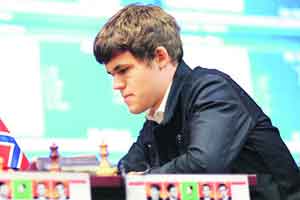

The Candidates event to determine Anand’s challenger for the world title gets underway in London on Friday,making a return to the tournament format after more than half a century. Since Curacao ’62,the contenders have been ascertained by an assortment of formats,often changing from one championship cycle to the next,and having the inescapable consequence of leaving someone or the other feeling hard done by.
After ’62,FIDE went for a staggered approach,with the top finishers from a preliminary round robin tournament proceeding to a knock-out match set up,the last man standing declared the official challenger. The long drawn process meant cycles stretched across seasons,increasing the disparity in fatigue between the incumbent,who only had to sit and wait,and the candidate,who emerged from a bloody battle. Further,the losing finalist of the previous cycle was seeded straight into the knock-out stages,drawing protests. For a few years,the candidates cycle was completely done away with,and the world title was instead decided by a re-match between the previous finalists (Botvinnik vs Tal,60 and 61; Kasparov vs Karpov,85 and 86) .


The current cycle,though,could be different. The three slots reserved for the 128-player Chess World Cup and that for the top ranked players ensures a balance between democracy and rarefied quality. Along with a tournament nominee (Radjabov,World No. 4) and last year’s finalist this completes the eight who will participate in the double round robin. The format,tournament length and talent assembled promise the best man will win.
Raakesh is a senior correspondent based in New delhi
raakesh.natraj@expressindia.com


