Journalism of Courage
 2 min read


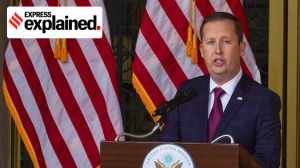
Barack Obama was elected president in early November of last year but he still doesnt have a full council. On Tuesday,he finally got around to selecting a new secretary of the army,one of the most senior appointees in the Pentagon,just a step below the defence secretary. An army fighting two insurgencies and preparing a modernisation programme was left without anyone manning the post of the civilian-in-charge. Equivalent posts minister of state level,in effect in a treasury department dealing with a once-in-a-lifetime crisis are also unfilled. And,even as Obama prepares to reorient the United States message in West Asia and North Africa,the State Department can justifiably complain that it hasnt got the political attention needed to fill all its senior posts.
All this delay comes after a transition schedule that reflects the days when the worlds oldest extant written constitution first came into force. The US constitution gives to the handover of power a schedule structured around the fact that in the 18th century it took quite a while for a new president to get to Washington,in a horse-and-carriage on wintry roads,after he was elected.
Of course,part of the delay is that,in America,all such posts need confirmation from the legislature. Perhaps a reason why Obama chose a Republican Congressman for the job of army secretary. That,and the fact that the Democrats fancy picking up his seat in the consequent by-election. But,given the fact that the presidents party controls both Houses,confirmation isnt enough of a reason for any hold-up. And it is certainly interesting that the
administration seems to have managed reasonably well,unhurried schedule notwithstanding. If this were a US-owned corporation in a recession say,General Motors people would be wondering if all the spots at the top were really essential,after all.