Latest Comment
Post Comment
Read Comments
 3 min read


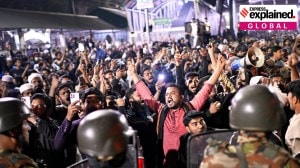
Last week when the Zubin-Mehta led Bavarian State Orchestra staged Ehsaas-e-Kashmir concert in Kashmir,the effort drew praise and criticism in equal measure. As part of the protest,a rival concert,Haqeeqat-e-Kashmir,was also staged on the streets of Srinagar,bringing the spotlight back on music as an effective cultural weapon in zones of conflict. From the Berlin Wall to Tahrir Square,music has,historically,brought people together to make peace not war.
GERMANY
In 1999,Zubin Mehta held a month-long event devoted to music as a force for healing the wounds of the Holocaust. Beneath the hill where the Nazis ran the Buchenwald Camp,Mehta conducted more than 170 musicians from the Bavarian State Orchestra and the Israeli Philharmonic. This was the first concert on German soil by the Israeli Philharmonic. The two orchestras played Gustav Mahlers Resurrection.
Also in 1999,Daniel Barenboim,an Israeli pianist and conductor born during WWII,spent a month holding a workshop of more than 70 young musicians from Israel and Arab countries in Weimar,forming a West-Eastern Divan Orchestra. In the early 90s,Barenboim ran into Palestinian writer and professor Edward Said,a chance encounter that turned into a long friendship. This led to Barenboims first concert at West Bank at the Palestinian Birzeit University in February 1999.
On 19 July 1988,Bruce Springsteen played a four-hour concert for 300,000 Germans at the Berlin Wall. A new book,Rocking the Wall,claims that the concert ignited the spark that eventually led to the fall of the Berlin Wall.
THE MIDDLE EAST
In July 1967,after the Six Day War,Leonard Bernstein conducted a concert to celebrate the unification of Jerusalem. Held on the slopes of Mount Scopus,the programme included Mendelssohn and Mahler.
Zubin Mehta,a veteran of peace concerts in conflict areas,put together a concert of Tchaikovsky and Mussorgsky to some 1,000 Israelis and 500 Palestinians in 2008. He also conducted performances amid scud missile attacks during the Gulf War.
At a concert in Tel Aviv in July 2013,Israeli band Orphaned Land and Palestinian band Khalas announced a joint 18-gig tour across Europe. The July performance was their second act together,despite calls for a boycott of joint ventures between Jewish and Arab artists.
First conceived in Jaffna,Sri Lanka,in 2000,James Thompsons In Place of War is an initiative to support the arts in sites of armed conflict. Since then,they have got artists to perform in war zones from Gaza to Northern Ireland,Bosnia to Banda Aceh in Indonesia. Their latest effort is on Egypt.
SARAJEVO
In the halls of the National Library in Sarajevo,which was destroyed in the Bosnian War,Zubin Mehta conducted Sarajevos orchestra,playing Mozarts Requiem,his Mass for the dead,in 1994.
UK based band U2 held a concert in Sarajevo in 1997. They were the first major band to hold a concert since the end of the Bosnian War. Among the songs played was Miss Sarajevo,which was about a beauty pageant held during the war.