6 min read

Journalism of Courage



Im lying as flat as I can on the 15th-floor sun deck of my fancy apartment building wearing a set of ill-fitting body armour and a ballistic helmet. Below me,over the ledge,is Bangkok,a twinkling city that Ive always thought looked better in the dark.
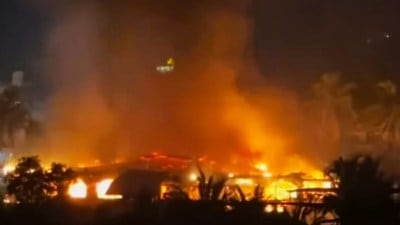
But not tonight. The darkness on this Friday is terrifying. Explosions boom across Lumpini Park and bursts of gunfire carry through the small alleys across the street. There is some unexplained shouting and the tinny,amplified voice of a woman who seems to be warning people to stay indoors. Bangkok is a battlefield.
My first impression of Bangkok,when I lived here for a stint in the 1990s,was that it looked poor but did not act poor,a colossal failure in urban planning yet a place that managed to remain seductive,remarkably friendlyand safe.
Much has happened since then to bring Bangkok to a totally different state,one of political chaos and spiralling violence. The country has been in a long,slow burn. In recent years,there has been a military coup,anxiety over the declining health of the countrys king and the rise of protest movements that push their agendas in the streets rather than in Parliament. But if any one idea can sum up the troubles,it is that Thailands politics have failed to develop as fast as its rising wealth.
Over the past two months,as a debilitating protest in Bangkok took hold and shadowy groups have operated with impunity,I have crouched behind furniture in hotels when grenades exploded on the street outside. I stood on a wide avenue as dozens of dead and wounded protesters were carried from the carnage of a failed military crackdown. I hid behind a telephone pole during an hour-long crackling barrage of gunfire. And on Thursday,a man I was interviewing was struck in the head by an assassins bullet and collapsed at my feet.
Bangkok today has many more high-rise condominiums and much more luxury than the city I knew 15 years ago,but is plagued by its dysfunctional politics. When I sat down to write this article in my apartment,I slipped on my ballistic helmet,a piece of equipment left over from a spell covering the Iraq war that is probably more useful to me in the streets of Bangkok.
I donned the helmet because my desk faces floor-to-ceiling windows with no curtains or shutters and outside is the neighbourhood where protesters are battling with troops. I have come to view my windows as an emblem of the turmoil. The architects of this citys gleaming apartment blocks and office towers did not anticipate gunfire. They thought about prestige and the liberating feeling of floating above a sprawling metropolis,separated only by glass.
But from my desk,it seems as if Bangkoks architecture has outpaced its political maturity. Who in Bangkok today would feel confident behind a wall of glass when explosions rip through the night?
The protesters battling security forces this week are known as Red Shirts and draw their strength from the urban and rural poor. Their arch-rivals are the Yellow Shirts,a group whose core support comes from the elite and middle class. The Reds and Yellows are hardly the only factions in Thailands highly fissured society. But they share a legacy of radicalising Thailands democracy by bringing politics into the streets.
The Red Shirts,who have demanded new elections,have built barricades around one of Bangkoks glitziest neighbourhoods. The Thai government is trying to take back this areathe commercial heart of Bangkokin an ongoing military operation,block by block.
Over the past two months,about 50 people have been killed and more than a thousand injured in acts of violence like the failed crackdown and a grenade attack on an elevated train station. And then there was the attempted assassination on Thursday of Maj Gen Khattiya Sawatdiphol,a radical Red-Shirt leader and renegade officer in Thailands fractured military.
The shooting was a measure of the depth of the countrys divisions and the treacherous effect they have on Bangkok as a city,the hub of mainland Southeast Asia.
I spotted General Khattiya as he was greeting supporters on Thursday inside the encampment that protesters have built in central Bangkok. He lingered for at least half an hour at a spot near a makeshift barricade of tires and bamboo spikes,answering questions from a group of reporters.
By 6:50 p.m.,the other reporters had drifted away,allowing me and my interpreter to fire away with questions. What turned out to be my last was about the likely outcome of a military crackdown. Would the army be able to penetrate the protesters fortifications?
The military cannot get in here, answered General Khattiya.
Then there was a loud bang and he fell backward to the ground. There was no scream,no sign of agony,just his crumpled body on a slab of sidewalk with his eyes wide open.
From what I could see,the bullet struck General Khattiya somewhere on the top of his head,near the intersection of the temple and the forehead. The general was facing me,so my best guess is that the shot came from behind me,possibly from a sniper located somewhere in the business district across a busy road.
When calm returns to Bangkoks streets,ballistic experts will presumably lead a more precise investigation.
But the thought occurs to me: How many more bullets will fly through the Bangkok sky before Thailands democracy reaches a level of maturity equal to the modernity and grandeur of its capital city?