Journalism of Courage
 3 min read



If Finance Minister Jaswant Singh8217;s message in his interim budget is that good economics makes for good politics, that dictum could be put to the test just 24 hours after he sought a vote on account in Parliament. The Union cabinet is scheduled to take a decision this afternoon on allowing domestic carriers to operate on existing unused international routes.
On the outcome of that meeting could well be determined the NDA government8217;s commitment to economic reform. This could possibly be the last policy decision the cabinet will be asked to make before the Lok Sabha is dissolved and the council of ministers transits to caretaker status. In any case, the absurdity of state monopolies cannot be overstated. Keeping domestic competition grounded would be akin to telling private steel manufacturers that they had better not produce the categories of the alloy being offered by SAIL. Or like telling tea sellers that they cannot venture near blends being marketed by the Tea Board. Hardly a brew to make one feel good, surely.
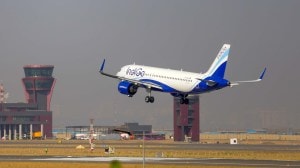
The issue before the government is extremely simple: whether to allow scheduled carriers like Jet and Sahara to fly on unused international routes. And at stake is the monopoly of our national carriers, Indian Airlines and Air India. Through a decade and more of economic reform that monopoly has been kept intact, thanks to pressure groups and misplaced notions of national pride. Concerted bids to successfully thwart attempts to liberalise the civil aviation sector have taken a heavy toll on industry and tourism. Arrivals to India, for tourism or business, are always capped because the national carriers do not have enough aircraft to ferry visitors. In any case, they have failed to keep up with the international competition in maintaining aircraft and providing services. The figures speak for themselves. Air-India accounts for just 12 per cent of all passenger traffic between India and the US; and just 15 per cent of all India-Britain traffic. Even on Gulf routes, the two carriers mop up just 32 per cent of all arrivals and departures. In total, on all international routes combined, the two airlines account for a grand 18 per cent of the business. In other words, the business domestic players could have carved out for themselves simply goes to foreign airlines! In any case, when the government is attempting reform in other sectors, why this pressure to move in the opposite direction on this one?