Journalism of Courage
 5 min read



On a bus journey 19-year-old Mamoni from Sonapur made friends with a woman who offered her a job. Mamoni8217;s journey ended in a brothel in Siliguri. But fortunately she was rescued eight days later.
Meanwhile, Panchami, a minor girl from Tangla in Darrang district of Assam, was rescued by an NGO, far away in Faridabad. Panchami had ended up in Haryana after a woman from Ranchi took her and five others away with the promise of a job.
Bijulee, 12, rescued from a village also near Faridabad was pregnant when police rescued her. Today, the traumatised girl can barely speak.
These are just some of the horror stories that are appearing regularly these days in Assamese dailies. Local television channels too have at least one story a week on girls being either rescued and brought back by police and NGOs from Mumbai, Faridabad, Siliguri and Kolkata, or being rescued by vigilant student groups from trains going out of the state.
8216;8216;Groups of people, especially from up north, are literally making a beeline to the Northeast to lure girls into the sex trade,8217;8217; says Hasina Kharbhih, president of Impulse NGO Network that works in tackling trafficking. 8216;8216;While some lure good-looking young girls for modelling assignments or jobs in call centres with good salaries, others target girls from poor families in rural areas, offering them jobs as domestic workers,8217;8217; she adds.
Assam, Meghalaya, Manipur, Nagaland, Tripura and Arunachal Pradesh are all battling the trafficking terror.
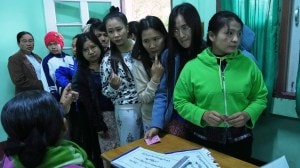
According to police records, in Assam alone as many as 65 girls were rescued from trains as they were being taken away by pimps posing as employers and recruitment agents. 8216;8216;Most of these rescued girls tell us that there were more girls and women from the Northeast in this racket who were ensnared with such attractions,8217;8217; says Kharbhih. Records with Impulse NGO Network says 64 girls from Meghalaya, nine from Manipur, two from Arunachal Pradesh, Mizoram and Tripura and one from Nagaland were rescued outside the region in the past six years.
Gunottam Bhuyan, IGP CID, who is also the nodal officer dealing human trafficking in the Assam Police, points out that girls living in relief camps established in strife-torn Kokrajhar and other districts of Assam are often the target. Over 100 girls, mostly belonging to the adivasi community, have gone missing from 25 relief camps in Kokrajhar in the past two years, he adds.
While most student groups in the Northeast focus usually on the issue of Bangladeshi and outsider influx into the region, one student body8212;the All Bodo Students8217; Union ABSU8212;has started working as a vigilant group against trafficking.
8216;8216;Girls going missing in villages has become common news. While we asked our volunteers to keep an eye on suspicious-looking people, we could intercept and stop several batches of girls from being taken by train to Mumbai, Gujarat, Haryana and other places,8217;8217; says Gautam Mushahary, general secretary, ABSU.
While ABSU volunteers conduct regular checks on trains leaving the region, the traffickers are one step ahead. 8216;8216;These days they transport the girls in small groups by bus to Siliguri from where they are shifted in larger groups to Delhi or Mumbai,8217;8217; points out Mushahary.
Though a detailed study on this issue is yet to be done, sociologists say rural poverty is largely responsible for pushing these girls into such well-laid traps. 8216;8217;People in villages, especially in the interior where the economy is shattered either by ethnic violence or natural calamities, are living in abject poverty. They are illiterate and ignorant and fail to comprehend the risk their daughters could face in heading out,8217;8217; says Mushahary.
Hasina Kharbhih echoes his views. 8216;8216;We have rescued a dozen girls from Mumbai and Delhi in recent months and they all belong to families living below the poverty line who were sold to traffickers,8217;8217; she says.
The trafficking route goes from the Northeast to the rest of the country. But it also criss-crosses within the region. For instance, Dimapur in Nagaland and Shillong in Meghalaya have emerged as major trafficking destinations.
But what is causing more concern now is the HIV risk that these girls face. 8216;8216;There is a definite link between human trafficking and HIV/AIDS,8217;8217; says Nasif Sadik, Special Advisor to the UN Secretary General and Special Envoy for UNAIDS in Asia and the Pacific. Sadik. In Guwahati last week, Sadik said he was particularly worried because there were no provisions yet to conduct compulsory testing for HIV on such girls. 8216;8216;You can8217;t force anyone into testing. It has to be voluntary.8217;8217;