3 min read

Journalism of Courage




The first Chief Minister of Sikkim, Kazi Lhendup Dorji Khangsarpa, who passed away in Kalimpong on Saturday, played a key role in the state8217;s merger with the Indian Union, ushering in a democratic movement when Sikkim was still ruled by a monarch.
The 103-year-old Dorji, who passed away in Kalimpong on Saturday, was honoured with the Padma Vibhushan by the Government of India, the second highest civilian award for his outstanding political career.
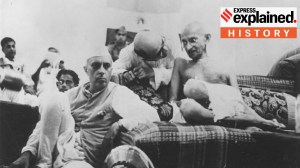
During his presidentship of the Sikkim State Congress, he led a delegation to Delhi in 1954 to call on then Prime Minister Jawaharlal Nehru.
The Sikkimese had been fighting for political and economic reforms and these were discussed by the delegation with Nehru, who was deeply impressed by their sincerity, particularly that of Dorji.
Nehru promised to give assistance for the progress and economic welfare of the Sikkimese people and assured them of Indian Government8217;s support towards political reform in Sikkim.
Earlier, in 1945, Dorji started the Sikkim Praja Mandal and was elected its first president.
In 1953, he became President of Sikkim State Congress and held that post till 1958. At that time, there were two main political parties in Sikkim namely the Sikkim State Congress and the National Party and the political approaches of these parties were different and bordering on communal sympathies.
Dorji then decided to form another party, called the Sikkim National Congress in 1962 which gave a new direction to political life in Sikkim. Dorji8217;s idea was to form a non-communal party which could give the people of Sikkim peace, prosperity and progress.
Fighting on this platform, his party secured eight seats out of 18 in the third general elections in Sikkim. This was by no means a minor achievement in view of the earlier political influences which were diverting their energy towards a communal end.
Dorji formed the opposition in the Sikkim Council and tried to bring about a feeling of communal harmony.
In the 4th general elections held in 1970, Dorji was appointed executive councillor and allotted the portfolio of Agriculture, Animal Husbandry and Transport Authority.
Realising that Sikkim was an agricultural country, he tried to bring about certain reforms to ameliorate the economic conditions of the agriculturists. He was, however, relieved of his executive councillorship in 1972 and, thereafter, he and his Belgian born wife Elisa Maria left for a tour of Europe.
On their return, he set about to fight the elections, which was held in 1973. The results of the elections of 1973 did not satisfy the Sikkim National Congress which felt that they had not been held fairly.
This led to an agitation in April 1973 which ultimately resulted in the merger of the Sikkim Janata Congress and the Sikkim National Congress. The United Party subsequently obtained an overwhelming majority in the general election by securing 31 out of 32 seats.