Journalism of Courage
 4 min read



The politicisation of defence buying in India has peaked, and not since Bofors have the power corridors in their entirety been so prepossessed with why we need to buy weapons and, more importantly, how we buy them. From aircraft the Air Force didn8217;t know it needed, to submarines the Navy needs more than anything else, arms buying has long been removed from the isolated preserve of government officers and bureaucrats. In the last few years, the world8217;s arms market has come upon India like never before. Even Washington sends officials every week to see if they can get the job done on billions of dollars worth of war tools. In the middle of the political blame game, the insidious movement of middlemen in New Delhi8217;s power circles and intelligence apparatus combing the world for bad news, there8217;s little that8217;s certain about how long it will take the armed forces to get what they want. Talk to the three armed forces8217; chiefs and you8217;ll know the war toys we buy now will pretty much define the country8217;s newfound opportunity to be a global military power.
 Autonomous Wheeled Artillery
Following the blistering and successful use of howitzers, which aren8217;t built for mountain warfare, on the Kargil heights, the Army decided it needs specialised weapons in the Himalayas that can trudge up those scattered paths. With possibilities available from Sweden, South Africa and Israel, wheeled guns, like the Bofors Archer L52, will allow the Army to fire at enemy positions and scoot to over a kilometre away before the shell even lands. A far better proposition than static guns, which, more often than not, make sitting ducks once they open fire. The Army is looking at buying about 600 of these monsters.
Deal Size: Rs 3,100 crore
INS Vikramaaditya
Bought to replace that old lady INS Viraat, who retires from service with added grace in 2008, the Vikramaaditya will shoulder in isolation the Navy8217;s far-out air defence prowess for four years, until the Western docks deliver the country8217;s first home-made carrier in 2012. Until then, with its complement of 16 MiG-29K deck-based fighters, the Vikramaaditya will swirl around the peninsula, helping the Navy look east, get more serious on exercises, rejuvenate air operations and project power across the Indian Ocean. As any Navy officer will quickly remind you, it8217;s the only ocean named after a country.
Deal Size: Rs 6,960 crore
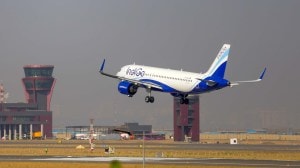
The baby pictured here is an American F-16, but it8217;s only one of the five jets competing for a huge impending order from the Air Force. When these lethal fighters begin to arrive later this decade, they8217;ll dot some of the frontier sectors to the west and north. These fighters are meant to be the Air Force8217;s quick response jets, for short sharp attacks, intercepts, etc. They will be built to fire beyond visual range missiles, protect high value ground assets, intercept infiltrating aircraft and damn much anything else. And with a potential order for 126 jets, coupled with the ensuing production of Sukhoi-30 Flankers in Nashik, the IAF8217;s air power will not be something you joke about at cocktail parties.
Deal Size: Rs 25,000 crore
The Navy says it needs these more than anything else8212;but the government has stopped short of giving the go-ahead. Built as eminently offensive oceanic platforms, these attack submarines are built to kill ships, other subs, or to even just switch off engines and watch the enemy. In military jargon, that8217;s called 8216;acoustic discretion8217;. A Scorpene can keep its 31-strong crew out at sea for 45 days and comes with automated gizmos that help keep watch over an unprecedented event horizon. When and if they finally do arrive, the Navy8217;s new attack subs will be stationed primarily in the Arabian Sea. No prizes for guessing why.
Deal Size: Rs 14,000 crore
The Air Force8217;s most significant force-multiplier since the mid-air refuellers arrived a few years ago, the three airborne warning and control aircraft to be delivered starting 2007 have rotodome radars that can pick up almost all suspicious aerial movement in a vast expanse of territory. This information, collated by three other on-board radars, is then beamed out to squadrons of fighters already in the air with perfect coordinates for either an attack or engagement. If you think of fighters in the air as fists, think of the Phalcon as clairvoyant eyes and brain. The Israeli systems will be mounted on Russian IL-76 aircraft, similar to the ones upgraded to refuel the IAF8217;s fighters.
Deal Size: Rs 4,785 crore