Journalism of Courage
 4 min read



The latest issue of People8217;s Democracy has an editorial on the Indo-Pak peace process in the backdrop of the visit of India8217;s external affairs minister to Pakistan. The editorial states that a harmonious Indo-Pak relationship will eventually help in making South Asia a prosperous region. 8220;This will have its positive impact at the global level as well,8221; it says.
Talking about American president George Bush8217;s comment that the time was ripe for solving the Kashmir issue, the editorial states that there is neither any need nor requirement for a third party 8212; least of all the US 8212; to intervene or be associated with the resolution of the issue.
The editorial concludes, 8220;This process of carrying forward the composite dialogue between India and Pakistan must be supported and strengthened by all those who cherish peace, stability and good neighbourly relations.8221;
Still a victory
In an article titled 8216;Rural Bengal once again reposes faith in Left Front8217;, PD argues that the people of Bengal gave their verdict in favour of the Left Front for the seventh consecutive time in the panchayat general elections.
It also gives details of where it lost out to the opposition. Quoting CPM Central Committee member Benoy Konar, PD says that the 8220;seventh panchayat general elections represented a tough proposition and that this had been anticipated.8221; According to the article, this was because of the well planned vilification campaign of the opposition against the CPM and the Left Front government for more than a year. The article says, 8220;The opposition were arrayed against the CPM and the Left Front stretching from the extreme right to the extreme left, and added to by religious fundamentalists of both persuasions.8221; It further says, 8220;The debate and doubts generated among the Left itself, in the post-assembly elections period, too, indirectly helped the campaign of misinformation by the opposition8221;.
Save NREGA
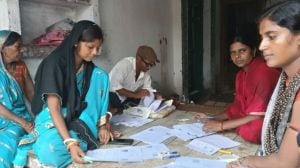
In an article titled, 8216;Prevent any dilution of NREGA8217;, politburo member Brinda Karat says that the condition of the rural workforce, the agricultural workers and landless households and their ever-increasing numbers have worsened in the background of the acute agrarian crisis.
In the context, the National Rural Employment Guarantee Act NREGA which recognises, in principle, the responsibility of the state to provide work to its citizens is a step forward in the struggle to demand the right to work as a constitutional right, according to Karat.
But there are several problems that, if not addressed, will gravely limit the potential of the scheme to bring full benefit of the act to the rural poor, she feels. 8220;Some are related to poor implementation of the scheme and the role of the state governments, while the rest 8212;- which are in a sense more crucial to the functioning of the act 8212;- are related to the provisions in the act itself and the role of the central government in financial allocations,8221; says Karat. She points out that the minister concerned has now sought to put a freeze on wages for the NREGA at the present level at a time when the government has failed to freeze the inflation rate.
Opposing such a freeze, she argues that the fixation of the state minimum wages should be in the jurisdiction of the state governments and adds that state governments must be consulted if there is to be any change.
The article also criticises the rural development ministry8217;s circular increasing the work time to 9 hours in the name of linking the NREGA with the Minimum Wages Act, which through a 45-year-old amendment had stipulated the work day as 9 hours.