Journalism of Courage
 4 min read



What does fertiliser use have to do with climate change? It does, and the link was discussed in detail at a recent meeting of the Parliamentary Consultative Committee of the Ministry of Agriculture.
In the past few months, the country has begun to discuss ways to prepare itself for the fall in crop yield that will come with increased temperatures and erratic supply of water. The other side of the climate change story is how best to reduce emissions from the agriculture sector, which contributes to 28 per cent of the total Green House Gas GHG emissions in India.
While the focus is on industry emissions, scientists believe that with some management solutions, emissions from agriculture could be reduced or mitigated to a large extent. The emission source in agriculture is primarily methane from rice paddy fields, nitrous oxides from application of manures and fertilisers to soil, and enteric fermentation in animals.
With our need to increase food production, the emissions from agriculture are expected to increase significantly in future. In any case, tropical climate encourages increased emission of nitrous oxide and other GHGs even at the current level of fertiliser consumption.
It is becoming increasingly important to focus on nitrogen as it is the most important plant nutrient and 80 per cent of all fertilisers used in India is urea, which is nitrogen based. The problem lies with the basic nature of urea8212;it starts emitting nitrogen at early stages of plant development much in excess of what is required. This leaves the plants starving for nitrogen in the later stages.
Besides, there is leaching of nitrates and release of nitrous oxides that are not consumed by the plants at the early stage. Scientists have been on a look out for inhibitors8212;something that will slow down the process of nitrification to ensure a steady supply of nitrogen to the plant in its entire life cycle. This will mean fewer applications by farmers and lesser emissions.
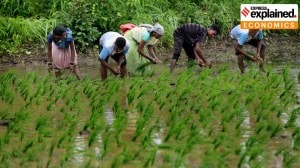
Studies have shown that the process of nitrification of urea is completed in 15-20 days in most agro-climatic conditions in India, and not in 90-100 days, which is the entire crop cycle. It is worse in waterlogged conditions for crops like rice, where the nitrogen is even less efficiently absorbed.
Scientists have found neem cake-coated urea to be a good inhibitor, but despite encouraging results, it is yet to become popular with farmers. The government too has not been very forthcoming in encouraging a ready mix of urea coated with neem cake.
This points to a lack of policy support considering the potential to mitigate these gases. The Indian Council for Agriculture Research has identified a list of priority issues and is in the process of developing a detailed action plan for each one of them, including specific budgets. Some of these are:
8226; Renew focus on efficient use of nitrogen-based fertiliser and water management: Widespread testing of neem cake and neem-coated urea that are known to inhibit emissions would be rewarding. Financial incentives be given for fertiliser-use efficiency. Incentives for both farming community and industry for producing and using neem-coated urea.
8226; Livestock population management: Determine optimal size of livestock population in different agro-ecological regions considering national milk requirements and GHG emissions.
8226; Identify opportunities for reducing methane generation in ruminants by modifying diet of cattle.
8226; Irrigation management for rice: Policies should encourage mid-season drainage of fields in irrigated areas.
These steps could lead to lower emissions from the agriculture sector. A fringe benefit may be increased yields with some of fertiliser management techniques.