5 min read

Journalism of Courage




The way they tell it on television, you8217;d think war is just another statistic. Sixteen Stealth bombers, 3,000 Tomahawk bombs, B2 bombers with 256 bombs weighing 2,000 pounds each8230; Speed. Range. Missiles.
8216;8216;This is A Day 8212; the day of Awe and Shock, we are reporting,8217;8217; proclaimed CNN. When it was all over but for the black plumes of smoke, the Fox News anchor agreed: 8216;8216;It8217;s Awesome, Awful, Shocking8217;8217;.
It was terrifying. For the 5 million people of Baghdad and those who watched the Iraqi capital go up in flames on Friday night. From the green of night vision rose gigantic clouds of orange and red in a celestial celebration of Holi. The clouds greyed and hung over the city, suspended in the sky like mangled waxwork figures from Madame Tussaud8217;s. And all the while, that sickening hum of jets and an accompanying drumbeat. But, the city light8217;s are still on, said a TV anchor brightly, impatient of such hyperbole. Even as you wondered what it like was to live through this night of 8216;8216;awe and shock8217;8217;, CNBC reported that the price of gold had fallen 8212; along with bits of Saddam8217;s palace.
It made you glad to think that the citizens of Baghdad can8217;t see or hear these TV broadcasts. What8217;s frightening about the war we8217;re watching is that those who suffer these extraordinary assaults Iraqi people are absent, those who report them are all frighteningly normal. There8217;s Jim Clancy CNN in his shirtsleeves or Lyse Doucet BBC in her short sleeves. There8217;s CNN8217;s White House correspondent revealing that George Bush said 8216;8216;go ahead8217;8217; to the decapitation attack 8216;8216;and went to have dinner with the First Lady8217;8217;. On a full stomach, he announced the hostilities.
There8217;s the clean-shaven John Vause resembling a movie star, describing how Kuwaitis deal with the threat of chemical warfare: 8216;8216;Basically, you rush down to your bomb shelter till the siren goes off.8217;8217; Just like that.
On board the aircraft carrier, USA Abraham, Kyra Phillipps says the pilots are waving at us from the bombers 8212; 8216;8216;There we go8217;8217;CNN.
It8217;s business as usual. Except that the business is war and it8217;s most unusual. The media is in the middle of the second Iraq war and as Mr Rodgers accompanying the American 7th. Cavalry exclaimed, 8216;8216;You have never seen pictures like these before8217;8217; CNN. That8217;s because there8217;s never been an electronic war of this kind before.
If anyone is in awe and shock, it8217;s the embedded reporters. They8217;re just delighted to be there and react with childlike wonder to the experience and the technology: the precision bombing, the laser guided missiles, etc. They reel off technical details like the string of a kite and with Tom Thumb8217;s self-congratulation: 8216;8216;Gee, what a good boy am I!8217;8217;
What we have seen is almost incidental: tanks racing across the desert like a mechanised Lawrence of Arabia, blurred green images of encounters, the surrender of troops, Baghdad burning8230; More importantly, there8217;s a psychological war being waged through television: information comes either from the Pentagon or embedded reporters. Which prompted Nicolas Witchell to quip: 8216;8216;they8217;re using the media as a weapon8217;8217; BBC .
It8217;s a phoney war: seeing is believing, but should you believe what you see? Take the strange case of the gentleman who read out the speech after the initial attacks on Baghdad. TV channels wondered: was he Saddam Hussein, a look alike or a videotape of Saddam Hussein prepared before the attack and relayed, as live, afterwards? See, it8217;s that kind of war.
It8217;s a phoney war because we see snippets of the action from the US or British perspective, not the big, assembled picture. What we have here is a skillfully managed media campaign. The media has access to military operations, live and happening and very commendable, but everything is under military supervision. Other than Baghdad, we8217;ve seen little of the war 8212; no shooting, no casualties, nothing to upset the viewer. Independent opinion is rare, other side of the story missing albeit a few hospital shots, like troops in action.
It is in this context that DD8217;s coverage has been commendable with Sashi Kumar in Kuwait, Satish Jacob in Baghdad, Sankarshan Thakur in Istanbul. Better than the private channels. Indeed, Thakur was one of the first to talk about the Turkish troops crossing over to the Kurdish areas.

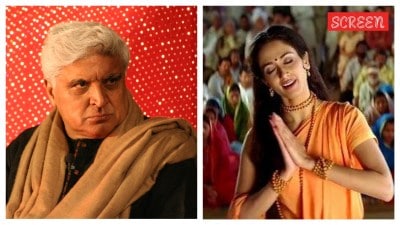
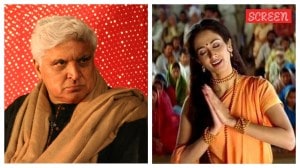
Veteran poet, screenwriter and lyricist Javed Akhtar recently expressed his disagreement with longtime collaborator and music composer AR Rahman over the latter’s claims that the Hindi film industry has become more communal in the past eight years. Akhtar claimed that the film industry has always been religion-agnostic and has picked the best person for the job.