Journalism of Courage
 3 min read



During his abruptly truncated tenure as chairperson of the Censor Board, Anupam Kher waged a valiant struggle to secure the frontiers of his deeply desired nanny state. Voicing an illiberal suspicion of unfettered freedom of expression, he sought to expand the acreage of film susceptible to his scissor8217;s wrath. Films like Final Solution, on the Gujarat riots, were held up at the censor8217;s office. Music videos were famously deemed to be in dire need of his office8217;s scrutiny. His agenda, in other words, was cause for deep unease. Why then does the clumsy shuffle in appointments this week, with Sharmila Tagore sweeping into his post, cause even greater disquiet? Kher was in any number of cases seen to be organising a moral policing in keeping with his political appointer8217;s wishes. So why does his dismissal disturb? Maybe because this remedy 8212; his replacement 8212; is part of the same old problem. Certainly because in effecting this change in personnel the UPA government has given us no indication that it is in any way better when it comes to allowing diversity in creative endeavours.
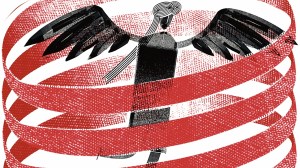
To connect the new appointment at the Censor Board with the personalities involved would be an extremely shallow reading of developments. The issue is not Tagore8217;s qualification or Kher8217;s intent. The point really is that the exercise reeks of a purge. And in any democracy that values institutions and procedures, a purge must be viewed as a grave danger. It harks back to practices in other lands, when a shift in the balance of power in the Kremlin would have clear and ideological repercussions for the creative establishment. Comrades in India, despite their periodic denouncement of Stalinist excesses, may perhaps have a lingering fascination for such tactics. After all, the action against Kher gathered momentum after Harkishen Singh Surjeet wrote in the CPIM journal People8217;s Democracy of the ideological threat posed by men like Kher.
These purges are not just undemocratic, they are also short-sighted. In these days of anti-incumbency, ideologically motivated appointments threaten to reduce everything from textbook formulation to censor guidelines to a political battleground. But expecting the government to de-ideologise culture by strengthening autonomy in these pursuits may be wishful thinking. Consider the stringent conditions being imposed on Prakash Jha8217;s film on Jayaprakash Narayan to provide a justification for the Emergency 8212; never mind that Sonia Gandhi herself has expressed regret for the Emergency. Or that she has even referred to Mrs Gandhi8217;s later misgiving for that suspension of democratic rights. Censorship, unfortunately, appears to be an addiction with the ruling class.