© The Indian Express Pvt Ltd
 10 min read


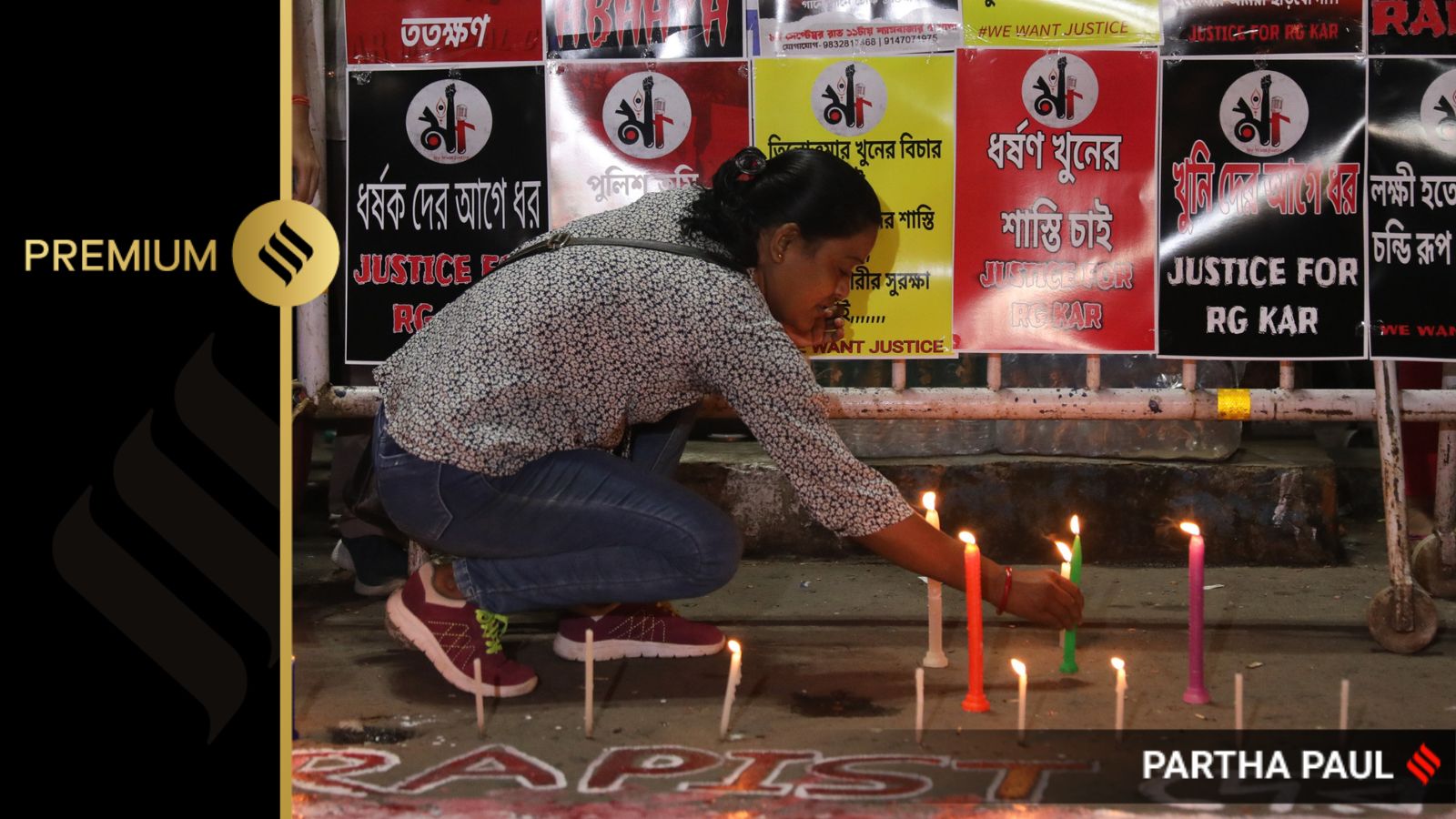 Reclaim the night protest at Shyambazar demanding justice for R G Kar rape and murder of a junior doctor. (Express photo by Partha Paul)
During her residency in 1992, it was not unusual for Dr Arpita Ray Chaudhury, 56, who currently heads the nephrology department at Siliguri-based North Bengal Medical College and Hospital, to nap in the deserted seminar hall at 2 am while on night shift “since it had tables and chairs”. The only woman in a team of five men at Kolkata’s Nil Ratan Sircar Medical College and Hospital then, she says her colleagues would use the seminar hall to “sleep, study or even take breaks before the start of their long hours of ward duties”.
On August 9, the body of a junior doctor was found in the fourth-floor seminar hall of Kolkata’s R G Kar Hospital, one of India’s oldest medical colleges established in 1886. The doctor was allegedly raped and murdered inside the hospital that sees a footfall of nearly 4,500 patients daily in the OPD. On August 18, a woman doctor was allegedly assaulted by a drunk patient and his family at Mumbai’s Sion Hospital around 3.30 am.
The ongoing protests following the rape-murder and the echoes it is still finding across the country are framed by a reality: the steadily increasing presence of women in medicine. Data from the All India Survey on Higher Education (AISHE) shows that for every 100 men, there were 100 women enrolled in medical colleges in India in 2020-21. These numbers increased from 88 in 2011-12 per 100 men to 110 in 2019-20, before dipping a little during the pandemic.
Despite the influx of women in medicine now, Dr Subhash Giri, former director of Lady Hardinge Medical College, and the heads of three leading government medical colleges across India say that even today facilities as basic as doctor duty rooms with latches or hostels for women remain “highly inadequate”.
Emphasising the need for “safe work spaces”, Dr Debarupa Sarkar, an MD in general medicine at Barasat Medical College and Hospital in West Bengal’s North 24 Parganas, says women continue to face challenges despite their increasing numbers in traditionally male-dominated fields. “During my MBBS (2012-2018), gender-based discrimination was minimal, but that situation altered significantly once I started working. Patients still ask about the arrival of Boro Sir (senior sir) and insist on addressing women doctors as ‘Sister’ or ‘Masi (maternal aunt)’ instead of ‘Doctor’,” she says.
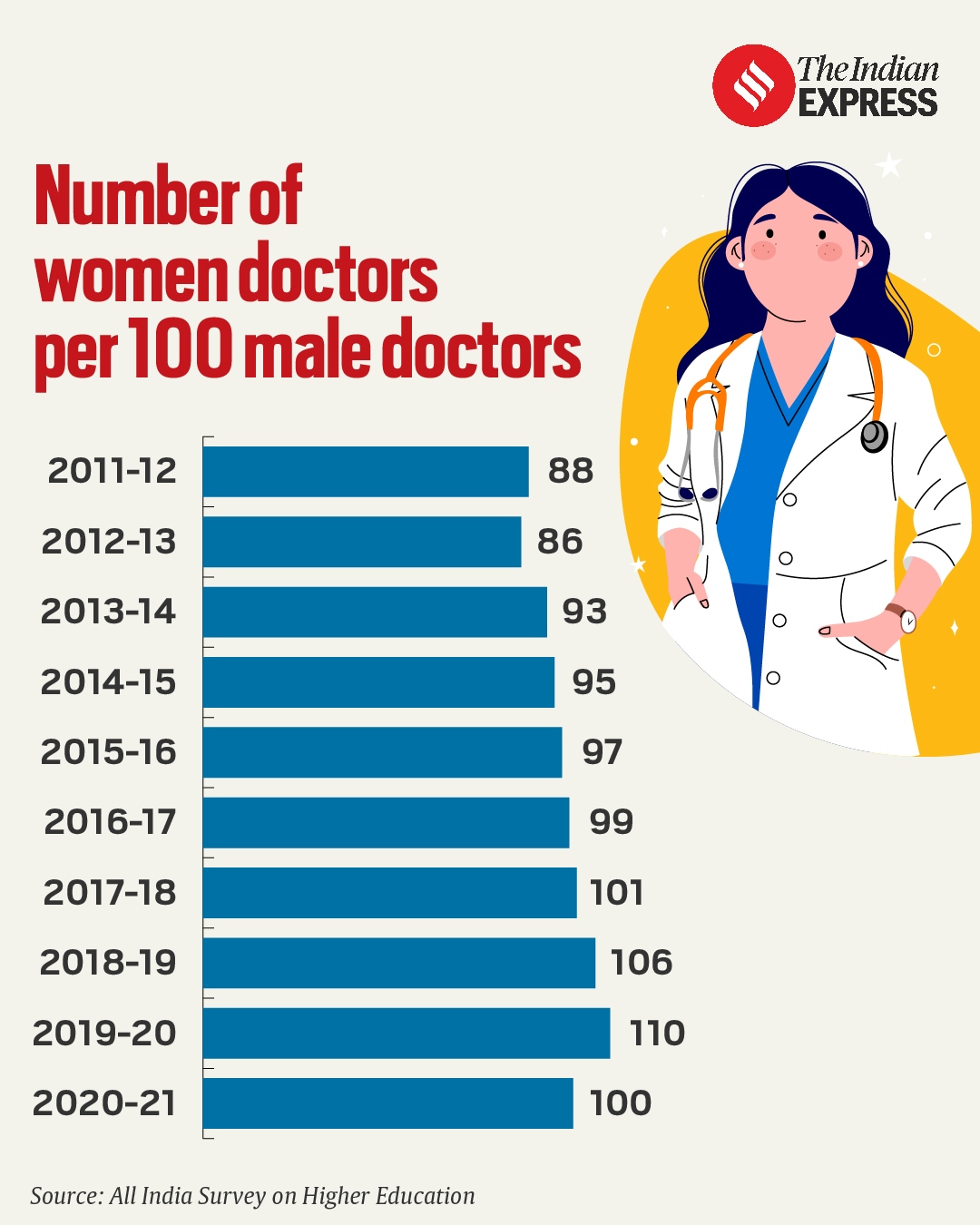 Number of women doctors per 100 male doctors
A veteran with over two decades of experience, including heading the West Bengal-based multispecialty SSKM Hospital from 2008 to 2023, Dr Chaudhury says there is stark difference between the current scenario for women doctors and her early days as a doctor in 1994, “though residencies remain as demanding as ever”.
“When I did my MBBS, there were 50 women against 150 men. Though I napped in the seminar room, being the only woman in a group of four-five male doctors, I would, at times, do the rounds alone at night,” she says.
In her time, she says most women would gravitate towards gynaecology, paediatrics or dermatology or preclinical subjects like anatomy, pathology, microbiology due to the pressure to get married and have children. “By the time a woman doctor finishes her post-graduation at the age of 26, she is pressured by her family to get married. By 28, around the time you finish your MD, you were pressured over your ticking biological clock,” she says.
Talking about the “significant” shift in societal attitudes now, she adds “Women doctors have started opting for all branches now. More parents are supportive of their daughters pursuing medicine. In fact, we’re seeing a growing number of women in traditionally male-dominated branches.”
She is not wrong. AISHE data shows that more women are entering branches that were male-dominated at the post-graduate level until just five years like orthopaedics, cardiology, oncology, and neurology, among others. From just 48 women in orthopaedics against 970 men in 2012-13, their numbers rose to 283 against 4,023 men in 2020-21. In 2012-13 in cardiology, there were just seven women against 312 men, but the number rose to 78 against 220 men in 2020-21. There were just 29 women against 95 men in oncology in 2012-13, but the figures for 2020-21 stand at 116 women against 123 men. Even in neurology in 2012-13, there were only nine women against 118 men, but there were 78 women against 173 men in 2020-21.
Dr Sarkar of Barasat Medical College and Hospital says her unwavering passion for general medicine and supportive parents got her through the worst of challenges she faced while studying medicine at Jadavpur’s KPC Medical College. “While we’ve witnessed a surge in women doctors, the system must adapt to provide a secure environment for all medical professionals. There is a need for infrastructural improvements to accommodate the rising number of women doctors, particularly when it comes to safety protocols during night shifts,” she says.
Stating that gender biases continue to plague the medical profession, Dr Sumedha Bhattacharya, a critical care specialist at a private hospital in Kolkata, says, “There’s a persistent notion that women are not cut out for surgery. While orthopaedics remains a male-dominated field, I am optimistic about more women entering the specialty in the future.”
Dr Pritha Haldar, 30, a second-year post-graduate trainee in the gynaecology department at R G Kar Hospital, says changes in social attitudes have made it easier for women to choose the disciplines they actually want. “Gone are the days when women were confined to gynaecology or dermatology. Today, we are excelling in surgery, general medicine and cardiology, besides taking on the demanding role of on-call emergency physicians.”
The recent murder-rape has underscored the deep-rooted problems within the system, says Dr Chaudhury. “Providing adequate support systems to women doctors, including day boarding and creches, makes it easier for them to balance their work and private lives,” she says.
The question of safety too weighs heavily on the minds of many doctors. A doctor at R G Kar Hospital says the incident has shattered her perception of campus safety despite having spent six years there. A Kolkata-based doctor who says she has spent “countless” hours in hospitals, both leading teams and organising events, says she always considered them her “second home” till the recent “terrifying” incident at R G Kar Hospital.
Trinamool MP Sharmila Sarkar, who was an MBBS student and a doctor at R G Kar Hospital between 1998 and 2001, says the number of women doctors had increased during her time. “Of 150 doctors in my batch, 32 were women. I did night duties alone too, but I cannot recall ever feeling unsafe.”
A medical student in the late 1970s, Dr Sutapa Ghosh, who studied and worked at Calcutta National Medical College and Hospital (CNMC), never felt unsafe during her time there. “The ratio of male to female students was stark then, perhaps 10:2. Despite being the only woman doctor on night duty, I never felt unsafe. The patient-doctor relationship too was different then.”
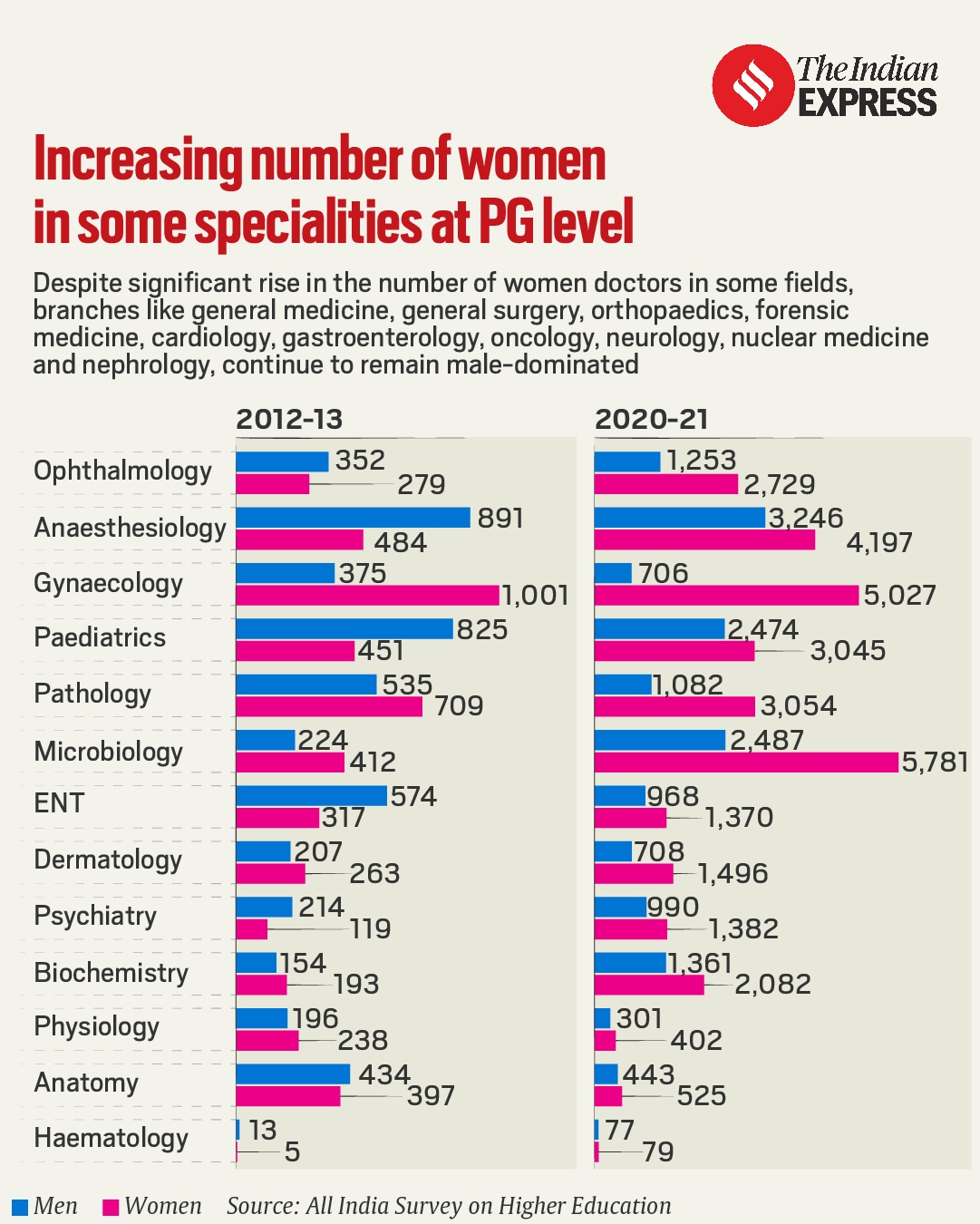 Increasing number of women in some specialities at PG level
However, she says, the experiences of her daughter, a doctor at R G Kar Hospital, were “disturbing”. Dr Ghosh says, “ During my time, CNMC had proper washrooms and restrooms for doctors. The conditions my daughter described at R G Kar Hospital are unimaginable. She said there were no dedicated washrooms for doctors and that they had to use patient washrooms that were not cleaned regularly.”
Talking about why night shifts pose a significant concern for women doctors, Dr Sarkar says, “The fear isn’t solely due to the recent R G Kar incident, but a general sense of insecurity due to limited staff at night and the potential for unruly crowds, which makes enhanced security measures imperative.”
To tackle issues related to staff safety, the current head of a national institute says, “It is essential for hospitals to create a safe working environment and have a mechanism in place for its staff to ensure timely help in case of an issue. While our hospital has golf carts to ferry staff between buildings and well-lit corridors, there is still need to do more.”
Critical care specialist Dr Bhattacharya says the lack of safety she encountered during her stint at a primary health centre in Sonarpur in West Bengal’s South 24 Parganas was “harrowing”, compared to the “superior” security measures at her private MBBS college (K P C Medical College in Jadavpur).
She recalls, “In college, we were under constant CCTV surveillance. During my posting at the primary health centre, the lack of security was alarming — anyone could walk in or out. My male colleagues would often swap night duties with me.”
Dr Nandini Sharma, who took over as dean of Maulana Azad Medical College in New Delhi in May 2020, during the extended COVID-19 lockdown, says the demand for safe spaces for women remains a “distant dream” even after all these years. The third woman to head the institute in nearly 40 years after cardiologist Dr Padmavati Sivaramakrishna Iyer, Dr Sharma recalls not even having a place to keep her purse. “Nobody thought of it since men carry wallets in their pockets.”
She adds, “My female students still don’t have safe spaces (like dedicated changing rooms). We have not learnt any lessons despite the Aruna Shanbaug incident (a nurse who spent over 40 years in a vegetative state after she was assaulted in a Mumbai hospital by a cleaner in 1973), which happened because she was changing in an unsafe space.”