© The Indian Express Pvt Ltd
 8 min read


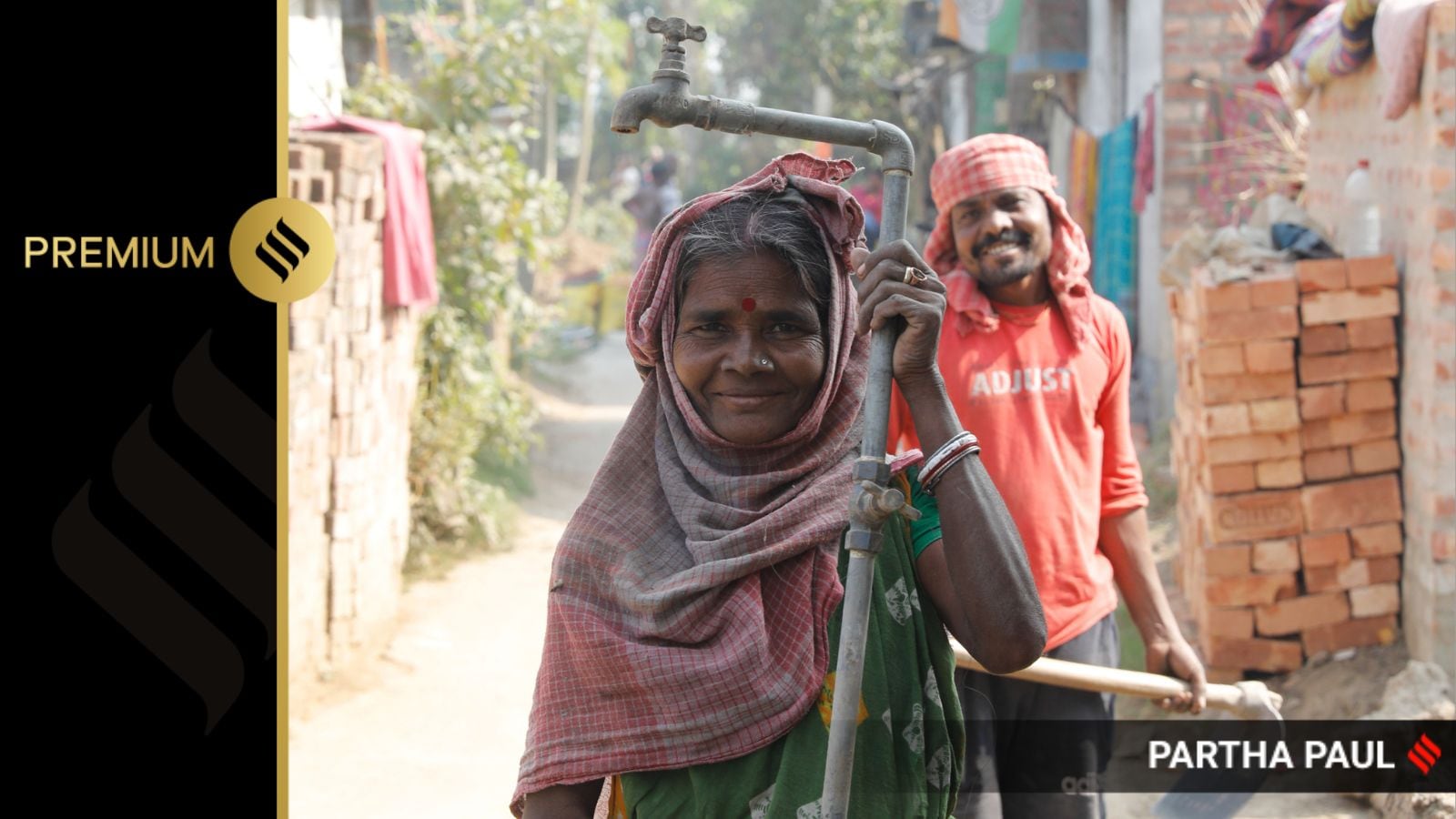 Bedana Dhara holds up a now-abandoned water pipe in Dangordihi village of Hooghly, West Bengal. (Express photo by Partha Paul)
In Dangordihi village in Hooghly’s Beraberi Gram Panchayat, 64-year-old Bedana Dhara picks up a rusted pipe with a tap still attached to it from a rubbish pile near her house and holds it up like a weapon. Installed three years ago under the national ‘Jal Jeevan Mission’ to provide safe drinking water to households across India, the pipe is now useless.
“Jal deyni (The water never came),” she tells The Indian Express.
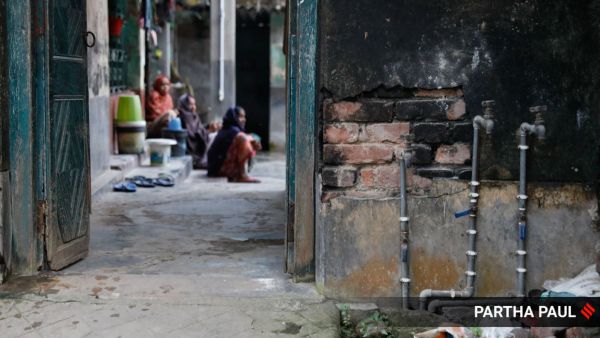 Taps run dry at Gopikantapur in Purba Bardhaman’s Chakdighi panchayat. (Express photo by Partha Paul)
Started by the central government’s Ministry of Jal Shakti in 2019, the Jal Jeevan Mission aims at providing safe drinking water to the country’s 19.36 crore households in India.
In West Bengal, the mission was launched on August 15, 2019, with an initial deadline of 2024. But five years on, the state appears to be doing poorly: having covered only 54.24 per cent of its 1,75,52,371 rural households, it’s currently last but one on JJM dashboard, behind Madhya Pradesh (67.21 per cent), Rajasthan (55.24 per cent), and Jharkhand (54.65 per cent), all of which are doing marginally better. Only Kerala (54.19 per cent) is behind West Bengal.
Funding for the scheme is shared by the Centre and states on a 50:50 basis, with the implementation of the project resting on the latter.
Of West Bengal’s 25 districts, Nadia (87.27 per cent) Paschim Bardhaman (70.77 per cent), Purba Bardhaman (70.68 per cent), North 24 Parganas (65.98 per cent), and Hooghly (65.85 per cent) have the most tap connections while Murshidabad (40.76 per cent), Uttar Dinajpur (39.17 per cent), Paschim Medinipur (38.30 per cent), Malda (36.08 per cent) and Purulia (32.45 per cent) have the least.
Significantly, no district in the state has been granted the “Har Ghar Jal” status to denote that all its households have got tap water supply. Moreover, only one of West Bengal’s 345 development blocks, 36 of 3,327 panchayats and 2,355 of 38,256 villages have got the status.
In comparison, states such as Goa, Arunachal Pradesh, Haryana, and Punjab and Union Territories such as Andaman & Nicobar, Puducherry, Dadra and Nagar Haveli and Daman & Diu have been granted the certified status, meaning that they have villages whose Gram Sabhas has passed a resolution certifying 100 percent tap water supply.
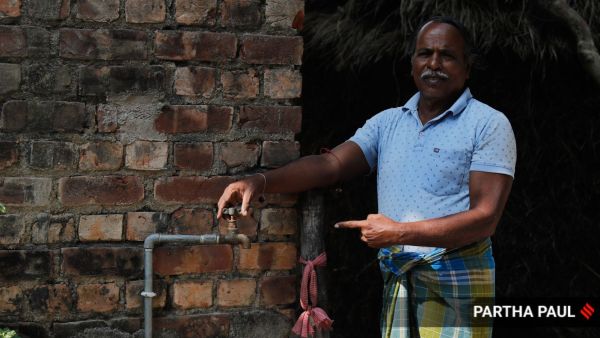 Tinkari Patra turns on a dry tap in Dangordihi village of Hooghly, West Bengal. (Express photo by Partha Paul)
In 2020, the state’s Mamata Banerjee government renamed the project ‘Jal Swapno’, under which the state promised water pipelines to its 2 crore rural households. From 2019-20, the central and state governments have each allocated over Rs 25,000 crore for the mission.
But even among the rural households that did secure tap connections, a ground visit to districts such as Purba Bardhaman, Hooghly and Howrah – which are among those with the most coverage under the scheme – shows that taps are often running dry. All three are in the state’s top 10 districts with the most coverage.
With implementation still lagging in the state, the deadline for the mission has now been pushed back to August 15, 2027.
Here’s what The Indian Express found:
According to the JJM dashboard, 6,42,395 of Hooghly’s 9,75,103 households have tap water supply. But in the village of Dangordihi, residents speak about how there’s no water in the taps.
“Residents paid (panchayat labourers) between Rs 50 and 100 to get taps installed three years ago,” says Tinkari Patra, 64, turning on a tap outside his modest brick house to show there’s no water. “We paid because we thought we’d have no drinking water. But there’s still no water, and you can see how the pipes are rusted.”
This means relying on neighbours’ with tubewells, which does not always go well. “We go to their houses to get water and they behave badly with us. But what to do? We have to get water,” Bijali Dhara, 48, says.
But Paramita Malik, deputy pradhan (head) of the Beraberi Gram Panchayat and a local TMC leader, believes the problem is that of “low water pressure”. “We have held a meeting and decided to put up a small pumping station to boost water pressure. The meeting was held just a few days back,” he says.
Calls and text messages to Hooghly District Magistrate Mukta Arya went unanswered.
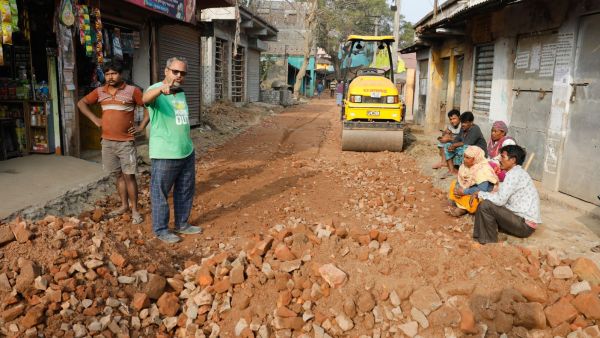 Work in progress to lay water connections at Jalabiswanathpur Village in Howrah’s Panchla Block (Express photo by Partha Paul)
Purba Bardhaman comes third on the state’s JJM list with 7,92,710 tap connections. But the only time that the residents of Paikpara village under the district’s Jyotisriram Gram Panchayat saw any water in the taps was when they were installed a year ago.
“At that time, panchayat officials took pictures of the tap and our Aadhaar cards,” 40-year-old Sabita Adak, pointing to a broken tap in a nearby rubbish pile. “Every year, our village flooded, but drinking water still eludes us. It’s like a bad joke being played on us.”
With the nearest pump house about half a kilometre away also remaining under lock and key, this village too has to rely on the village tubewells.
In Banharishpur gram panchayat Howrah’s Panchla block, Saddam Shah, 32, gave up his private water connection two years ago after he heard of the plans under the JJM. Howrah is ninth on West Bengal’s JJM dashboard.
“Now, we neither have our old nor the new connection,” he says.
But the real trouble begins when tube wells too start to dry, says Goursundar Mondol, 45, a TMC leader and pradhan of Chakdighi Gram Panchayat in Purba Bardhaman.
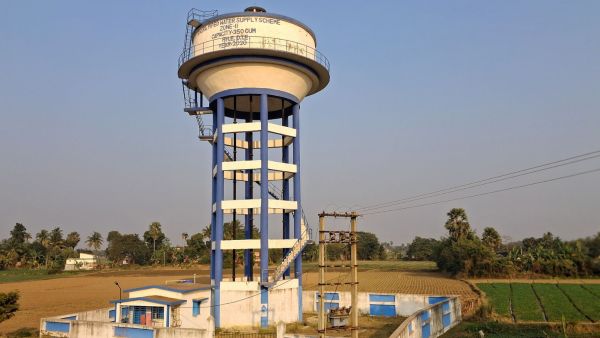 A water tank at Gopikantapur in Purba Bardhaman’s Chakdighi panchayat.
“When I was the panchayat pradhan, we had frequent meetings with PHE officials at the district level but nothing happened. We also identified land for a pumping station but then nothing happened there either,” Goursundar says.
Purba Bardhaman District Magistrate Ayesha Rani confirms that the administration had received such complaints. “We spoke to the local administration, the Sub Divisional Officer and the Block Development Officer. We’ll try to sort this out soon,” she says.
Howrah District Magistrate Deepap Priya says that the administration is building water reservoirs in Sankrail and Shyampur blocks to ensure sufficient water supply. “We expect that by March this year, we’ll be able to send water to all households of Uluberia and Panchla blocks,” the official says.
The pace of work under the JJM has rattled the state government. At a review meeting in November and December, Chief Minister Banerjee blamed it on the “non-cooperation” of the central government and said “stern action” will be taken against defaulting contractors.
Senior officials at the Jal Jeevan Mission, New Delhi, declined to comment saying the state was responsible for the implementation. On his part, the state’s Public Health Engineering Department minister Pulak Roy says it “isn’t easy work” and that the department would act on “specific information” in cases where there were connections but no water. PHE is the nodal agency in the state for JJM.
Roy also contests the allegation that the state was the lowest performer in the mission, saying it was “time-taking work”. “We started this project in July 2020 instead of August 2019. We are a densely populated state, fourth in the country in terms of population,” he says. Meanwhile, PHE sources say that a probe is on against contractors and engineers “not fulfilling their duties”.
But the Opposition blames the Banerjee government for the scheme’s performance.
“Drinking water has not reached households, but cut money has filled pockets of certain sections, including the ruling party,” Communist Party of India (Marxist) Sujan Chakraborty says.
BJP’s Rajya Sabha MP Samiki Bhattacharya accuses the Banerjee government of “vindictiveness and intolerance of a national scheme”.
“It was reluctant from the very beginning. It’s the people of West Bengal who are suffering,” Bhattacharya says.