Journalism of Courage



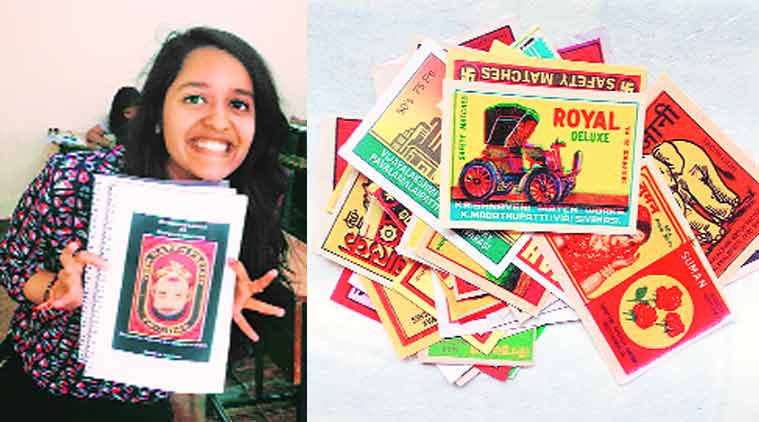 ShreyaKaturi (left) has close to 700 matchboxes, collected from across India and abroad
In late 2013, Shreya Katuri, then a final-year journalism student at Delhi University, had to present ideas for her dissertation. An art enthusiast, she expressed an interest in studying and documenting the history behind the graphics on Indian matchbox brands. “I was told to leave the room and return with a better idea. The professors found the idea too sketchy,” says Katuri. But she was adamant and managed to convince them. Six months later, her dissertation, titled “Indian Matchbox Labels as Popular Culture: Religion, Nature and Gender in India”, was awarded good grades.
It’s been a year since Katuri finished college but the 22-year-old still picks up any matchbox she finds on the road, at paan shops or hotels across the country. Her collection is nearing 700 and comprises matchboxes from Rajasthan, Kerala, Sikkim, Karnataka, Andhra Pradesh, Uttar Pradesh and some from China, Botswana and Singapore.
Art on a Box, her Instagram page that she started in October last year, features over 200 pictures of the colourful matchboxes — some with motifs of Indian gods and goddesses, brand names, animals, stars and flowers. “Since I had already built up a sizeable collection during my research, I decided to continue the project online,” says Katuri.
Books on the subject, such as pop culture historian and author Warren Dotz’s Light of India and Mumbai-based Shahid Datawala’s Matchbook, helped her study how the labels have evolved over the years. She discovered that most of the brands were manufactured in southern India, especially Tamil Nadu. “Many motifs are indicative of the effects of globalisation. They are often objects of aspiration — a big home, a cake, a luxury car — for the illustration artists, most of whom hail from villages,” she says.
Katuri also draws a parallel between religion and the idea of the nation. “It could be looked at as soft propaganda as there’s a lot of Hindu-dominated imagery — not just gods, but also symbols like the swastik and a puja thali.” Also, aside from cartographic representations of Mother India and goddesses such as Saraswati and Laxmi, the graphics are male-centric. “Men also dominate images of professions such as doctors, farmers and astronauts, reinforcing ideas of patriarchy,” says Katuri, who now works with an NGO as a communications consultant.
Her Instagram feed is now flooded with pictures that strangers send her, of matchboxes they find in different parts of the country. Katuri also keenly follows the typography on foreign matchboxes in a bid to trace their significance. She hopes to launch a website for discussions on Indian pop art with other design enthusiasts, and is in talks with another artist to print postcards with matchbox illustrations. “While places like CIViC in Delhi have matchbox labels displayed, no one seems to be actively promoting them or studying them in terms of visual culture. I don’t want to limit Art on a Box to Instagram only,” she says.
shikha.kumar@expressindia.com

 3 min read