5 min read
📣 For more lifestyle news, click here to join our WhatsApp Channel and also follow us on Instagram
© IE Online Media Services Pvt Ltd



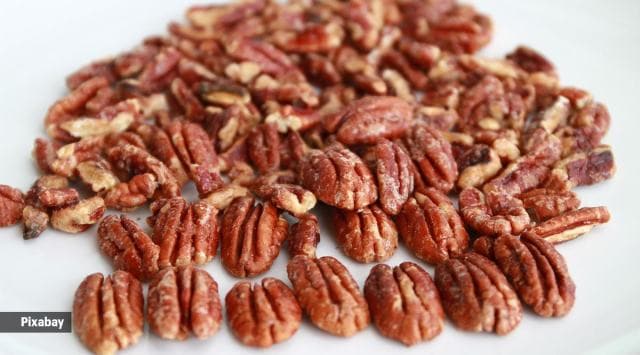 Pecans contain antioxidants like ellagic acid and vitamin E, which help combat oxidative stress, reduce inflammation, and protect against chronic diseases. (Pic source: Pixabay)
Do you love pecan pie, cookies or anything to do with pecans? Well, if you do, there is a reason to celebrate. With its rich, buttery flavour and a slightly sweet undertone, pecans not only enhance the taste of your desserts but offer numerous health benefits. They are packed with healthy fats, fibre, and essential minerals like manganese and copper. Additionally, pecans are a good source of antioxidants and may help improve heart health, reduce inflammation, and support brain function.
Speaking with indianexpress.com, Dr G Sushma – Consultant – Clinical Dietician, CARE Hospitals, Banjara Hills, Hyderabad shared the nutritional profile of pecans, their numerous health benefits, and also weighed on whether it is safe for diabetes patients to consume them.
Nutritional profile of pecans per 100 grams, along with the daily value (DV) percentages based on a 2,000-calorie diet:
– Calories: 691
– Total Fat: 72 grams (111% DV)
– Saturated Fat: 6 grams (29% DV)
– Monounsaturated Fat: 41 grams
– Polyunsaturated Fat: 21 grams
– Cholesterol: 0 milligrams
– Sodium: 0 milligrams
– Total Carbohydrate: 14 grams (5% DV)
– Dietary Fiber: 9 grams (36% DV)
– Sugars: 4 grams
– Protein: 9 grams (17% DV)
– Vitamin E: 3 milligrams (15% DV)
– Thiamin (Vitamin B1): 0.6 milligrams (40% DV)
– Riboflavin (Vitamin B2): 0.13 milligrams (7% DV)
– Niacin (Vitamin B3): 1.2 milligrams (6% DV)
– Vitamin B6: 0.2 milligrams (10% DV)
– Folate (Vitamin B9): 22 micrograms (6% DV)
– Calcium: 70 milligrams (7% DV)
– Iron: 2.5 milligrams (14% DV)
– Magnesium: 121 milligrams (30% DV)
– Phosphorus: 277 milligrams (28% DV)
– Potassium: 410 milligrams (12% DV)
– Zinc: 4.5 milligrams (30% DV)
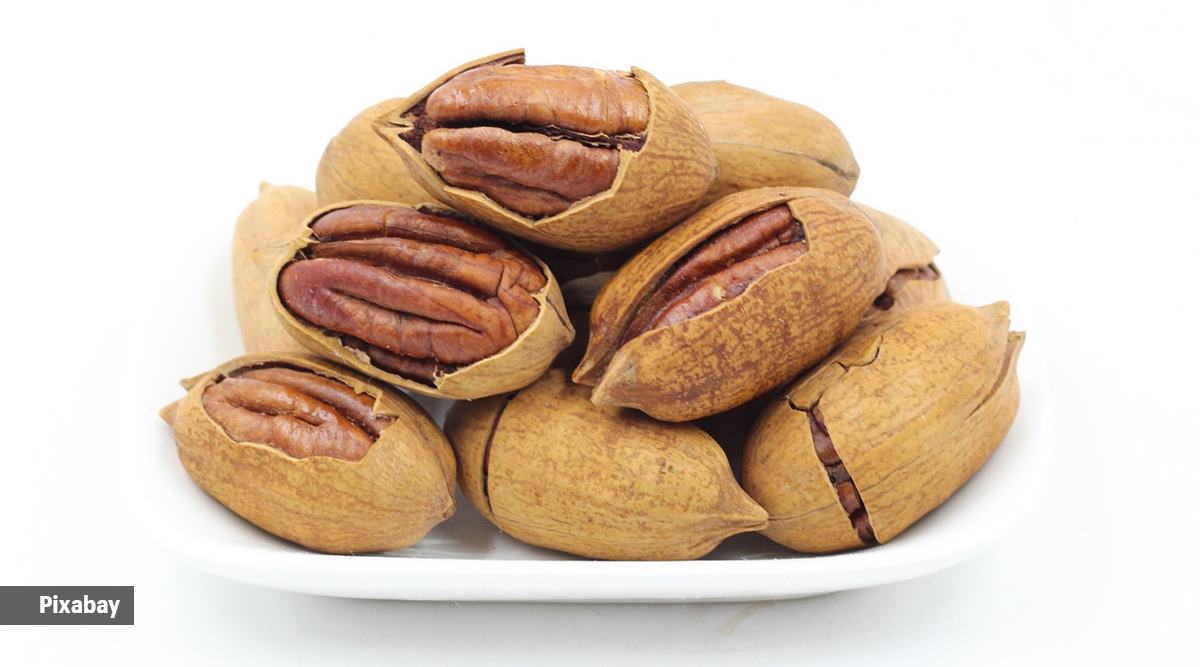 Pecans are a nutrient-dense food, providing a good source of vitamins, minerals, and dietary fiber. (Pic source: Pixabay)
Pecans are loaded with health benefits. Dr Sushma shared them as:
1. Good for heart health: Pecans are rich in monounsaturated fats, which can help lower bad cholesterol levels (LDL) and reduce the risk of heart disease.
2. May aid in weight management: Despite being calorie-dense, pecans can be beneficial for weight management. The healthy fats and fibre in pecans promote satiety, helping you feel full and satisfied for longer periods, which may reduce overeating.
 The healthy fats and fibre in pecans promote satiety, helping you feel full and satisfied for longer periods, which may reduce overeating. (Pic source: Freepik)
3. Are nutrient-dense: Pecans are a nutrient-dense food, providing a good source of vitamins (such as vitamin E, thiamin, and B vitamins), minerals (such as magnesium, phosphorus, and zinc), and dietary fibre.
4. Rich in antioxidants: Pecans contain antioxidants like ellagic acid and vitamin E which help combat oxidative stress, reduce inflammation, and protect against chronic diseases
5. May help control blood sugar levels: Pecans have a low glycemic index, meaning they have a minimal impact on blood sugar levels. They can be a suitable choice for individuals with diabetes, but portion control and overall carbohydrate intake should be considered.
6. May boost brain health: The vitamin E content in pecans contributes to brain health and may help protect against age-related cognitive decline.
 The vitamin E content in pecans contributes to brain health and may help protect against age-related cognitive decline. (Pic source: Pixabay)
Regarding diabetics consuming pecans, it’s generally safe for them to include pecans in their diet. “Pecans are low in carbohydrates and high in healthy fats, which means they have a minimal impact on blood sugar levels. However, moderation is still important as pecans do contain calories,” said Dr Sushma.
She added that a suitable portion for diabetics would be about 1 ounce (28 grams) or a small handful per day of pecans, while considering the overall carbohydrate intake from other sources.
You need to consider a few things when consuming pecans. Dr Sushma listed them as:
1. Allergies: Pecans are tree nuts, and individuals with tree nut allergies should avoid them.
2. Portion control: Pecans are calorie-dense, so it’s essential to consume them in moderation to avoid excessive calorie intake.
3. Preparation: Roasting pecans or consuming them raw is a healthy choice. Avoid pecans that have been heavily salted or coated in sugary coatings.
4. Nutrient balance: Pecans are nutritious, but they should be part of a well-balanced diet that includes a variety of other fruits, vegetables, whole grains, and lean proteins.
📣 For more lifestyle news, follow us on Instagram | Twitter | Facebook and don’t miss out on the latest updates!