5 min read
📣 For more lifestyle news, click here to join our WhatsApp Channel and also follow us on Instagram
© IE Online Media Services Pvt Ltd



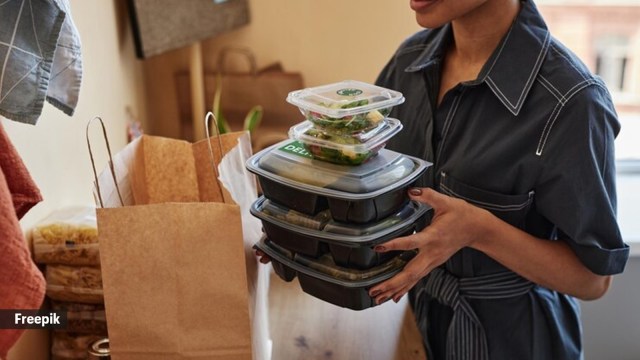 What are the potential dangers of serving hot foods in plastic containers? (Source: Freepik)
In a recent call to action, integrative lifestyle expert Luke Coutinho raised concerns about the widespread use of plastic containers by food delivery apps, sparking a crucial debate on food safety and public health
Coutinho wrote in an Instagram post, “Swiggy, Zomato, Restaurants…. Please work with your partners to ensure food deliveries happen in bio degradable non plastic containers…many restaurants do this already, please make it uniform…deliver food and health…hot food in plastic is making people sicker…you’ll have the power to help make a change.”
He added, “People want their food on time …so restaurants will cook your order on high heat and flame , destroying most ingredients , using more refined oil as a medium for fast cooking …from pan / vessel straight into a plastic container which is immediately covered with the cover retaining immense heat and steam.”
“This heat as we know starts to break down the plastic into dangerous bpa and other toxins that wreck havoc with the human body and hormones , fertility , estrogens etc ..we need to move to biodegradable non plastic asap for better health and a better earth …. @swiggyindia @zomato @fssai_safefood you’ll have the power to make this change and be part of a healthier india respectfully request you’ll @swiggyindia @zomato and @fssai_safefood @fssai_group_of_india to work this out,” he stated.
View this post on Instagram
Zomato CEO Deepinder Goyal acknowledged Coutinho’s concerns. He replied, “Thanks, Luke, for bringing this up. We will do what we can — will highlight restaurants which use food-safe packaging, so customers can make a more conscious choice.”
This highlights the potential dangers of serving hot foods in plastic containers, particularly when meals are transferred directly from high-flame cooking to plastic packaging. Biraja Rout, Founder, Biggies Burger and Beamer Brands, says, “Heating food at high temperatures and then packing it in plastic containers can cause harmful chemicals to leach into the food. When you think about a hot, steaming meal straight from the stove being placed in a plastic container, it’s not just the food that’s being packed.”
Here’s what you need to know about the chemicals involved, he informs:
– Bisphenol A (BPA): This chemical is commonly found in polycarbonate plastics and epoxy resins. BPA can mimic estrogen, leading to hormonal imbalances. Long-term exposure has been linked to increased risks of breast and prostate cancer, heart disease, and reproductive issues. According to research published in Environmental Health Perspectives, BPA is a significant endocrine disruptor.
– Phthalates: These are used to make plastics more flexible and durable. Phthalates can interfere with the endocrine system, which is crucial for hormone regulation. A study in the Journal of Toxicology highlighted that phthalates are linked to reproductive and developmental issues, particularly affecting fetal development and young children.
– Styrene: Found in polystyrene containers, styrene is a suspected carcinogen. It can leach into food, especially when the food is hot. Exposure to styrene has been associated with adverse effects on the nervous system, such as headaches, fatigue, and dizziness, as documented by the National Institutes of Health.
“These chemicals are more likely to migrate into food when it is hot, posing significant health risks,” Rout asserts.
 Reduction of plastic packaging in the food delivery industry is essential (File)
One option, according to Rout, is the use of biodegradable containers. “Made from materials like cornstarch, bagasse (sugarcane fiber), or PLA (polylactic acid), these containers decompose naturally. They are excellent for the environment because they break down into non-toxic components.”
Similar to biodegradable options, compostable containers also break down into organic materials that can improve soil health, he says. Compostable packaging is usually made from plant-based materials and decomposes without leaving harmful residues.
Rout adds, “Stainless steel or glass containers can be sanitised and reused multiple times. They are durable and do not leach harmful chemicals into food.”
Rout recommends the following government regulations to support the reduction of plastic packaging in the food delivery industry:
– Plastic Tax: Imposing taxes on plastic packaging to discourage its use and generate funds for sustainable initiatives. This can make plastic packaging more expensive, thereby encouraging companies to switch to alternatives.
– Subsidies and Grants: Providing financial support to companies transitioning to eco-friendly packaging. Government grants can help offset the initial costs associated with the switch.
– Mandatory Standards: Setting regulations for the use of biodegradable or compostable packaging in the food delivery industry. Mandating the use of sustainable packaging can create a level playing field where all companies are required to comply.
– Public Awareness Campaigns: Government-led initiatives to educate the public on the benefits of reducing plastic use. National campaigns can help shift public opinion and behavior towards sustainable practices.