Journalism of Courage



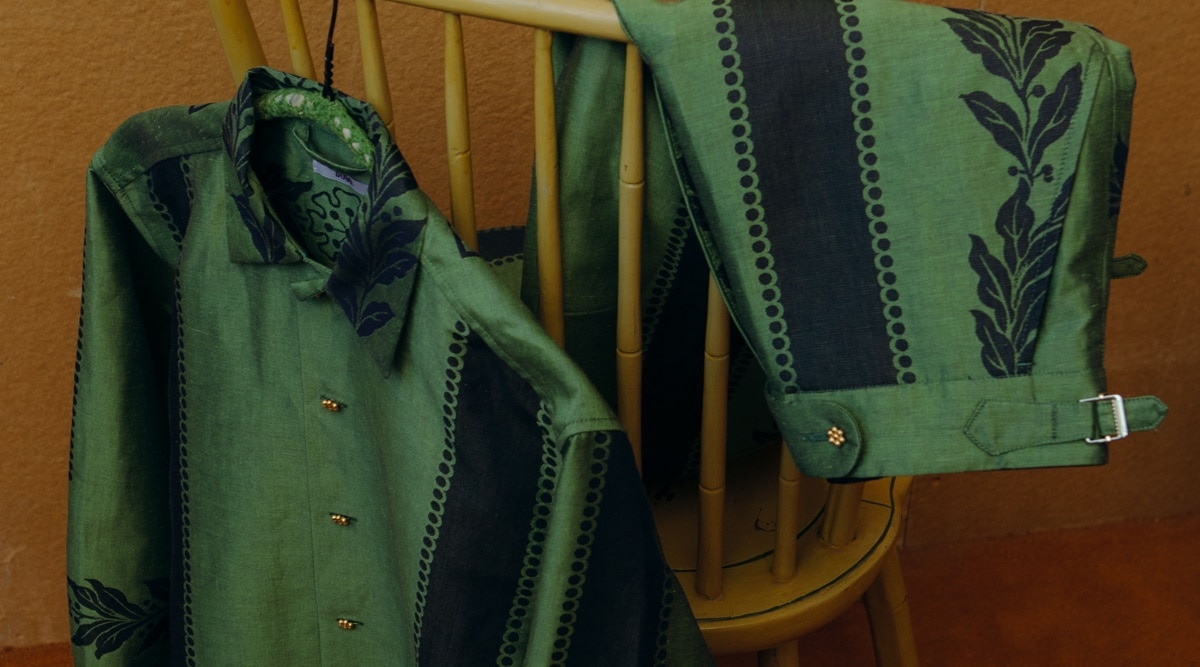 Pieces from the collaboration between designer Emily Bode Aujla and Jean Prounis. (Dana Golan/The New York Times)
 Written by Thessaly La Force
The Edith Piaf impersonator was belting out “La Vie En Rose” as an ice sculpture of the divine Greek stallion Pegasus slowly melted between two seafood towers. Potted orchids dotted the draped tables alongside standing ice buckets filled with bottles of Champagne, in a nod to a more midcentury kind of evening decor.
What had seemed an ordinary winter night at Orsay, a French bistro on New York’s Upper East Side, had been temporarily transformed into a scene from the city’s 1940s cabaret culture. And even if the partygoers, who included actors Lucas Bravo and Tommy Dorfman, artist Nate Lowman, model Ella Emhoff and fashion designer Aurora James, appeared more interested in the present than the past, it didn’t matter. The evening’s hosts — fashion designer Emily Adams Bode Aujla and fine-jewelry designer Jean Prounis — stood side by side, satisfied in having transported their guests to another moment in time.
The two friends — and now collaborators — were celebrating their first capsule collection, inspired by Prounis’ family history, which combines Bode Aujla’s unisex silhouettes with gold-plated silver buttons and charms designed by Prounis. Eight pieces hung on a rack by the bar: a tunic, a pair of trousers, a pair of boxer shorts, four different shirts and a scarf. In addition, Prounis had crafted three pieces of fine jewelry for the occasion: a gold pin, an emerald ring and gold earrings.
“I’ve always wanted to find a way to go back,” said Prounis, 29, wearing a flowy silk dress from Desert Vintage, the coveted downtown-by-way-of-Arizona retailer, and a black hat with period-appropriate netting. Beginning in 1936, her great-grandfather and his brother, Otto Prounis and Nick Prounis, were co-owners (along with a subsequent third partner, Arnold Rossfield) of a popular Manhattan nightclub called Versailles.
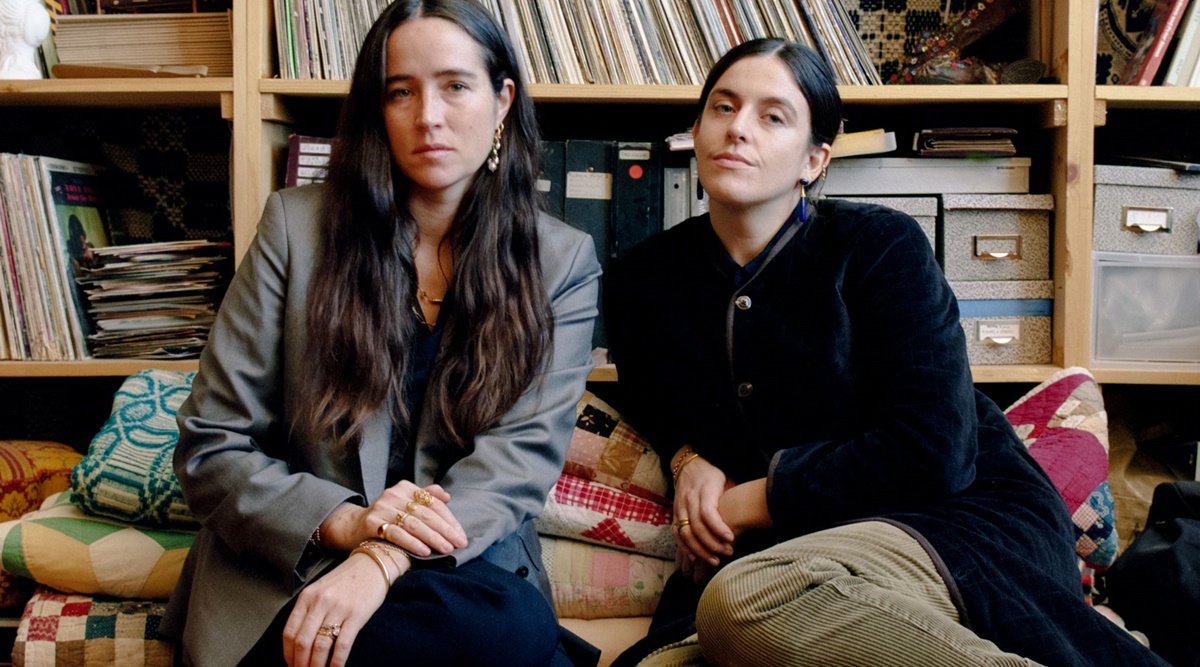 The designer Emily Bode Aujla, left, with Jean Prounis, in New York. (Dana Golan/The New York Times)
Originally located at 151 E. 50th St., Versailles was where wealthy New Yorkers, celebrities, aristocrats, showgirls and other regulars rubbed shoulders, dining on French cuisine, cocktails and Champagne over live music and other entertainment. Famous musicians and comedians including Abbott and Costello, Dean Murphy, Hildegarde, Perry Como, Desi Arnaz and Peggy Lee performed there. Edith Piaf was a frequent guest singer beginning in 1947. When Versailles shut its doors for good in 1958 — its owners were facing “some financial troubles and ready to retire,” according to Prounis — it was one of several closures that signaled the end of a particular era of New York nightlife.
Prounis’ obsession with her family history first took root when she was a child, after her grandfather showed her photographs and other ephemera from Versailles’ heyday, such as old menus, silverware, napkins and autographed showgirl portraits. He also introduced her to his personal library devoted to ancient Greek culture — the Prounis family is originally from Metsovo, Greece — where she pored over images of architecture, statuary and other artifacts with an obsessive eye. Both would eventually become the inspiration for Prounis’ eponymous fine-jewelry line, which she launched in 2017, offering stately pieces made of a buttery green 22-karat gold alloy composed only of copper, silver and gold that was commonly used in antiquity.
Both brands, Bode and Prounis, possess distinct aesthetics; the former a kind of refined-but-dusty flea market chic, the latter more of a glittering ode to antiquity. And yet the two have found meaningful ways to come together, sharing a spirit that bucks at the flashiness of contemporary fashion. At Bode’s spring 2019 menswear presentation, the models wore Prounis rings, necklaces, bracelets and earrings as accessories alongside Bode khadi bowling shirts and rugby shorts, loosely evoking the cinematic universe of Satyajit Ray. When Lorde was dressed by Bode Aujla for the 2021 Met Gala, the pop star wore two pairs of Prounis earrings and several gold rings with a custom Bode white silk and beaded skirt, top and headpiece.
As both of the brands have grown, so has their stature with a certain class of celebrity. Justin Bieber, Jay-Z, Kendrick Lamar and Harry Styles have all worn Bode. Zoe Kravitz wore a Prounis necklace and ring in a Super Bowl commercial, while Bella Hadid sported a pair of Prounis drop earrings at the Met Gala after party last year. Bode opened a New York City store in 2019 (where Kendall and Kylie Jenner were photographed shopping a few months ago) as well as a second location in Los Angeles last year.
Prounis and Bode Aujla first met in 2016, bonding over the fact that they were both young designers launching their own brands. One evening over dinner at her West Village apartment, Prounis showed Bode Aujla her family’s pistachio green-and-white damask Versailles tablecloth, asking if Bode Aujla could sew it into a shirt. When Bode Aujla launched her label that same year, she debuted with one-of-a-kind pieces made with antique textiles. (Her singular approach to fashion has since earned her three Council of Fashion Designers of America awards.) And though she often preferred to work with vintage and other found fabric, Bode Aujla was wary of altering an item of such value. Instead, she offered a better idea: Why not create a historical reproduction of the tablecloth and use it to design something entirely new?
Creating the collection was a process of trial and error. They were both busy running their own businesses, and it was challenging to find the time. “We were more organic in our approach,” said Prounis. “We never had a proper deadline.” They eventually changed the white in the original fabric’s pattern to a darker forest green to better emphasize the Jacquard weave. While they knew that adding more buttons and charms could be costly, they ultimately decided to sew them on the cuffs, collars and edges of various pieces for a gentle metallic effect. (The clothing, which ranges from $385 to $890, will be available on Bode’s website and at both Bode stores, while the jewelry, which ranges from $590 to $2,480, will be available on Prounis’ website and by appointment at Prounis’ New York City showroom.)
This article originally appeared in The New York Times.
📣 For more lifestyle news, follow us on Instagram | Twitter | Facebook and don’t miss out on the latest updates!

 7 min read