Journalism of Courage



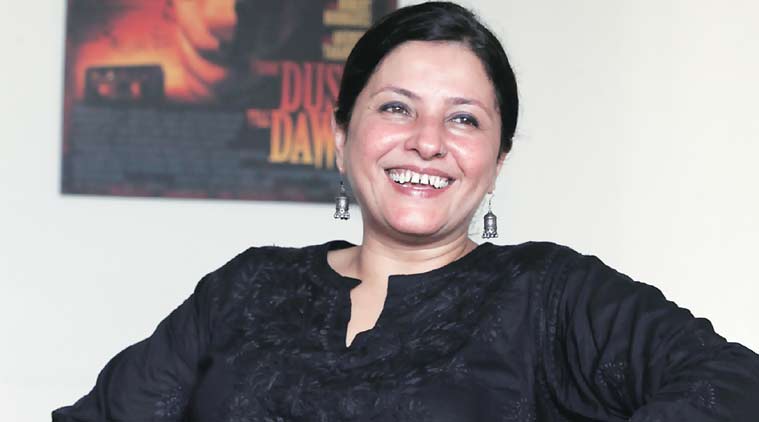 I met women who spoke about their experiences. I also met men and realised that they, too, are victims of conditioning. The roles of gender in our society make them the ‘perpetrators’ and women the ‘victims’ – Leena Mehta (Express Photo by Vasant Prabhu)
There are no villains; circumstances and conditioning make people so. This is the philosophy Leena Yadav imbibed when she travelled across Kutch for two weeks in December 2012, meeting women from villages and listening to their stories. She wanted to make a film, and the journey — she travelled with actor Tannishtha Chatterjee — enabled her to explore a world she was not familiar with and find a story she wanted to tell. Parched will premiere at the Toronto International Film festival (TIFF) in the Special Presentations category alongside Meghna Gulzar’s Guilty and Jason Bateman’s The Family Fang in September.
“I met women who spoke about their experiences of misogyny, sexuality and a host of other issues that feminism hopes to address. I also met men from these villages and realised that they, too, are victims of conditioning. The defined roles of gender in our society makes them the ‘perpetrators’ and women the ‘victims’,” says Yadav, who made her debut with Shabd in 2005.
[related-post]
At the centre of Parched are four women from a fictional village, each with a distinct persona, who become friends as they “throw off traditions that hold them in servitude” and explore an unknown world. “The bond allows the women to be themselves in a repressive society. How does a young widow who has had to wear black from an early age, feel about it? The film compels one to question what we often accept as norm,” said Yadav. The women are played by Chatterjee, Radhika Apte, Surveen Chawla and Leher Khan while Adil Hussain and Mahesh Balraj essay the “interesting male characters”.
 At the heart of Parched (above) is a journey into the unknown; Leena Yadav shot the film in the picturesque locales of Rajasthan.
“We shot in Rajasthan because it offers a picturesque landscape,” says Yadav, whose husband, cinematographer Aseem Bajaj is the producer of the film. Though the stories are drawn from real life events in Kutch, the writer-director realised that these issues were universal when she shared the script with friends from across the world. “For instance, most of these women earn a livelihood by producing intricately embroidered handicrafts. Yet, the man is said to ‘run’ the household. This story found resonance with an educated and successful friend in London,” says Yadav, who returns as director after Teen Patti (2010). She adds that experiences of urban women are also included in the film.
The credit list makes for an enviable read and includes a range of experts, from American cinematographer Russell Carpenter (of Titanic fame) as Director of Photography, and actor Ajay Devgn as producer to Oscar-nominated editor Kevin Tent and Suprateek Sen, one of the writers of Kai Po Che! and Kaminey, as writer of dialogues and additional screenplay.

 3 min read