Journalism of Courage



 One simple way of describing the book’s argument is that the three elements come together very rarely.
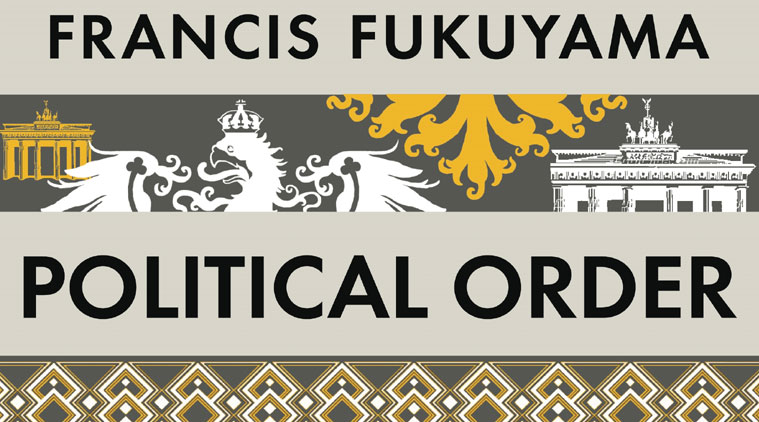
Book: Political Order and Political Decay: From the Industrial Revolution to the Globalization of Democracy
Author: Francis Fukuyama
Publisher: Profile Books
Pages: 464 pages
Price: Rs 2,676
There is a strange tension running through this book. Francis Fukuyama seems wedded to the idea that in the long run, the only sustainable form of political organisation is one that looks like a liberal democracy. Yet he also has a sense of how anomalous and fragile its success has been. The regime has three components: an effective state that not just monopolises violence but can solve practical problems, the rule of law that tames power and protects individuals, and democracy which induces a modicum of public accountability. One simple way of describing the book’s argument is that the three elements come together very rarely.
The most unfortunate political condition for Fukuyama is having no state; law does not create its own order, it presupposes order. Much of the world has been plagued by relatively weak states: Nigeria and West Asia are his prime examples. Some societies like China and East Asia manage to create impressively strong states. But they do not have democracy and rule of law. He argues, in an aside, that China historically has had no conception of law, because it does not have a conception of the transcendent: law inherently requires putting ourselves under rules that transcend us. Latin America has had middling kinds of states. Then, there are different pathways. Germany created a strong state, but not participation and democracy. The United States, in his view, created an effective bureaucratic state much after democracy took root. Costa Rica bucked the general trend in Latin America, while Argentina, which had much promise, floundered. As is conventional wisdom, only in Britain did all three components co-evolve. But Fukuyama is clear: choose order above all else.
Where do states come from? Fukuyama is here at his more soberly realistic. State building seems to have a long trajectory. The form of colonialism can matter: in this view, the British left a stronger state in India than Africa where their modality of rule was more indirect. But in discussing East Asia, he suggests that pre-colonial state formations matter a lot more; regions with histories of strong states re-emerge quickly. Contrary to conventional wisdom, Japan had a much stronger state even before the Meiji period. He has a provocative argument that state formation in Europe was helped by war. Latin America did not develop strong states because their states were less embroiled in war: war is good for state building, civil war bad.
The other two components are even harder to diagnose. Fukuyama veers to the theory that though the rise of the middle class is, strictly speaking, neither necessary nor sufficient for democracy, it is a big sustaining factor. The argument is that the middle class often revolts against clientalism, and pushes for more “meritocratic” and formal state structures. The existence of a large middle class mitigates class conflict. If you ask what happened to class, the answer is it became middle class. Meeting middle-class needs and aspirations requires protecting a degree of individuality and participation. So this large sociological change will create pressures favouring
democratisation.
But the last and more interesting part of the book deals with political decay: the atrophying of institutional forms to the point of dysfunction. He argues that the very things that made the US a success, checks and balances, no longer function as they are supposed to.
The US has become what he calls a vetocracy: more power has shifted to small groups that can block the public interest. He is scathing about the transfer of unaccountable power to judiciaries (though in the US the judiciary is, in part, a democratically elected institution).
And he has nothing but contempt for the legislature that has now devolved into a series of lobbying interests. But more surprising is his argument that there has been a massive deterioration in American state capacity. He has a lot of nostalgia for progressive-era state building where bureaucrats and professionals, though politically embedded, were empowered to do their job. Now they are more captured. This is a hard claim to judge: his sole example is the deterioration of the Forest Service.
Fukuyama is learned, erudite and historically wide-ranging. But this book is oddly flat: there are no theories. Even the mechanisms of change are ad hoc; there is a little bit of everything. For those familiar with the giants of political sociology from whom Fukuyama draws, Samuel Huntingon, Barrington Moore, Charles Tilly, Theda Skocpol, Reinhard Bendix and Seymour Lipset, the book will read like a watered-down synthesis, but without their sense of historical urgency.
Instead, this book is more a symptom of the sense of crisis now besetting advanced democracies. It is perhaps appropriate to do a Straussian reading of Fukuyama ( Leo Strauss had argued that often authors have an esoteric message not clearly stated). The book represents a yearning now showing up in democracy for strong executives and professional bureaucracies. It is still a neo-conservative tract, albeit, a lot more battle-weary and historically pessimistic. The middle class might force China to be more democratic. But the American middle class is wearying of its democracy.
Mehta is president, Centre for Policy Research, Delhi, and a contributing editor to The Indian Express

 6 min read