


📣 For more lifestyle news, click here to join our WhatsApp Channel and also follow us on Instagram
Tags:


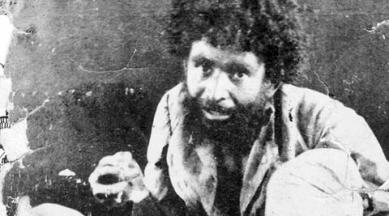
Actor, filmmaker, make-up artist, painter, dialogue and scriptwriter. These were just some of the roles Dhirendranath Ganguly, fondly remembered as DG and better known as the father of Bengali cinema, took on. Now, 37 years after he passed away, a book chronicles the life of the filmmaker. Written by his daughter Monica Guha Thakurta, a former actor, the book titled DG and Bengali Films (IMH Publishers, Rs 150) captures Ganguly’s life and his relationship with his daughter. It was released earlier this week by Jawhar Sircar, CEO, Prasar Bharti, at Delhi’s India International Centre (IIC).
For someone making films in the early 20th century, Ganguly was nothing short of a movie enterprise. He directed, produced and acted in Bengali cinema’s first silent film, Bilet Pherat or England Returned (1921), the story of an Indian who returns to the country after living in the UK for a few years. “The film was his attempt to reflect the socio-political changes taking place in the country. Nobody attempted to document his work before. And the people who knew my father have already passed away,” says Thakurta, 86.


Though she vaguely recalls her father’s as an actor, she describes him more from a personal point of view, as someone who was “witty and had a knack for dressing up well”. In his three decade-long career in Bengali cinema, DG made 49 films, in most of which he commented on the political mood in the country at the time. Very little is known about DG and most copies of his films do not exist. Except for a 1979 documentary by Kalpana Lajmi titled D.G. Movie Pioneer, there is not much historical record of him.
A determined filmmaker, it was a conversation with yesteryear Bengali actors Devaki Bose and Pramathesh Barua that had DK sit outside the entrance of their studio in Kolkata for days, dressed as a beggar. The duo was confident that no amount of make-up would conceal the real identity of a person. “For days neither the guard nor Barua and Bose could recognise Ganguly. Eventually, they were forced to acknowledge their error in judgment,” says Thakurta.
Ganguly loved the art of disguise and often dressed up as a woman to display his make up skills, since men had to mostly portray female characters in films during that time. He even wrote books in Bengali about make-up such as Bhaber Abhibyekti, Rang Beyrong, Biye, Bhalobasha and Phoolshojya. “The Calcutta police hired baba briefly to teach them the art of make up and disguise. But he left due to political reasons,” says Thakurta. For one of his plays, titled Aleek Babu, DG dressed up as a 22-year-old even though he was 80 in real life. In 1974, he was awarded the Padma Bhushan and two years later the Dada Saheb Phalke Award for his contribution to cinema. “I think it came a little too late,” she says.


