Premium
This is an archive article published on July 21, 2019

From Page to Stage

Theatre director Abhijeet Choudhary on his new play, Jaag Utha Hain Raigad, and bringing classics of Indian literature to theatre.

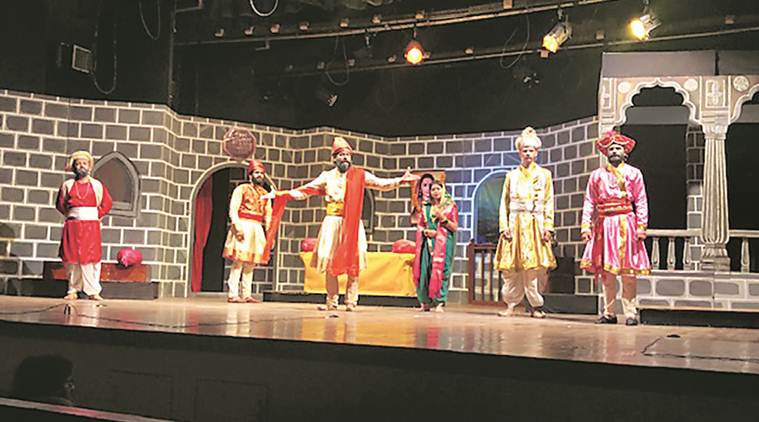
abhijeet choudhary, theatre director abhijeet choudhary, abhijeet choudhary theatre director, play on chhatrapati shivaji, pune theatre, pune theatre director, art and culture, Indian Express Scene from Jaag Utha Hain Raigad

All that we want to know about bringing a balance in society is contained in our stories. Great writers have packed every kind of knowledge in books,” says theatre director Abhijeet Choudhary. He has adapted one of the great works of Marathi fiction, Raigadala Jevha Jaag Yete, by Vasant Kanetkar, for the stage. Titled Jaag Utha Hain Raigad, it opened on July 13 in Pune.

The play shows Shivaji in his living quarters arguing with the queen, despairing about Shambhaji and relaxing with his younger son. The air pulsates with the emotions of court — intrigue, ambition, despair and sorrow. “We know him as a great warrior, the master of realpolitik and an expert in guerrilla fighting. But, how was Shivaji as a father and a husband? The play gives us a clue,” says Choudhary. “It made me realise the importance of one’s personal life in one’s well-being. I asked myself, ‘How much time do I spend with my family?’” he adds.

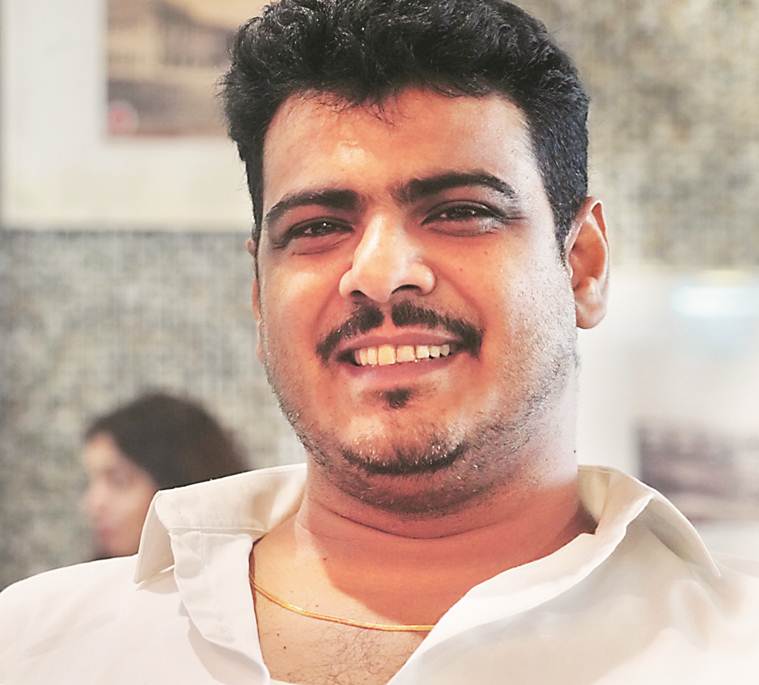
abhijeet choudhary, theatre director abhijeet choudhary, abhijeet choudhary theatre director, play on chhatrapati shivaji, pune theatre, pune theatre director, art and culture, Indian Express Abhijeet Choudhary

Thursday evenings at Swatantra Theatre, the group that Choudhary has founded in Pune with Dhanashree Heblikar and Yuwaraj Shah, are spent reading important writings of Indian literature before bringing some of these on stage. Jaag Utha Hain Raigad was among the four plays they had picked up of Kanetkar. “I was curious about Kanetkar, who is a legend of Marathi literature. He has given us a great treasure trove of stories and we wanted to introduce his writing among Hindi theatre audience,” says Choudhary. Arun Kanetkar, the nephew of the playwright, lives in the neighbourhood of Swatantra Theatre and watches them practise. “He inspired us to make the play on Jaag Utha Hain Raigad,” says Choudhary.

Born and raised in Bihar and trained in theatre in Delhi, Choudhary knew little about Kanetkar until he arrived in Pune in 2005. “Theatre in India falls back on popular names such as William Shakespeare. There is also a number of new, experimental scripts being written but it is my belief that we should learn about the writings that already exist,” he says. Last year, he had worked on another play of Kanetkar, Dhai Aakhar Prem Ke, a light-hearted drama about events in a professor’s family after his daughter falls in love.

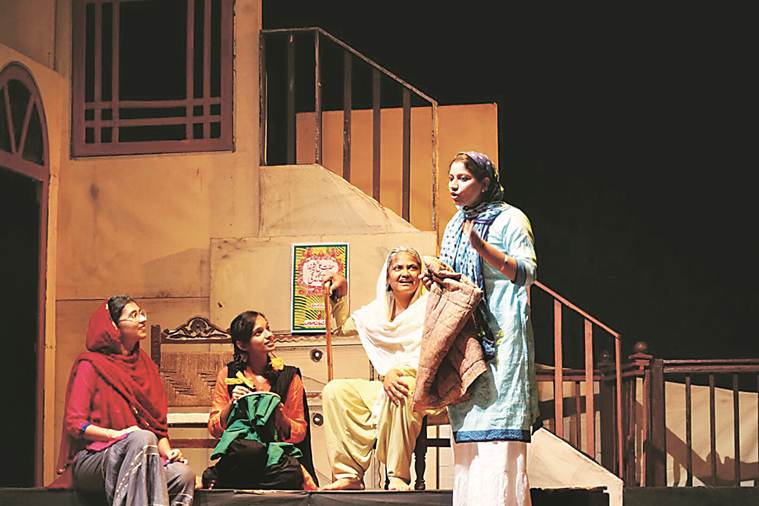
abhijeet choudhary, theatre director abhijeet choudhary, abhijeet choudhary theatre director, play on chhatrapati shivaji, pune theatre, pune theatre director, art and culture, Indian Express Scene from Jis Lahore Nai Dekhya O Jamyai Nai
Choudhary’s theatre is driven by a social consciousness. He aspires to make works that will compel audiences to reflect and react. His plays range from Asghar Wajahat’s Jis Lahore Nai Dekhya O Jamyai Nai, about an old Hindu woman who stays back in her home in Lahore during the Partition, only to realise that it has been assigned to a Muslim refugee family from Lucknow; Ajay Shukla’s Tajmahal Ka Tender, a satire on bureaucracy, corruption and red-tape; and Dario Fo’s An Accidental Death of an Anarchist, which revolves around political corruption. “I am curious about the Marathi culture,” he says, explaining recent productions such as Dadasahb Phalke: The father of Indian Cinema and Characters of PL Deshpande.

The first play that Choudhary wrote and directed was for Teachers’ Day when he was in Class III. The 10-minute skit was untitled, unless “Drama by Class III” is a name. The script revolved around a jailbreak and had a happy ending. Choudhary had drawn upon conversations he overheard at home between his mother, who worked as a jailor, and his father, who was a farmer. “Once, some inmates of the prison had escaped and brought the administration to its feet,” he recalls.

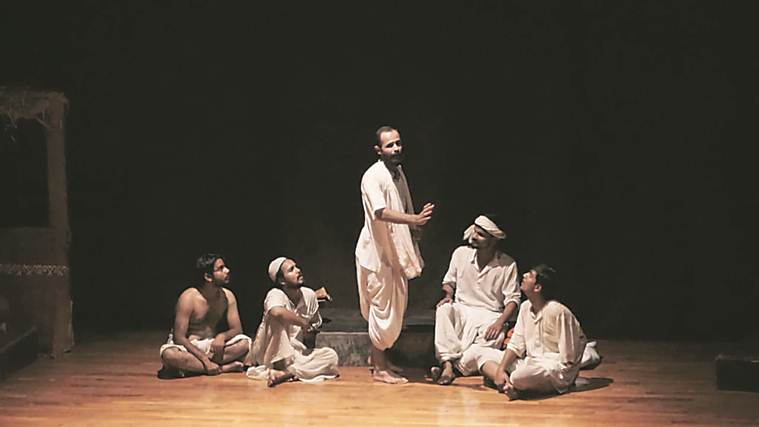
abhijeet choudhary, theatre director abhijeet choudhary, abhijeet choudhary theatre director, play on chhatrapati shivaji, pune theatre, pune theatre director, art and culture, Indian Express Scene from Kabira Khada Bazar Mein

Artistically inclined, he sang, mimicked and painted in secret. “My family did not permit it. They wanted me to focus on studies,” he says. After Class X, he escaped to Delhi and landed at the National School of Drama (NSD) to learn theatre. “I was told that we need to be graduates to qualify for NSD,” he says. He spent the years learning direction and editing at the Asian Academy of Film and Television in Delhi and working with Asmita Theatre, an activist group of youngsters who are directed by Arvind Gaur. He assisted Gaur, while observing how actors and crew were taught.

Story continues below this ad

Choudhary came to Pune in 2005 and began to create a Hindi theatre group. His treatment of plays is bold and political. “I refused to have a shining throne for Shivaji on stage. My argument is that he is at home, not in court. Somebody suggested that we decorate the sets with swords and shields, which I shot down on the same ground,” says the director. Instead, he put up a large picture of Rajmata Jeejabai, the mother of Shivaji and an important influence in his life. Choudhary prioritises acting over stage design. In Kabira Khada Bazar Mein, he had no sets and 44 actors. Another production, Komal Gandhar, unfolded around four pillars on stage. The group is finalising a new production, Khajuraho ki Shilpi, by Shankar Shesh, which evolves around a sculptor’s loyalty to his art, even at the face of social turmoil.

Dipanita Nath is a Senior Assistant Editor at The Indian Express, based in Pune. She is a versatile journalist with a deep interest in the intersection of culture, sustainability, and urban life. Professional Background Experience: Before joining The Indian Express, she worked with other major news organizations including Hindustan Times, The Times of India, and Mint. Core Specializations: She is widely recognized for her coverage of the climate crisis, theatre and performing arts, heritage conservation, and the startup ecosystem (often through her "Pune Inc" series). Storytelling Focus: Her work often unearths "hidden stories" of Pune—focusing on historical institutes, local traditions, and the personal journeys of social innovators. Recent Notable Articles (December 2025) Her recent reporting highlights Pune’s cultural pulse and the environmental challenges facing the city during the winter season: 1. Climate & Environment "Pune shivers on coldest morning of the season; minimum temperature plunges to 6.9°C" (Dec 20, 2025): Reporting on the record-breaking cold wave in Pune and the IMD's forecast for the week. "How a heritage tree-mapping event at Ganeshkhind Garden highlights rising interest in Pune’s green legacy" (Dec 20, 2025): Covering a citizen-led initiative where Gen Z and millennials gathered to document and protect ancient trees at a Biodiversity Heritage Site. "Right to breathe: Landmark NGT order directs PMC to frame norms for pollution from construction sites" (Dec 8, 2025): Reporting on a significant legal victory for residents fighting dust and air pollution in urban neighborhoods like Baner. 2. "Hidden Stories" & Heritage "Inside Pune library that’s nourished minds of entrepreneurs for 17 years" (Dec 21, 2025): A feature on the Venture Center Library, detailing how a collection of 3,500 specialized books helps tech startups navigate the product life cycle. "Before he died, Ram Sutar gave Pune a lasting gift" (Dec 18, 2025): A tribute to the legendary sculptor Ram Sutar (creator of the Statue of Unity), focusing on his local works like the Chhatrapati Shivaji statue at Pune airport. "The Pune institute where MA Jinnah was once chief guest" (Dec 6, 2025): An archival exploration of the College of Agriculture, established in 1907, and its historical role in India's freedom struggle. 3. Arts, Theatre & "Pune Inc" "Satyajit Ray, Ritwik Ghatak were not rivals but close friends, says veteran filmmaker" (Dec 17, 2025): A deep-dive interview ahead of the Pune International Film Festival (PIFF) exploring the camaraderie between legends of Indian cinema. "Meet the Pune entrepreneur helping women build and scale businesses" (Dec 16, 2025): Part of her "Pune Inc" series, profiling Nikita Vora’s efforts to empower female-led startups. "How women drone pilots in rural Maharashtra are cultivating a green habit" (Dec 12, 2025): Exploring how technology is being used by women in agriculture to reduce chemical use and labor. Signature Style Dipanita Nath is known for intellectual curiosity and a narrative-driven approach. Whether she is writing about a 110-year-old eatery or the intricacies of the climate crisis, she focuses on the human element and the historical context. Her columns are often a blend of reportage and cultural commentary, making them a staple for readers interested in the "soul" of Pune. X (Twitter): @dipanitanath ... Read More


📣 For more lifestyle news, click here to join our WhatsApp Channel and also follow us on Instagram

Latest Comment
Post Comment
Read Comments
Advertisement
Advertisement
Advertisement
Advertisement