Journalism of Courage



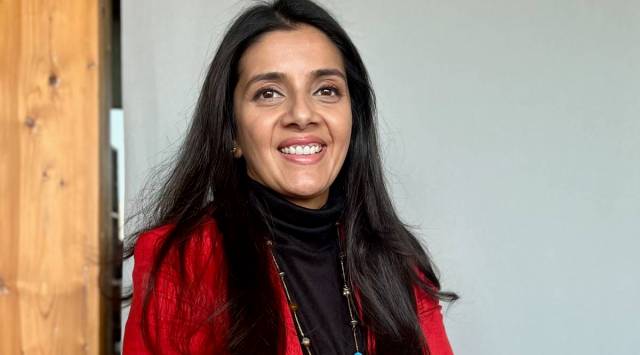 "We welcome international collectors but what is unique about our market is that we have a very strong domestic demand. Our market is not a boom-and-bust model, and hopefully, we have built a strong foundation," says Jaya Ashokan, India Art Fair Director.
 Launched in 2008 as the India Art Summit, in over a decade the rechristened India Art Fair has gained a global reputation as one of the subcontinent’s leading art fairs. To be held in Delhi from February 9 to 12, its 14th edition will see participation from 72 galleries and 12 institutions. On display will be works of modernists such as MF Husain, SH Raza, KG Subramanyan, and Gulammohammed Sheikh alongside contemporary artists such as Jitish Kallat, Shilpa Gupta, and Atul Dodiya, and the younger lot that includes Gigi Scaria and Manjunath Kamath. Also finding representation will be folk and digital art. In a conversation, director Jaya Ashokan spoke of going beyond the commercial aspects of the fair and a focus on women artists this year and the future of the Indian art market. Excerpts from an interview:
You joined as director of the India Art Fair in 2021, during the pandemic. The 2022 edition that marked its return after the COVID hiatus saw some new initiatives. How will the fair evolve further?
Last year, it was a given that we were on the backfoot with Covid and the weather (it was held from April 28 to May 1) but it was commercially one of our most successful editions. A little bit of that has to do with the initiatives we had undertaken, including making the presence of the fair felt outside of the four days. We want to make it a year-round event, where we dot the calendar with programmes in other cities, including the South and East of India. This year, we organised a collector’s weekend in Baroda, last year we did Kolkata and Hyderabad. This builds on certain aspects of the fair. For instance, for the residence programmes we pick artists who are not well-known and don’t necessarily have gallery representation. We give them a platform, and whoever we’ve had has been picked up by a gallery soon after. We are in this unique space of working with corporates, so we are also attempting to get corporates to work with artists directly.
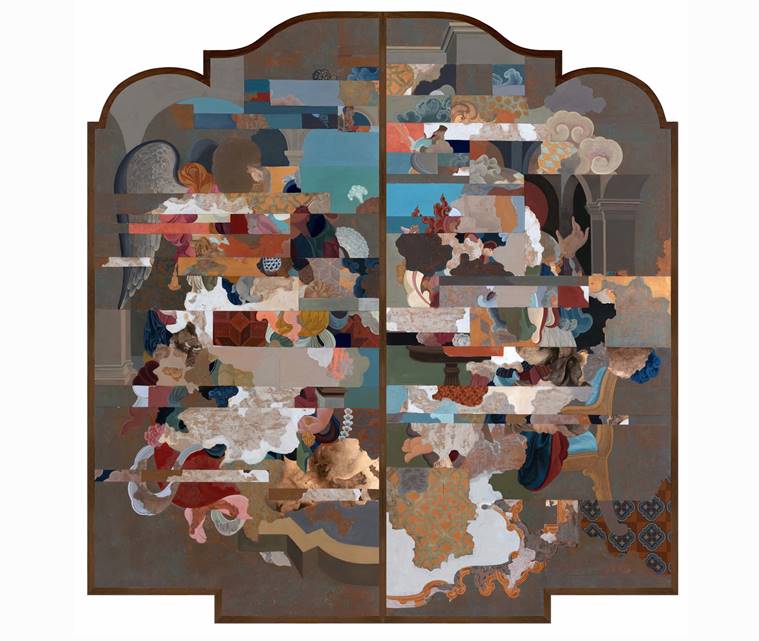 Manjunath Kamath Monologue 2022.
Art fairs are essentially commercial platforms, do you see these other roles you have undertaken as an extension?
Yes, we are a commercial fair but we are much larger than that. We aim to make art a lot more accessible and approachable and share a snapshot of the art world as it is today. It is a place to share ideas that bring people together. We have workshops, talk programmes that dive deep into the conversation surrounding the arts, and an inclusion lab. We also have other initiatives throughout the year, like the Collectors’ Weekend, all of which are to build art awareness. We understand that art and the art world are at times intimidating but we want to offer a non-pretentious open conversation as a starting point. This year, the talks will also be documented like an action plan that will be widely circulated and made accessible to the public.
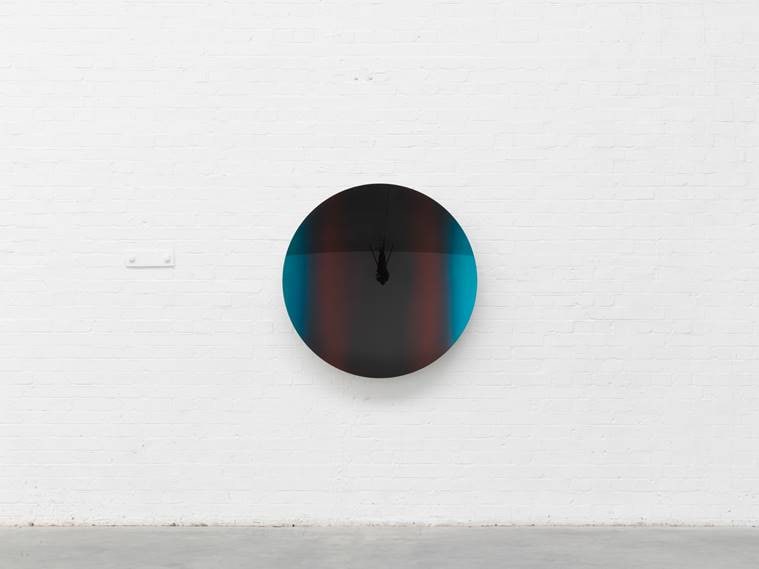 Anish Kapoor’s Mipa Blue to Red Mix 2 and Black Mist 2018.
Where do you think Indian art is right now? There was a boom in the 90s, followed by a fall, and then a plateau.
We are at an inflection point in a very exciting way because, unlike other markets that are saturated, we are seeing new galleries opening, active collecting, collaborations, and more institutional museums and private museums being set up. We had the Madras Art Week for the first time last year. People are looking at art, young collectors are driven by social and personal aspects of buying art. We have a very vibrant and dynamic opportunity for growth, which is also playing a huge role in the development of the South Asian market.
We welcome international collectors but what is unique about our market is that we have a very strong domestic demand. Our market is not a boom-and-bust model, and hopefully, we have built a strong foundation. Our modernists continue to do well and our contemporary artists are being picked up by international galleries and museums as well. Hopefully, we will have an exciting five-10 years ahead.
If you could tell us about the Digital Artists in Residence programme that debuts this year?
For us, digital art is and has always been very important. It’s another medium and there still has to be strength and talent in the art itself. In collaboration with Today at Apple, we did an open call for the digital residency and a jury made the selection. For us, it was very interesting to take this and highlight this in a very specific context – bringing the medium to the people that otherwise find limited representation in gallery booths.
We will have Gaurav Ogale, Mira Felicia Malhotra, and Varun Desai showcasing their works in this section. The Studio will also host special digital projects supported by Serendipity Arts and The Gujral Foundation with video and tech-inspired works presented by contemporary artists Sudarshan Shetty and Raghava KK respectively, along with digital animations and drawings by Shrimanti Saha in an interactive public project supported by the Foundation for Indian Contemporary Art.
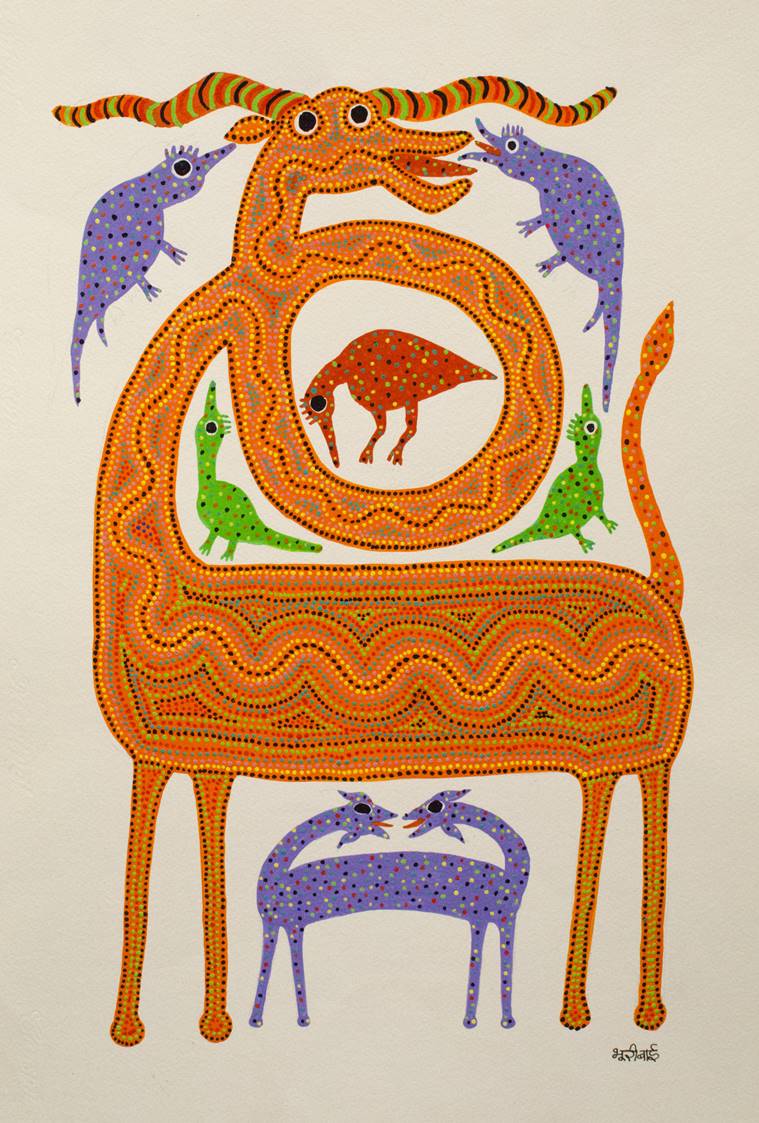 Bhuri Bai Paper work
Last year folk and tribal art dominated the Platform section. Have any special efforts also been made this year to showcase the genre?
For us, they are very much part of the Indian art scene. Indian art is not only contemporary art and the masters. We come from such a strong tradition. It is very important to showcase them on the same level playing field as other artists at the fair. This year, the facade of the fair will be painted by the Vayeda brothers. Titled ‘Forest of the Future’, it will celebrate their community and ancestors with deep research into Warli traditions, mythological stories, and rituals. The Platform section will showcase the rich artistic traditions of India through the works of contemporary masters of traditional arts, from Gond (Dhavat Singh) to Madhubani (AK Jha and Padma Shri Baua Devi), Pattachitra (Prakash Chandra), Kalamkari art (S Srinivas Rao), Bhil traditions (Padma Shri awardee Bhuri Bai) and Chamba Rumal (Charu Centre run by DCC), among others.
There is also a focus on women artists at the fair. How conscious is that effort?
It’s a hugely conscious effort and we feel it’s very important for their voices. I think women got their day a little bit later and the men were highlighted more, so in some ways, we do need to equalise that. For the first time, the fair will publish an all-women-led poster zine titled ‘Fire in the Belly’, championing the voices of eight artists and creative powerhouses, including Anikesa Dhing, Aravani Art Project, Aqui Thami, Dhruvi Acharya, Meena Kandasamy, Rithika Pandey, Shilpa Gupta and Zeenat Kulavoor, each sharing their dreams, hopes, prayers, and wisdom for an equal world. From pain, pleasure, and mental health to sexuality, the caste system, and the body, each poster page will be a blazing response to the theme, encouraging readers to participate in creating a new world order based on feminist optimism and the power of small actions in introducing lasting change.
There are also several powerful women-led exhibitions by Arpita Singh and Nasreen Mohamedi at Vadehra Art Gallery, Chitra Ganesh at Gallery Espace, Sumakshi Singh at Exhibit 320, and a group show of 20-plus women artists from the Baroda School presented by Anant Art at Bikaner House.
While there are works of some big international names such as Anish Kapoor and Andy Warhol showing at the fair, the focus is largely on artists from the subcontinent.
For us, it will be skewed to mainly India and South Asia because that is the core of what we do and want to highlight. Personally, that is our strength and we don’t want to dilute that. This is the biggest platform for South Asian and Indian art in the region. At the same time, we also like the fair to be a place where you are exposed to new things. Even with international art, there are a select few who buy, and there is also an interest to come and view.

 8 min read