4 min read
© The Indian Express Pvt Ltd



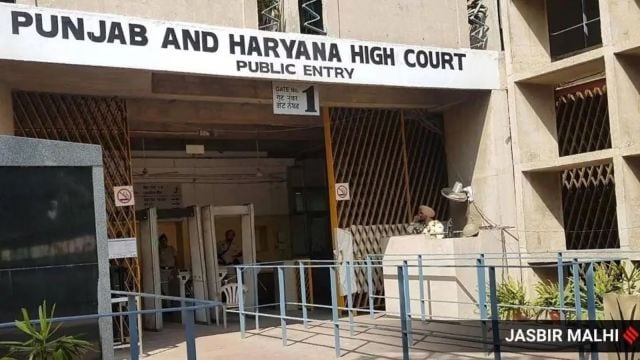 Justice Alka Sarin held that Gurdeep Singh's conduct not only violated the stay order on the divorce decree but also undermined “the foundational policy of family law” aimed at preserving marriages. (File photo)
The Punjab and Haryana High Court has sentenced a man to three months’ simple imprisonment and a fine of Rs 2,000 for civil contempt after he remarried even as his former wife’s appeal against their divorce decree was still pending.
In the order passed Thursday, Justice Alka Sarin held that Gurdeep Singh’s conduct not only violated the stay order on the divorce decree but also undermined “the foundational policy of family law” aimed at preserving marriages.
Singh and Rani married on December 9, 2012, in Bilaspur, Yamunanagar, and have a daughter. He secured a divorce on March 2, 2020, under Section 13 of the Hindu Marriage Act. Rani filed her appeal on March 12, 2020, within the 90-day limitation period. The appeal was admitted on June 15, 2020, and the divorce decree was stayed on August 13, 2020.
Despite this, Singh remarried on January 3, 2021, five months after the stay.
In her contempt plea under Section 12 of the Contempt of Courts Act, Rani alleged wilful disobedience that “deliberately undermined” her right to pursue the appeal and the possibility of reconciliation. Her counsel, G.C. Shahpuri, argued that Section 15 of the Hindu Marriage Act bars remarriage until the appeal period expires or the appeal is dismissed, irrespective of when summons is served.
He relied on the 2008 Division Bench ruling in Jasbir Kaur vs Kuljit Singh, which held: “The right of appeal is a substantive right… If any element of that right is defeated by an act of holder of a decree of divorce then it would constitute wilful disobedience of other process of the Court”. The judgment further clarified: “Reconciliation proceedings have to be construed as part of that right… The excuse of entering into second marriage after the period of limitation cannot be put forward as a valid excuse.”
Shahpuri also cited Court on its motion vs Jagdeep Pal Singh (2019) and Court on its motion vs Munish (2016) to argue that remarriage after the filing of an appeal interferes with the administration of justice.
Singh’s counsel, Saket Bhandari, countered that he was never served notice, owing to lapses at the Pooja Vihar, Ambala Cantt address, and came to know of the appeal only after an FIR by Rani in February 2021. He argued that contempt cannot lie without knowledge and relied on decisions of the Chhattisgarh, Rajasthan, and Bombay High Courts. He also questioned Jasbir Kaur’s binding value, pointing to later developments in related Supreme Court SLPs.
Justice Sarin rejected these arguments, noting that the appeal was filed in time, the stay was operative, and Singh had earlier been served at the same address, suggesting evasion. “As per the reply of the respondent-husband, he had admittedly solemnized a second marriage on 03.01.2021 i.e. after filing of the appeal by the petitioner-wife and after the operation of the impugned judgment and decree was stayed,” she recorded.
Citing Rakesh Kumar vs Suman (2019), the court reiterated that it is the decree-holder’s duty to verify whether an appeal has been filed during the 90-day period. It also relied on the Supreme Court’s recent ruling in N. Rajendran vs S. Valli (2025) 3 SCC 801: “What Section 15 intends is to place a time limit on the right of the unsuccessful party to challenge… The second marriage… clearly took place in contravention of mandate of Section 15.”
Rejecting out-of-jurisdiction precedents, the court held that Singh’s second marriage contravened Section 15 and amounted to civil contempt. His “unqualified apology” was found neither unqualified nor sincere. “Instead of tendering an unqualified apology… he has tried to contest his act,” the judgment noted.
On sentence, the court said the “irreparable damage” to Rani’s appeal and reconciliation chances was beyond repair: “The clock cannot be put back and the damage which has ensued cannot be rectified.”
Singh has been directed to surrender before the Chief Judicial Magistrate, Yamunanagar at Jagadhri within 15 days.