4 min read

© IE Online Media Services Pvt Ltd



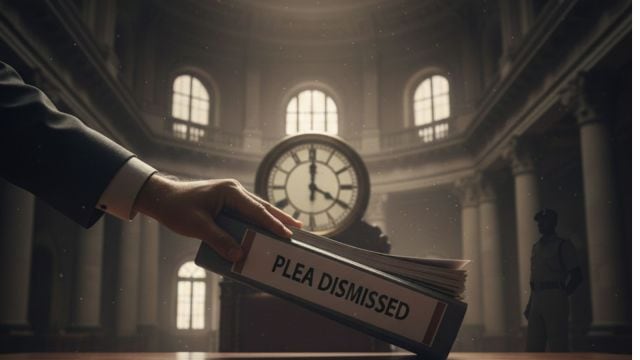 Jammu Kashmir Ladakh High Court order: The Jammu and Kashmir and Ladakh High Court dismisses BSF constable's plea of reinstatement after 6 years of absconding. This image is generated using AI.
Jammu Kashmir Ladakh High Court order: The Jammu and Kashmir and Ladakh High Court recently dismissed the plea of a Border Security Force (BSF) constable challenging his dismissal order from the service after six years of absence, observing that the employer cannot launch a manhunt for an absconding employee.
Justice Sanjay Dhar called the employer’s several attempts to communicate with the constable “sufficient”, adding, “An employer is not expected to launch a manhunt for an absconding employee in the whole of the world.”
The petitioner, Tariq Ahmad Lone, challenged the BSF’s Court of Enquiry 2004 dismissal order and sought reinstatement to his service and payment of all his salary, stating his dismissal was in “violation of the principles of natural justice and the provisions of the BSF Act and the rules”.
The high court pointed out that the constable did not approach the employer for a period of more than six years and did not even care to know about the fate of his service, and said that “the rules of natural justice do not operate in a vacuum.”
The court dismissed the petition, stating it was devoid of merit and held that providing an opportunity to the constable would be “mere wastage of time” since it would not alter his position of being guilty of unauthorised absence from duty for more than six long years.
Tariq’s counsel, senior advocate Z A Quresh, argued that the state should have published the notices in newspapers once the notices were not served upon his client through the registered post.
The state, through deputy attorney general Hakim Aman Ali, argued that notices were sent to the petitioner through registered post at his address, and a show cause notice was also sent to Tariq after the holding of the Court of Enquiry in exparte. However, all the notices were returned with the report “returned to sender for full address”, “no such person found at the relevant address” and “not known”.
The court noted that all the communications from the employer were sent to the same address where he received his appointment letter, and yet the “notices were returned unserved”.
Lone, who was appointed as a constable in the BSF in 1995, took sick leave in August 2003 for 11 days but subsequently overstayed the leave and never reported back to his service till he approached the BSF in November 2009, only to resume his duties. However, he was not allowed to do so on the grounds that his services had been terminated.
He submitted that his health condition worsened and he was subsequently hospitalised, due to which he could not resume his duties. He further contended that due to the death of one of the relatives in militancy-related activities, he was prevented from resuming his duties.
Tariq contended that he was not given any notice before proceeding to hold an enquiry, and even the enquiry proceedings against him were held ex parte without issuing notice to him. He also argued that the report of the BSF enquiry officer, along with the show cause notice, was never served upon him.
The court, however, dismissed his plea.