5 min read
Stay updated with the latest - Click here to follow us on Instagram

Journalism of Courage



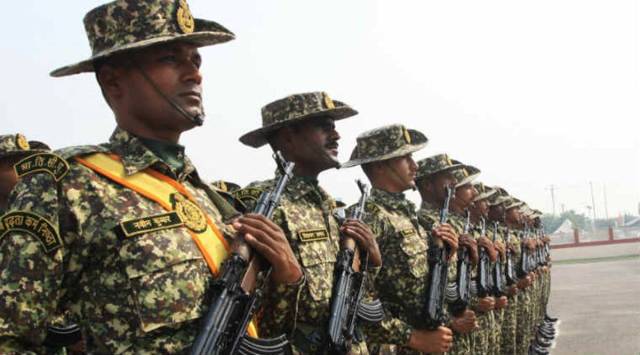 With ITBP being the first line of defence on the China border, sources said, induction of new troops will strengthen the security grid on the LAC. (File photo)
 With the tension along the Sino-Indian border refusing to abate and China continuing to sustain a large number of troops close to the Line of Actual Control (LAC), the cabinet on Wednesday approved the induction of close to 9,000 troops into the Indo-Tibetan Border Police (ITBP). This, sources said, will entail raising seven new battalions and a new sector headquarters.
With ITBP being the first line of defence on the China border, sources said, this will strengthen the security grid on the LAC where Indian and Chinese forces have clashed multiple times in Eastern Ladakh and Arunachal Pradesh in the last few years and Indian forces continue to be denied access to many of their traditional patrolling points in the Depsang plains and the Charding Nalla region in Ladakh. It will also help give the ITBP, which has 100 per cent deployment most of the year, the luxury to afford rest, recuperation and better training for its personnel.
“This has been a long-pending proposal from the ITBP and has been there since 2013-14. Initially it was envisaged to raise 12 new battalions, but has now been decreased to seven battalions. This has been in conjunction with the decision to increase the number of border outposts and staging camps along the LAC,” a home ministry official said.
The decision comes in the backdrop of clashes between Indian and Chinese forces in December last year in the Yangtze region of Tawang in Arunachal Pradesh, where several Indian troops were reported to have been injured. Before and after this incident, Army chief Manoj Pandey has on multiple occasions underlined that the situation on the Sino-Indian border remains “stable but unpredictable”.
The Indian and Chinese forces have been locked in a confrontational situation in Ladakh since April 2020. This had also led to clashes between the two forces in the Galwan valley in eastern Ladakh in June 2020. Since then diplomatic and military level talks have been able to achieve disengagement at five of the seven friction points in Ladakh. However, both sides continue to maintain high numbers of troops in the theatre.
In November last year, Pande indicated that though there was disengagement, no de-escalation was in sight in Ladakh. “As far as the PLA force level is concerned, there has been no significant reduction,” he said.
Speaking about Chinese infrastructure development on the border, Pande then said, “In terms of infrastructure development, that is going unabated. There is road infrastructure, helipads, airfields including roads right up to the passes. One of the notable developments has been the G 695. The road or highway running parallel to the LAC will give him [China] the ability to not only move forces forward but also switch forces from one sector to another.”
In a paper presented in the recent DGPs conference attended by Prime Minister Narendra Modi and Home Minister Amit Shah, it was pointed out that India had lost access to 26 of its 65 patrolling points on the LAC in Ladakh.
“Later on, China forces us to accept the fact that as such areas have not seen the presence of Indian Security Forces (ISFs) or civilians since long, the Chinese were present in these areas. This leads to a shift in the border under control of ISFs towards the Indian side and a ‘buffer zone’ is created in all such pockets, which ultimately leads to loss of control over these areas by India. This tactic of the PLA to grab land inch-by-inch is known as ‘salami slicing’,” the paper said.
According to the paper, the PLA has taken advantage of the buffer areas in the de-escalation talks by placing the best of its cameras on the highest peaks and monitoring the movement of Indian forces.
“This peculiar situation can be seen at Black top, Helmet top mountains in Chushul, at Demchok, at Kakjung, at Gogra hills in Hot Springs and at Depsang plains near Chip Chap river. With the ‘salami slicing’ strategy they object to our movement even in the buffer zone, claiming it to be ‘their’ area of operation and then further ask us to move back to create more ‘buffer’ areas. This situation has happened with Y nallah at Galwan, where we were forced to move back to Camp 01 without dominating the higher posts overseeing Y nallah; at Chushul, the BPM hut near the airfield has become the de facto LAC and Nilung nallah at Demchok has been restricted,” the paper said.
Stay updated with the latest - Click here to follow us on Instagram