Journalism of Courage



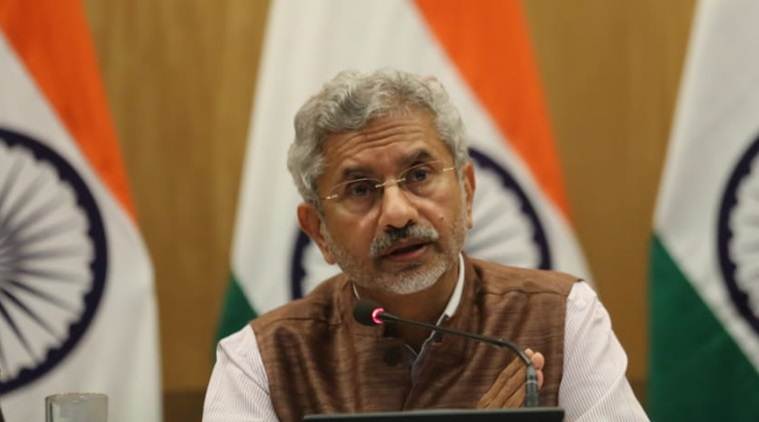 External Affairs Minister S Jaishankar wrote a letter on June 1 to BJP MP Nishikant Dubey. (File photo)
The government denied visas to teams of a non-governmental advisory body to the US Congress after its denouncement of the state of religious freedom in India.
External Affairs Minister S Jaishankar said this in a letter on June 1 to BJP MP Nishikant Dubey, who had raised the observations made by the United States Commission on International Religious Freedom (USCIRF), in Parliament in December 2019.
In April, the USCIRF had recommended to the US administration that India be designated a “country of particular concern”. It was the first time since 2004 — when its recommendation came against the backdrop of the Gujarat riots in 2002 — that the USCIRF had sought this. The USCIRF’s annual report had also named Home Minister Amit Shah twice, once recalling that he had referred to migrants as “termites” to be eradicated.
Opinion | The US report on religious freedom in India calls for reflection
In his letter to Dubey, Jaishankar wrote, “We have denied visa to USCIRF teams that have sought to visit India in connection with issues related to religious freedom, as we do not see the locus standi of a foreign entity like USCIRF to pronounce on the state of Indian citizens’ constitutionally protected rights.”
The USCIRF’s views are not meant to represent the opinion of the US administration or the US Congress.
The minister added, “USCIRF has been known to make prejudiced, inaccurate and misleading observations regarding the state of religious freedom in India. We do not take cognisance of these pronouncements and have repudiated such attempts to misrepresent information related to India.”
Jaishankar also noted that the MEA had earlier rejected the USCIRF’s statements as “inaccurate and unwarranted”. He said India “will not accept any external interference or pronouncement on matters related to our sovereignty and the fundamental rights of our citizens that are guaranteed by the Constitution”.
In its report in April, the USCIRF had said religious freedom in India had seen a “drastic turn downward”, with religious minorities under “increasing assault” in 2019, and talked of “rising Islamophobia”. It ranked India along with Pakistan, North Korea, China and Saudi Arabia, among others, as “countries of particular concern”, for “engaging in and tolerating systematic, ongoing, and egregious religious freedom violations, as defined by the International Religious Freedom Act”.
It cited the CAA-NRC issue, the scrapping of special status of Jammu and Kashmir and the Delhi riots in February. The USCIRF said the CAA and NPR moves were first steps towards a national NRC.
Throughout 2019, it said, Indian government actions — whether on the CAA or the enforcement of cow slaughter and anti-conversion laws — created a “culture of impunity for nationwide campaigns of harassment and violence against religious minorities”. It also cited the Supreme Court ruling handing over the disputed Babri Masjid site to the Hindu side in November 2019.
READ| India rejects criticism from US panel, OIC
The USCIRF recommended that the Trump administration “impose targeted sanctions on Indian government agencies and officials responsible for severe violations of religious freedom by freezing those individuals’ assets and/ or barring their entry into the United States… citing specific religious freedom violations”.
At the time the report came out, India had said the USCIRF’s “biased and tendentious” comments against the country were “not new”, but that, on this occasion, “its misrepresentation has reached new levels”.

 4 min read