Premium
This is an archive article published on November 4, 2021

Finally, WHO clears India’s homemade Covaxin for global use; eases overseas travel & export

No clearance during pregnancy yet; WHO sought vaccine data 9 times

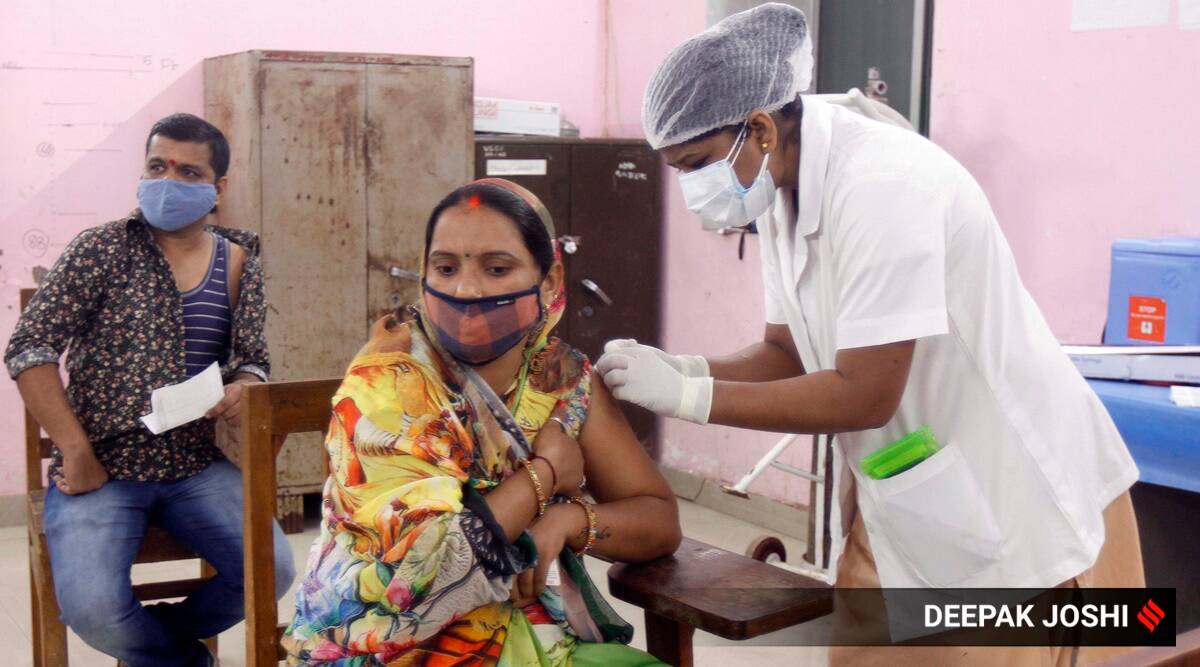
WHO, CovaxinThe WHO's decision implies that indigenously developed Covaxin meets the standards set by it for protection against the coronavirus disease. (Express file photo)

The World Health Organisation (WHO) on Wednesday granted Emergency Use Listing (EUL) for Covaxin, the Covid-19 vaccine developed by the Indian Council of Medical Research (ICMR) and Hyderabad-based Bharat Biotech.

The WHO’s decision implies that indigenously developed Covaxin meets the standards set by it for protection against the coronavirus disease.

It also removes to a large extent the uncertainty around overseas travel by Indians who have been vaccinated with Covaxin.


Thirty-eight countries that have bilateral agreements with India currently recognise Covaxin; the WHO clearance is likely to prompt many other countries around the world to open their doors to those inoculated with the vaccine.

India has so far administered 12.14 crore doses of Covaxin across the country. The WHO’s decision has come more than fours months after it started conducting emergency use listing (EUL) assessment for global use of the vaccine.

“This emergency use listing expands the availability of vaccines, the most effective medical tools we have to end the pandemic,” Dr Mariângela Simão, WHO assistant director general for access to medicines and health products said in a statement.

“But we must keep up the pressure to meet the needs of all populations, giving priority to the at-risk groups who are still waiting for their first dose, before we can start declaring victory.”

Story continues below this ad

Top government sources recalled that Wednesday’s EUL had come at the end of detailed scientific scrutiny — WHO had sought information related to Covaxin’s assessment from Bharat Biotech no less than nine times since July 5.

“On nine different occasions the WHO specifically asked the manufacturer to submit additional written information on Covaxin. On all nine occasions, the manufacturers very promptly furnished all the information. These were formal data on additional data and analysis,” a senior government official said.

In a statement, Dr Krishna Ella, chairman and managing director of Bharat Biotech, said, “Validation by WHO is a very significant step towards ensuring global access to India’s widely administered, safe, and efficacious Covaxin.

“As an organisation, we have focused on maintaining stringent quality and safety standards that meet rigorous assessment, and scientific standards established by WHO, as a result, many of our vaccines have received WHO prequalification.

Story continues below this ad

“The EUL authorisation for Covaxin will enable us to contribute to accelerating the equitable access of Covid-19 vaccine, and the access to our vaccine globally thereby addressing the current public health emergency.”

The EUL is a scientific assessment of the safety, efficacy, and, quality of Covid-19 vaccines, and allows countries to fast-track their own regulatory approvals to import and administer these products.

“WHO has granted emergency use listing (EUL) to Covaxin adding to a growing portfolio of vaccines validated by WHO for prevention of Covid-19,” the WHO said in a tweet.

It said that its Technical Advisory Group (TAG) — made up of regulatory experts from around the world — had determined that “the benefit of the vaccine far outweighs risks & the vaccine can be used”.

WHO also said that its Strategic Advisory Group of Experts (SAGE) on Immunisation had reviewed the vaccine and recommended its use in two doses, with a dosing interval of four weeks in all age groups 18 and above.

Story continues below this ad

However, “available data on vaccination of pregnant women” with Covaxin “are insufficient to assess vaccine safety or efficacy in pregnancy”, the WHO said. “…Studies in pregnant women are planned, including a pregnancy sub-study and pregnancy registry,” it said.

The WHO’s EUL is a prerequisite for a vaccine to be part for the Covax supply. However, sources said, “Covax first needs to enter into an agreement (with Bharat Biotech) which they have not done so far”. Therefore, “even if Bharat Biotech wants, they cannot at present supply vaccines to Covax,” the sources said.

According to the sources, Bharat Biotech has so far exported 10 lakh doses to the South American nation of Paraguay, and that Wednesday’s decision would enable more countries to request the manufacturer for export of Covaxin.

Wednesday’s decision constitutes the first WHO approval for a Covid-19 vaccine developed using the inactivated or killed virus along with certain chemicals. The production of such vaccines requires stringent procedures to avoid and check for contamination.

Covaxin was granted emergency use authorisation by the Drug Controller General of India in January. The clearance was in “clinical trial mode”, wherein Bharat Biotech had to obtain informed consent before administering the vaccine to those eligible for the government’s vaccination drive.

Story continues below this ad
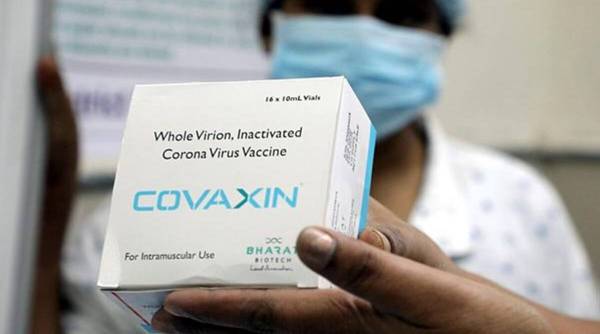
Covaxin, Covaxin approval, Covaxin WHO approval, Covaxin WHO approval news, WHO Covaxin, Covaxin approval news Covaxin accounts for 11% of the 985.5 million total doses administered in India, and has also been exported. (File)

The regulator had granted approvals based only on immunogenicity, the ability to trigger an immune response, and safety data generated in phase 1 and 2 clinical trials.

The regulator had then said that permission had been given in the public interest, “especially in the context of infection by mutant strains”. However, the grant of emergency approval in the absence of efficacy data, which is generated during phase 3 human clinical trials, had raised concerns.

Two months later, in March, the company released the efficacy data, which showed an efficacy of 78% against Covid-19 of any severity — and the regulator dropped the clinical trial mode.

On October 12, the Subject Expert Committee (SEC) recommended the grant of EUA to Covaxin for use in the age group of 2-18 years. The regulator and two expert groups in the Health Ministry are currently scrutinising the data on Covaxin’s children’s clinical trial, and the global data on Covid-19 vaccination among children.

Story continues below this ad

Last month, the WHO had said it could not “cut corners”, and that the timeframe for granting EUL was dependent on how quickly vaccine manufacturers were able to provide the required data.

“We are aware that many people are waiting for WHO’s recommendation for Covaxin to be included in the #COVID19 Emergency Use Listing, but we cannot cut corners — before recommending a product for emergency use, we must evaluate it thoroughly to make sure it is safe and effective,” the WHO had said on Twitter.

Earlier on Wednesday, the Central Drugs Standard Control Organisation (CDSCO) had approved extension of the shelf life of Covaxin up to 12 months from the date of manufacture.

“This approval of shelf life extension is based on availability of additional stability data which was submitted to CDSCO,” a statement from Bharat Biotech said.

Story continues below this ad

Dr R R Gangakhedkar, former ICMR chief of epidemiology and communicable diseases, said: “This is the first completely indigenous vaccine based on a safe vaccine platform. It will help us expand ‘vaccine maitri’ too.”

Dr Samiran Panda, ICMR’s current chief of epidemiology and communicable diseases, told The Indian Express that WHO approval for the indigenous Indian vaccine “underlines the prowess of scientists and public health practitioners from within India who spearheaded the vaccine development process, catalysed proactive regulatory response and designed innovative intervention measures to deal with vaccine hesitancy”.

As City Editor ( Delhi) at the Indian Express, Kaunain Sheriff  leads city reporting with a sharp focus on accountability journalism, data-driven stories, and ground-level impact. As the National Health Editor he leads the newsroom’s in-depth coverage of pressing health issues. He is the author of Johnson & Johnson Files: The Indian Secrets of a Global Giant, a definitive investigation into the accountability of one of the world’s most powerful pharmaceutical corporations. Areas of Expertise Investigative Reporting: Has deep expertise in investigative reporting spanning public health, regulatory affairs, drug safety, and the criminal justice system. His work sits at the intersection of governance, law, and accountability, with a particular focus on how regulatory failures, institutional lapses, and policy decisions affect citizens’ rights and safety. Data Journalism: Has extensively on big data–driven investigations, including analyses of flagship government schemes and large datasets on criminal trials, uncovering systemic gaps. Global Collaborations Kaunain is a key contributor to major international journalistic projects: The Implant Files: Collaborated with the International Consortium of Investigative Journalists (ICIJ) to expose global malpractices in the medical device industry. Chinese Big-Data Investigation: Uncovered how a foreign data firm monitored thousands of prominent Indian institutions and individuals in real-time. Awards & Recognition His commitment to "Journalism of Courage" has been recognized with the industry's highest honors: Ramnath Goenka Award for Excellence in Journalism SOPA Award (Society of Publishers in Asia) Red Ink Award (Mumbai Press Club) Indian Express Excellence Awards (Triple recipient for investigations into the NSA abuse in UP, Vyapam scam, and the anti-Sikh riots). Education: Studied Mechanical Engineering at Visvesvaraya Technological University (VTU), Bangalore, before moving to Delhi to pursue his passion for journalism. His engineering training informs his analytical approach, enabling him to decode technical, legal, and data-heavy systems with precision. Social media LinkedIn:  linkedin.com/in/kaunain-sheriff-3a00ab99 X ( fromerly Twitter): @kaunain_s ... Read More

Anuradha Mascarenhas is a Senior Editor at The Indian Express, based in Pune. With a career spanning three decades, she is one of the most respected voices in Indian journalism regarding healthcare, science and environment and research developments. She also takes a keen interest in covering women's issues . Professional Background Education: A gold medalist in Communication and Journalism from Savitribai Phule Pune University and a Master’s degree in Literature. Author: She authored the biography At The Wheel Of Research, which chronicles the life and work of Dr. Soumya Swaminathan, the former Chief Scientist at the WHO. Key Focus: She combines scientific accuracy with storytelling, translating complex medical research into compelling public and human-interest narratives. Awards and Recognition Anuradha has won several awards including the Press Council of India's national award for excellence in journalism under the gender based reporting category in 2019 and the Laadli Media award (gender sensitivity -2024). A recipient of the Lokmat journalism award (gender category-2022), she was also shortlisted for the RedInk awards for excellence in journalism-2021. Her debut book At The Wheel Of Research, an exclusive biography of Dr Soumya Swaminathan the inaugural chief scientist of World Health Organisation was also nominated in the Popular Choice Category of JK Paper AUTHER awards. She has also secured competitive fellowships including the Laadli Media Fellowship (2022), the Survivors Against TB – New Research in TB Media Fellowship (2023) and is part of the prestigious 2025 India Cohort of the WomenLift Health Leadership Journey.” Recent Notable Articles (Late 2025) 1. Cancer & Specialized Medical Care "Tata Memorial finds way to kill drug-resistant cancer cells" (Nov 26, 2025): Reporting on a breakthrough for triple-negative breast cancer, one of the most aggressive forms of the disease. Discipline, diet and purpose; How a 97-year-old professor defies ageing'' (Nov 15, 2025) Report about Prof Gururaj Mutalik, the first Head of Department at Pune's B J Government Medical College who at 97 credits his longevity to healthy habits and a strong sense of purpose. 2. Environmental Health (The "Breathless Pune" Series) Long-term exposure even to 'moderate' air leads to chronic heart, lung, kidney issues" (Nov 26, 2025): Part of an investigative series highlighting that even "safe" pollution levels are damaging to vital organs. "For every 10 µg/m3 increase in PM2.5 level, there was 6-8% jump in medicine sales" (Nov 23, 2025): Using commercial data to prove the direct link between air quality and respiratory illnesses in Pune. 3. Lifestyle & Wellness News "They didn't let cancer, diabetes and heart disease stop them from travelling" (Dec 22, 2025): A collaborative piece featuring survivors who share practical tips for traveling with chronic conditions. At 17, his BP shot up to 200/120 mmHG; Lancet study flags why child and teen hypertension doubled between 2000 and 2020'' (Nov 12,2025)--A report that focusses on 17-year-old-boy's hypertensive crisis and reflects the rising global trend of high blood pressure among children and adolescents. 4. Scientific Recognition & Infrastructure For promoting sci-comm, gender diversity: IUCAA woman prof highlighted in Nature" (Nov 25, 2025): Covering the global recognition of Indian women scientists in gender studies and physics. Pune researchers find a spiral galaxy like the Milky Way from early universe'' (December 3, 2025)- A report on how Indian researchers discovered a massive galaxy that existed when the universe was just 1.5 billion years old , one of the earliest to have been observed so far. Signature Beat: Health, Science & Women in Leadership Anuradha is known for her COVID-19 reportage, where she was one of the first journalists to provide detailed insights into the Covishield and Covaxin trials. She has a dedicated interest in gender diversity in health and science, often profiling women researchers who are breaking the "leaky pipeline" in STEM fields. Her writing style is scrupulous, often featuring interviews with top-tier scientists and health experts from various institutions.   ... Read More

Stay updated with the latest - Click here to follow us on Instagram

Latest Comment
Post Comment
Read Comments
Advertisement
Advertisement
Loading Taboola...
Advertisement