6 min read
© The Indian Express Pvt Ltd



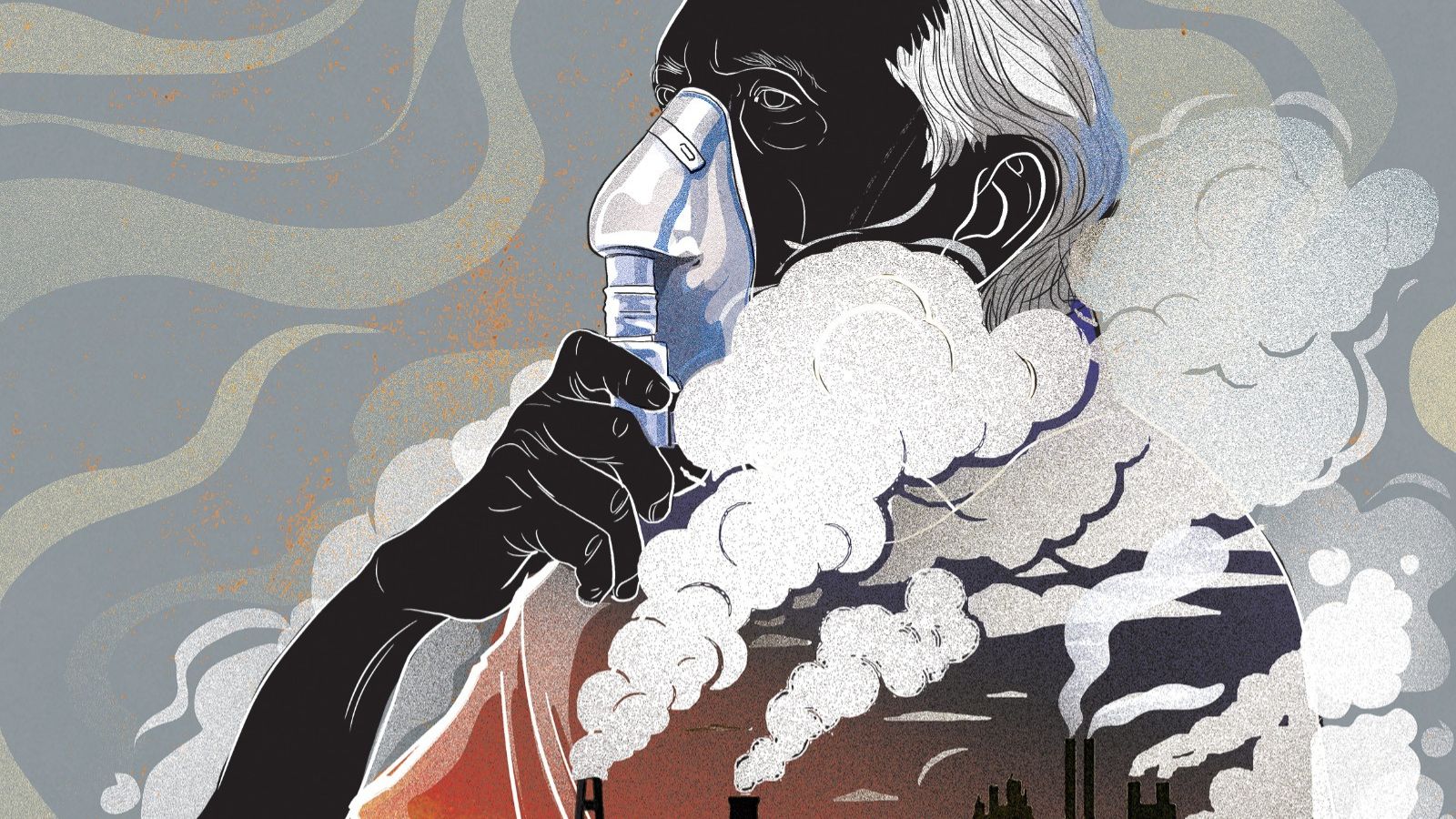 Since PM2.5 particles are tiny, they can be inhaled and pass from the lungs into the bloodstream.
 For the past five years, 62-year-old Vedika Singh*, formerly an HR consultant, has watched her rheumatoid arthritis spiral out of control during the winter months in Delhi. As November arrives, her fingers swell up and her joints stiffen. Her pain is so intense that sitting and standing up are a daily 10-minute struggle. “I cannot answer my doorbell immediately. Getting off the bed and unfreezing my limbs and fingers take about half-an-hour. I feel so out of control as I am completely immobile when I should be up and about,” she says.
Singh has been living with chronic autoimmune disease, where the immune system mistakenly attacks the body’s joints, causing inflammation, pain, swelling and stiffness. This can damage joint tissues and bone and affect other parts of the body like the eyes, heart, lungs, skin, and blood vessels. There is no cure but the condition can be managed by drugs. “I have been stable for years with a combination of methotrexate and leflunomide, the standard drugs that keep my rheumatoid arthritis in check. Yet, I do not get better and feel sick and exhausted,” Singh says.
What she didn’t know was that over the last decade, the increasing load of pollutants in Delhi’s air, particularly 2.5, had been worsening her condition, pulling her down every time she tried to get up. That’s when she met Dr Uma Kumar, professor and head of the rheumatology department at All-India Institute of Medical Sciences (AIIMS) Delhi, who has been researching the role of pollutants in asthmatic patients. “The cold causes stiffness but not inflammation. That is triggered only by pollution,” she explains.
Since PM2.5 particles are tiny, they can be inhaled and pass from the lungs into the bloodstream. Once in the bloodstream, PM2.5 particles trigger a general inflammatory response throughout the body. The particles are strong oxidizers, which can damage cells and tissues, contribute to inflammation and imbalance the body’s immune system.
Dr Kumar has established the concerning link between long-term exposure to Delhi’s air pollution and early signs of autoimmune disorder in her research. She and her team found that people living within 50 metres of arterial roads, where pollution levels are significantly higher, had a markedly greater presence of autoantibodies, an early indicator of autoimmune disease. These findings suggest that polluted air may trigger subtle immune system changes long before any clinical symptoms appear.
The study further indicated that nearly 20 per cent of Delhi residents may have “pre-clinical autoimmunity”, a state in which individuals do not yet have an autoimmune disease but test positive for autoantibodies associated with conditions like lupus and rheumatoid arthritis. She says this heightened autoantibody activity appears strongly linked to prolonged exposure to a polluted environment.
Singh’s case, the doctor says, isn’t unusual. As the Air Quality Index (AQI) dips to hazardous levels every winter, rheumatology OPDs across the city see an uptick in patients reporting complications despite being stable for much of the year. “It is all a result of toxic particles interacting with cells lining the airways. When polluted particles reach the airway lining, they alter the cellular proteins. These transformed proteins are then no longer recognized by the body’s immune system. This is what we doctors call a breach of tolerance. The immune system launches an attack, triggering oxidative stress and systemic inflammation,” says Dr Kumar.
The altered proteins begin to mimic the synovium or the protective lining of joints. This phenomenon, known as molecular mimicry, causes the immune system to mistakenly attack the synovium as well. “So the immune system thinks the synovium and the changed protein are the same,” she explains. “That’s how joint damage begins, or why the risk of rheumatoid arthritis increases. Other autoimmune diseases get triggered the same way too,” says Dr Kumar.
The link between Delhi’s air pollution and rheumatoid arthritis flare-ups isn’t just anecdotal. Back in 2014, Dr Kumar’s study observed how such patients were stable for most of the year but experienced disease reactivation from November to February. “We were able to prove that pollution plays a role. Even now, patients who were doing well suddenly come in with swelling and pain during these months.”
She describes a recurring pattern of symptoms — joints that were flexible and functional start swelling again, pain intensifies, stiffness returns and physical activity dips. “Consistent high pollution means consistent inflammation, which acts as a trigger,” adds Dr Kumar.
Pollution doesn’t cause rheumatoid arthritis overnight. “It requires years of exposure,” she clarifies. While referral hospitals like AIIMS always have high patient numbers, cases of autoimmune diseases are spiralling nationwide, pollution being one of the contributing factors.
Dr Kumar advises that patients should avoid morning walks, since pollution peaks early in the day. “Delay outdoor activity until particles settle. Wear masks, preferably high-quality ones, whenever you step outdoors. Air purifiers can help those who can afford them. Temporary relocation outside Delhi, if possible, often brings rapid relief. However, do not stop exercising, just modify the timing and location,” she says.
Since pollution hits elderly patients harder, Dr Kumar’s advice for them is wide-ranging, including keeping their weight in the healthy range because every additional kilogram triples the load on knees. “Eat clean and fresh, avoid packaged foods and take vitamin C and D supplements. Stay physically active with indoor exercise or yoga, hydrate yourself and sleep well. Wear masks to reduce pollution exposure. Remember pollutants also act as carriers for airborne pathogens, which may cause other infections in the body. Besides, inflammation can always worsen existing heart disease, hypertension and diabetes among the elderly. Take medications consistently,” says Dr Kumar.